
Best Solar Installer Software in 2026: A Complete Buyer's Guide
By SubcontractorHub Editorial Team·Published June 2026·Updated September 2026
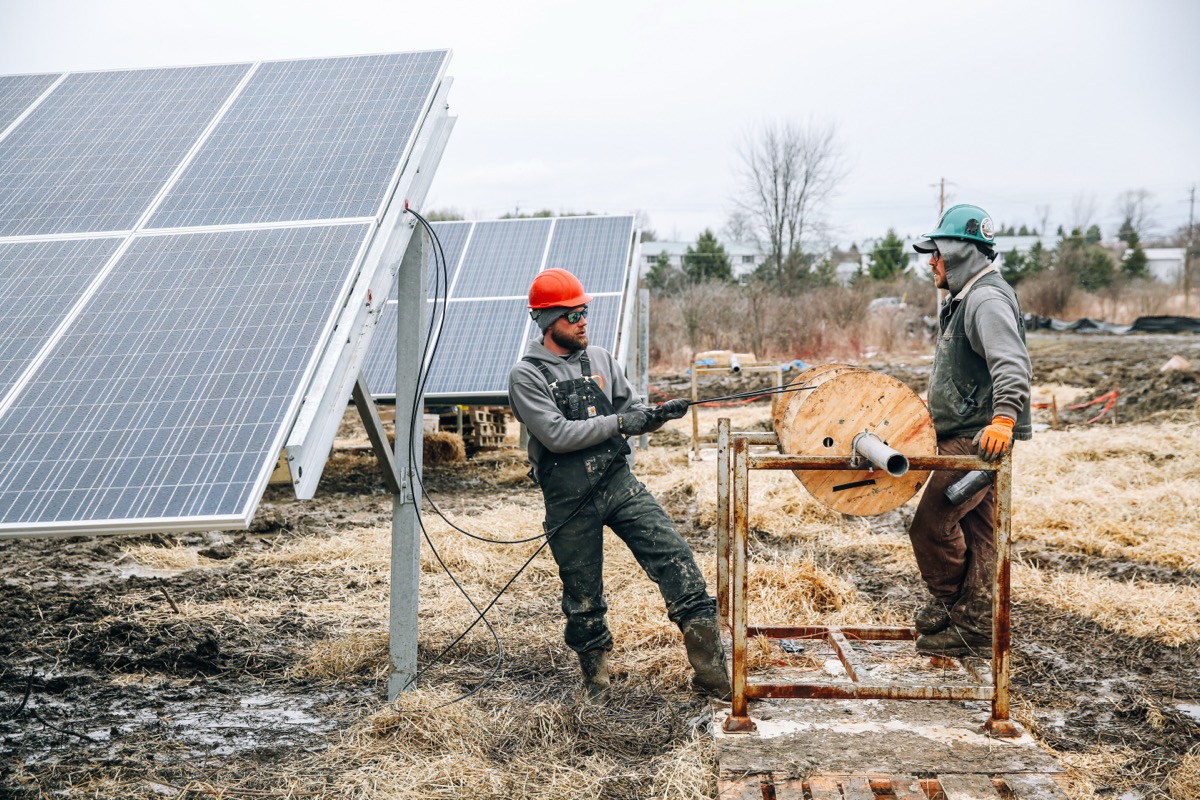
Quick Answer
The best solar installer software in 2026 is SubcontractorHub for installers who need a unified platform for proposals, sales pipeline, financing, and post-sale project management. Unlike design-only tools like Aurora Solar or generalist platforms like Jobber, SubcontractorHub combines AI-powered quoting (EasyQuote), a built-in solar CRM (Sales Velocity), and full installation project management in one platform — cutting the multi-tool chaos that slows growing solar teams down. Book a demo to see it in action.
The solar installation business has gotten more competitive every year. Crews are busier, margins are tighter, and homeowners are better informed. The installers pulling ahead aren't necessarily the ones with the best panels or the lowest price — they're the ones who close deals faster, run installs without chaos, and get referrals because their customer experience is clean.
The right software is the difference. But the solar software market is fragmented: some tools are built for design, some for sales, some for project management, and almost none do all three well. This guide cuts through the noise, compares the leading platforms head-to-head, and tells you exactly which tool fits which type of solar installer.
What Solar Installer Software Actually Needs to Do
Most solar software gets reviewed by its strongest feature. A design tool gets praised for its 3D shading analysis. A CRM gets praised for its pipeline views. But a solar installation business is not one function — it's a full lifecycle from first knock to activated system.
Complete solar installer software should handle all of these:
- Lead capture and CRM lead management: track every prospect from first contact through site survey, proposal, financing, and signed contract without leads falling through the cracks
- Proposal generation: fast, accurate, branded proposals reps can present on-site — not PDFs emailed three days after the appointment (see our solar proposal software guide for a full breakdown)
- Financing integrations: present monthly payment options and submit lender applications without leaving the platform
- Post-sale project management: permit tracking, crew scheduling, equipment delivery, inspection milestones, and interconnection coordination in one place
- Field scheduling and dispatch: assign crews to jobs, sequence installation stages, and give field teams real-time job details from their phones
- Customer communication: automated progress updates that keep homeowners informed without your team fielding daily status calls
- Rep performance visibility: manager dashboards showing each rep's pipeline, close rate, and revenue — not buried in spreadsheets
Very few platforms cover all of this. Most cover two or three pieces well and leave the rest to Zapier integrations or manual workarounds. That gap is exactly where SubcontractorHub's solar platform was designed to compete.
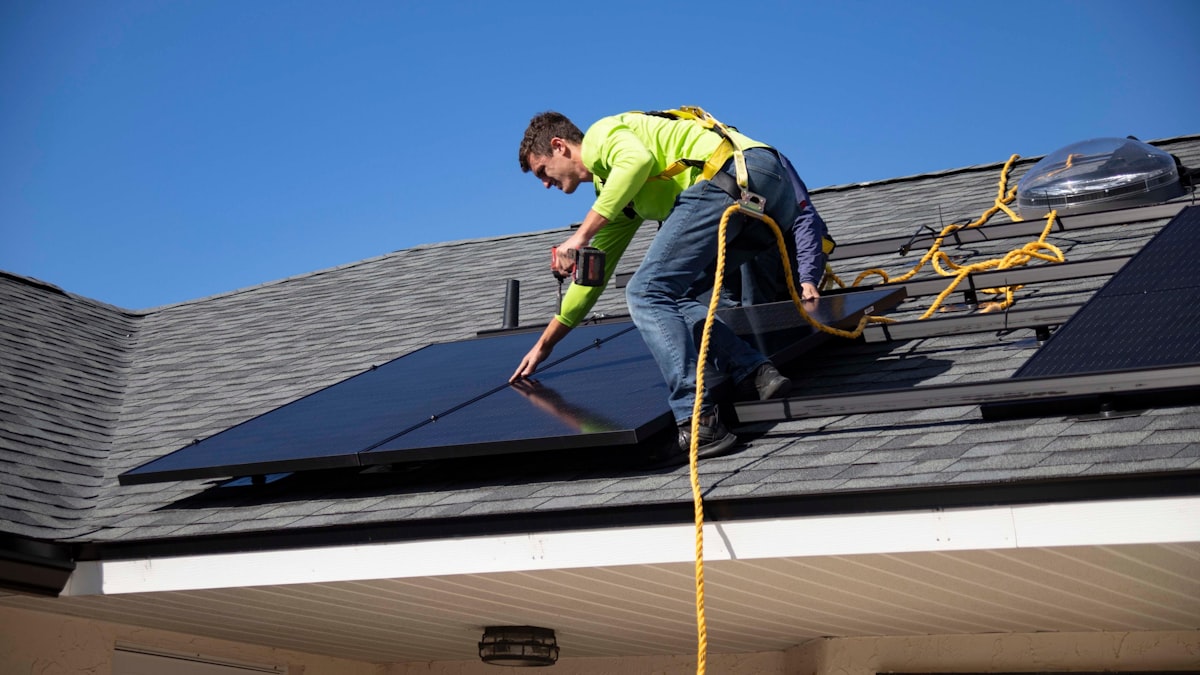
The best solar installer software lets reps generate proposals and collect signatures on-site during the homeowner consultation.
5 Questions to Ask Before You Buy Solar Installer Software
- Does it handle the full lifecycle or just part of it? Design tools, CRMs, and project management platforms are often sold as “complete solutions” when they only handle one slice. Ask: can a rep go from capturing a lead to generating a signed proposal to tracking the installation all in the same login?
- What does the customer-facing proposal experience look like? A proposal a homeowner can sign on their phone at the kitchen table closes in the first visit. A PDF they have to print and return does not. Ask to see live proposal output before you commit to any platform.
- How does financing work inside the platform? Financing is one of the highest-friction steps in solar sales. If your reps have to exit the platform, log into a lender portal, re-enter customer data, and come back to close, you are losing deals. Ask whether financing applications are embedded.
- What happens after the sale? The sold-to-installed handoff is where solar installations break down. Does the CRM auto-create a project record? Does it carry over the customer data, system specs, and proposal details automatically, or does someone re-enter everything?
- Will your reps actually use it in the field? A tool your sales team doesn't use is a tool that generates no data. If the mobile experience is clunky, your pipeline data will always be incomplete. Ask to see the mobile app before you sign a contract.
SubcontractorHub
See How Top Contractors Close More Jobs
AI proposals, sales pipeline, and project management — all in one platform.
- ✓AI-powered proposals in the field
- ✓CRM built for contractor sales
- ✓Project tracking from sale to install
30 minutes. No commitment.
Head-to-Head Comparison: Top Solar Installer Software in 2026
Platform-by-Platform Breakdown
Aurora Solar
Pros: Industry-leading solar design software with shading and energy modeling; widely adopted with strong integrations to permit packages and utility databases; AI roof detection reduces site survey time significantly.
Cons: Design-first tool — CRM and pipeline management are basic and not built for sales teams managing high lead volumes; no native post-sale project management; pricing at $149+/user/month adds up fast for larger teams. Best paired with a dedicated operations platform rather than used as a standalone business management tool.
OpenSolar
Pros: The most full-featured free option in the market in 2026; solid 3D design, shading analysis, and proposal generation with no licensing fees for core features; good for installers doing lower volume who need design capability without the per-seat cost of Aurora.
Cons: Free tier has limitations as you scale; CRM and pipeline features are minimal; no real installation project management; the business model pushes toward third-party integrations for anything beyond design. Like Aurora, it's a solar design software that becomes a liability when your team grows and needs full ops visibility.
Jobber
Pros: Strong service dispatch and scheduling; large user base; good mobile app; reasonable pricing for small teams; solid for residential service calls and repeat maintenance.
Cons: Built for service businesses — HVAC tune-ups, plumbing calls, lawn care — not for solar installation projects that run 4–12 weeks with permit milestones, crew sequencing, and equipment delivery coordination. Solar proposal generation is not native; financing is not embedded; rep performance dashboards for sales managers are limited. See our full Jobber alternatives breakdown.
ServiceTitan
Pros: Comprehensive for large multi-trade businesses; strong dispatch and technician management for high-volume service operations; enterprise reporting.
Cons: Expensive and heavyweight for solar-first installers; solar-specific workflows (financing approval tracking, permit coordination, interconnection milestones) are not native; better suited to HVAC and plumbing service businesses than solar installation companies. See our full ServiceTitan alternatives breakdown.
Choosing the best solar installer software means every rooftop project stays on track from permit to activation.
Why SubcontractorHub Wins for Solar Installation Operations
Most solar installers in 2026 are running three or four separate tools: a solar design software for proposals, a CRM to manage their pipeline, a project management app to track installs, and something else for financing. Every handoff between those tools creates friction — re-entered data, missed updates, customer information that lives in four different places.
SubcontractorHub was built to eliminate that stack. When evaluating the best solar installer software for your team, the key question is whether your chosen platform can handle CRM lead management, proposal generation, job costing, and field scheduling dispatch all in one login — or whether you're stitching together tools that were never designed to work together.
EasyQuote generates AI-assisted solar proposals in minutes. A rep can sit with a homeowner, pull up system specifications, pricing, and financing options, and produce a signed agreement before leaving the kitchen table — without calling the office or switching to a different app.
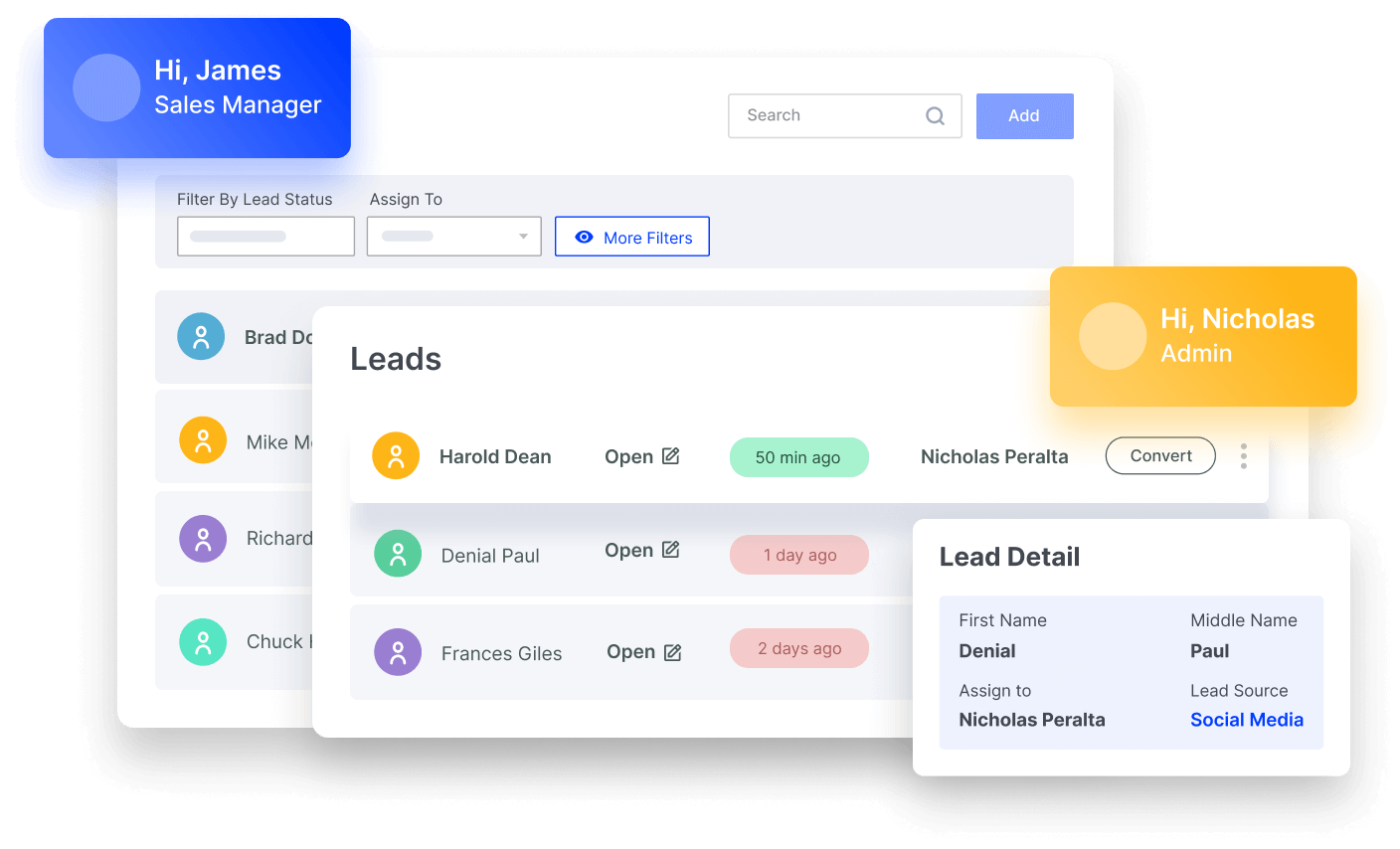
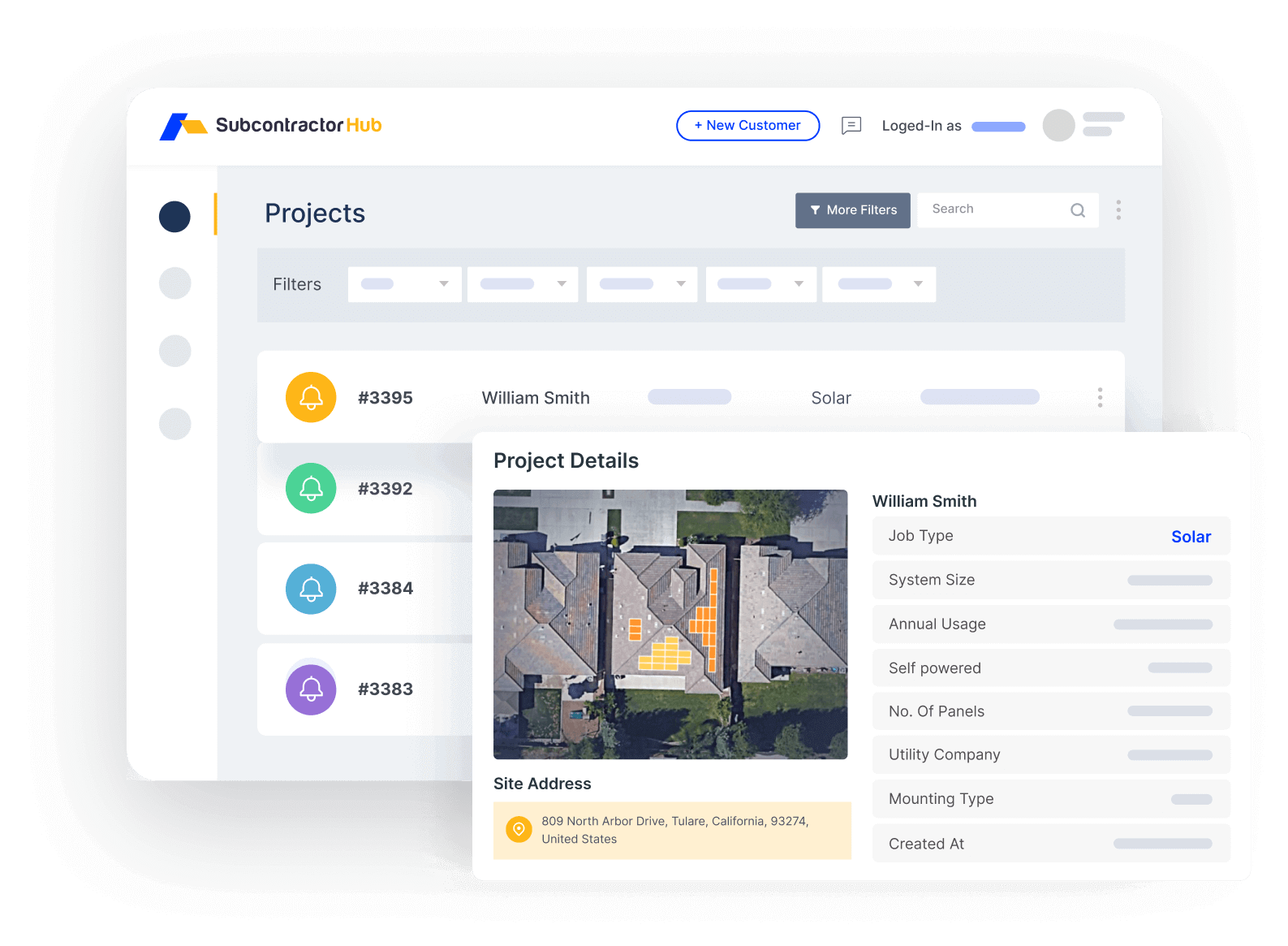
Sales Velocity gives sales managers a live view of every rep's pipeline — open leads, proposals sent, financing applications submitted, and contracts signed. No more chasing reps for updates or piecing together status from text messages.
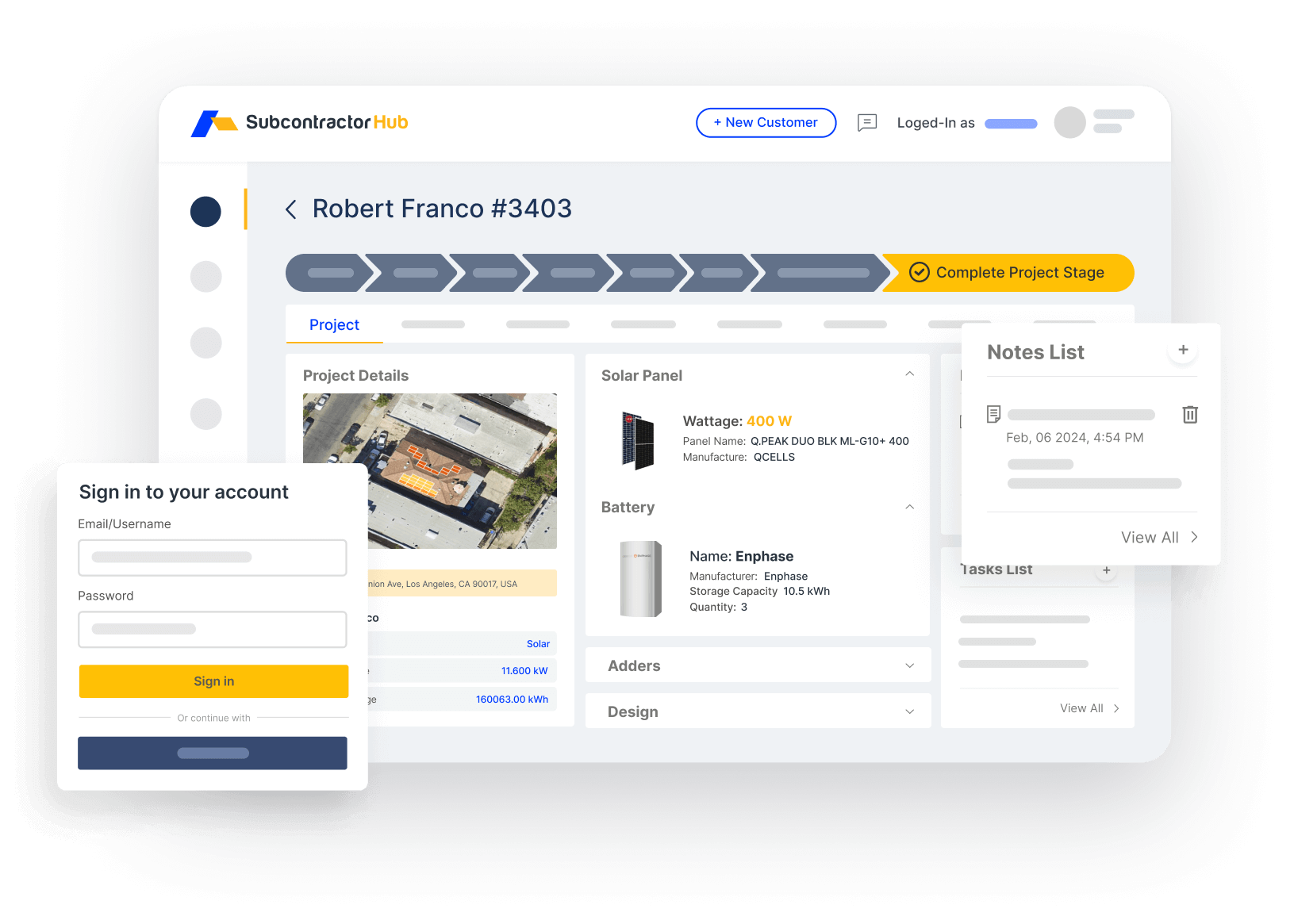
When a deal closes, the job flows directly into installation project management with all customer data, system specs, and proposal details intact. No re-entry. No handoff email. Just a project that's ready to be permitted, scheduled, and built. Invoicing and job costing are handled inside the same workflow, so you always know where each project stands financially.
When SubcontractorHub Is (and Isn't) the Right Call
SubcontractorHub is the right choice if:
- Your team does 10+ installs per month and the post-sale chaos is costing you time
- You have a sales team of 2+ reps whose pipeline you need visibility into
- You're tired of paying for 3-4 tools that don't talk to each other
- You offer roofing or HVAC alongside solar and need one platform for all three trades
- Financing is a significant part of how your customers pay and you want it in the proposal flow
You may want a different tool if:
- You are a solo installer doing fewer than 5 jobs per month — a free tool like OpenSolar may be sufficient until you scale
- Your primary need is complex structural engineering or shading energy modeling for permit-ready drawings — Aurora Solar remains the design standard
- You are exclusively doing commercial utility-scale projects where construction management platforms like Procore or Sitemark are better fits
One Platform for Solar, Roofing, and HVAC
More solar contractors are expanding into roofing and HVAC. Homeowners replacing a roof often go solar at the same time. HVAC upgrades pair with solar to maximize the energy savings pitch. Running those trades through separate tools creates exactly the kind of operational confusion that loses jobs and damages reputation.
SubcontractorHub was designed for solar, roofing, and HVAC in a single platform. Reps can quote a solar + roofing bundle in one proposal. Managers see all three pipelines in one dashboard. Project management handles all three job types under the same workflow.
No other solar installer software in 2026 handles multi-trade operations this cleanly. If your business is growing beyond pure solar, this is the platform worth evaluating first.
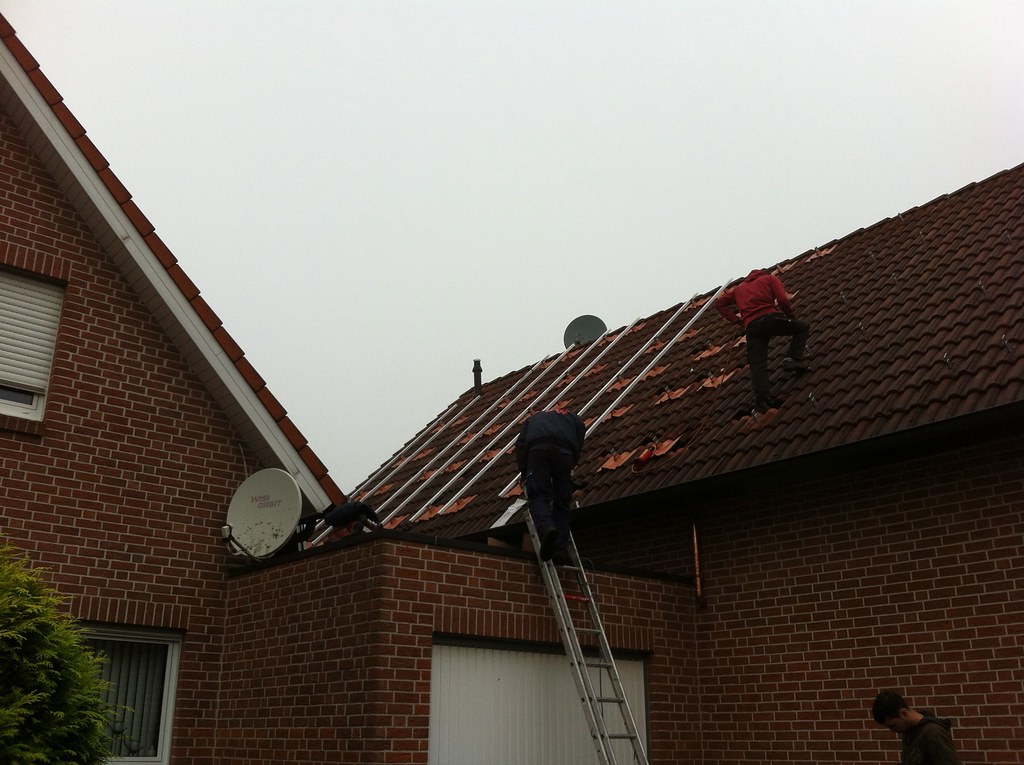
Solar installer software with built-in field scheduling and dispatch keeps crews moving and installs on schedule.
Ready to See It in Action?
Book a 30-minute demo and see how SubcontractorHub runs the full solar installation lifecycle — from first lead to activated system.
Book a DemoDesign, Permitting, Operations: The Three Layers Solar Software Splits Into
The most common mistake in a solar software search is comparing tools that were never competing in the first place. Ask “what is the best software for solar installers” and you get a list that mixes three genuinely different product categories. Knowing which layer you are actually short on saves months.
- Design and layout optimization. Aurora, OpenSolar, HelioScope, and PVcase live here. They model irradiance, shade, panel layout, and production estimates, and they output a proposal-ready design. This layer is where accuracy in the first 20 minutes of a deal is won, and none of these tools are trying to run your business.
- Permitting and interconnection. The layer buyers most often forget to budget for. Permit packet assembly, AHJ-specific plan sets, utility interconnection applications, and inspection scheduling are the single largest contributor to soft costs on a residential job — frequently more total labor hours than the install itself. Some design platforms bolt on permit-plan generation; dedicated permitting services handle the submission work outright.
- Operations, CRM, and financing. Where the job actually gets sold, scheduled, built, and paid for: pipeline, proposals, contracts and e-sign, change orders, crew scheduling, job costing, and embedded financing. This is the layer SubcontractorHub occupies, and it is the one that determines whether a design ever becomes revenue.
Very few contractors need all three from one vendor, and the ones who try usually end up with a strong layer and two weak ones. The practical pattern that works: pick the best design tool for your market, decide whether permitting stays in-house or gets outsourced, and then choose an operations platform that integrates cleanly with both rather than trying to replace them.
Where Solar Soft Costs Actually Hide
Soft costs — everything that is not panels, inverters, racking, and install labor — account for well over half the price of a residential solar system in the US, and software either compounds them or cuts them. The four that respond fastest to a tooling change:
- Customer acquisition. Slow proposal turnaround loses deals to whoever quoted first. Same-day, financing-attached proposals close materially better than a PDF that arrives three days later.
- Permitting and inspection labor. Rework from incomplete packets and missed AHJ requirements is pure margin loss, and it is almost always a document-control problem rather than an engineering one.
- Re-keying data between systems. Every hand-off between a design tool, a spreadsheet, a CRM, and an accounting package is an opportunity to introduce an error someone gets paid to find later.
- Financing friction. A homeowner who has to leave the kitchen table to apply for financing is a homeowner who has time to get a second quote. Embedded lender integrations exist to close that gap — see our GoodLeap integration and the broader contractor financing options.
Frequently Asked Questions
What is the best solar installer software in 2026?
For solar installers who need proposals, CRM, and project management in one platform, SubcontractorHub is the top choice. For pure design and system sizing, Aurora Solar is widely used. For free proposal generation, OpenSolar works well for volume-focused installers. The right answer depends on whether your primary bottleneck is closing deals or managing installs.
What features should solar installer software include?
Complete solar installer software should cover: lead and pipeline management, AI-powered proposal generation, financing partner integrations, permit and milestone tracking, crew and schedule management, customer-facing progress updates, and photo documentation. Tools that only handle design or only handle operations will require your team to maintain multiple platforms — creating data gaps and re-entry overhead.
How is SubcontractorHub different from Aurora Solar or OpenSolar?
Aurora Solar and OpenSolar are design-first tools built for producing accurate system designs and proposals. SubcontractorHub is an operations platform — it handles the sales CRM, AI-powered proposals, financing integrations, and the full post-sale installation workflow. Many solar teams use a design tool alongside SubcontractorHub for permit-ready drawings, then manage everything else — pipeline, project tracking, crew scheduling — inside SubcontractorHub.
Can SubcontractorHub handle both residential and commercial solar?
Yes. SubcontractorHub supports residential and commercial solar workflows including multi-phase project management, milestone-based progress tracking, permit filing coordination, crew scheduling, and multi-trade jobs that combine solar with a roofing replacement or HVAC upgrade.
Does solar installer software include financing?
SubcontractorHub includes financing partner integrations so reps can present monthly payment options inside the proposal and submit applications without leaving the platform. This is one of the most underrated features in the solar sales process — removing the friction of switching to a lender portal mid-appointment directly improves close rates.