
Best Solar Proposal Software in 2026: What to Use and What to Skip
By SubcontractorHub Editorial Team·Published June 15, 2026 · Updated August 2026
The solar proposal is the moment the sale either happens or dies. Customers don't sign because of a beautiful panel array or a strong close. They sign because the numbers made sense, the financing felt manageable, and the rep answered every question before they asked it. The right solar proposal software makes all three of those things faster and more consistent.
This guide covers the real options available in 2026: what each tool does well, where it falls short, and which one belongs in your sales toolkit depending on how your business operates today. If you want to see how SubcontractorHub approaches this end-to-end, SubcontractorHub's solar software page walks through the full platform.
Quick Answer
The best solar proposal software in 2026 is SubcontractorHub (EasyQuote), because it generates AI-assisted proposals in the field with built-in financing, then connects directly to installation project management so the proposal data never needs to be re-entered. Aurora Solar is the best pure design tool, but it stops at the proposal stage. Standalone tools like Scoop Solar are strong for sales teams that already have a separate ops workflow.
What Solar Proposal Software Needs to Actually Do
Most solar teams underestimate how much the proposal tool affects their close rate. A slow or manual proposal process creates four specific problems:
- Delays between site visit and proposal delivery. Every hour between a site visit and a delivered proposal costs close rate. Studies from the field service industry consistently show that same-day proposals close at 30–50% higher rates than proposals delivered 24–48 hours later.
- Financing friction at the signing step. Most solar jobs involve third-party financing. If the rep has to send the customer to a separate loan application after the proposal, you introduce a drop-off point that loses a material percentage of deals. Financing needs to live inside the proposal workflow.
- Manual re-entry after the sale. When a proposal is built in one tool and the installation is managed in another, someone has to manually re-enter the job details: system size, equipment specs, financing terms, site address, and customer contact. This is both a time cost and an error source.
- Inconsistent proposal quality across reps. When each rep builds proposals from scratch in PowerPoint or a shared Google Drive template, quality varies by rep. Purpose-built proposal software enforces a consistent format and ensures no required fields are skipped.
The best solar proposal software eliminates all four problems. Here's how the major options in 2026 measure up.
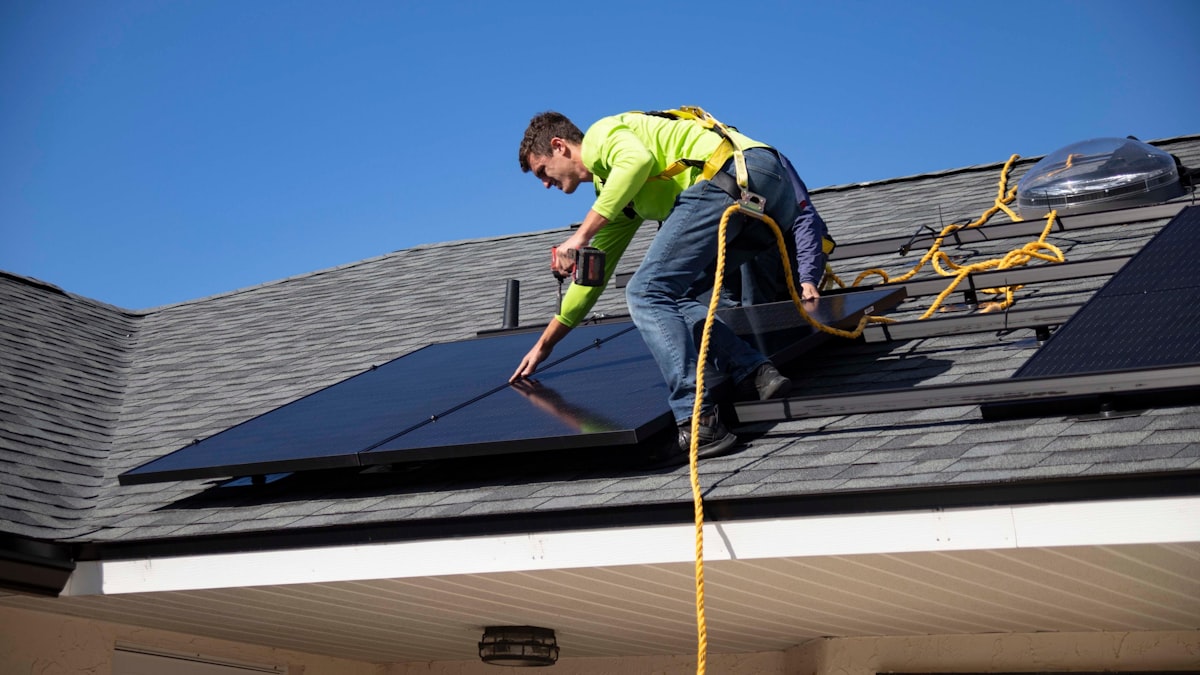
Modern solar proposal software lets reps generate solar quotes and walk through financing options with homeowners on the spot.
SubcontractorHub
See How Top Contractors Close More Jobs
AI proposals, sales pipeline, and project management — all in one platform.
- ✓AI-powered proposals in the field
- ✓CRM built for contractor sales
- ✓Project tracking from sale to install
30 minutes. No commitment.
Solar Proposal Software Comparison: 2026
* Competitor feature data sourced from public product pages and user reviews. Verify current capabilities directly with each vendor.
Platform-by-Platform Breakdown
SubcontractorHub (EasyQuote)
Best for: Solar contractors who want to propose in the field, integrate financing at the point of sale, and avoid re-entering job data when the project moves to installation.
Pros: EasyQuote generates a complete solar proposal in under 10 minutes using AI-assisted system sizing. Financing from 10+ lenders is embedded directly in the proposal — customers apply and get approved without leaving the flow. The proposal connects directly to project management in the same platform, so permit, crew, and inspection milestones pick up immediately from the data the rep entered in the field. Works for roofing and HVAC proposals too, so multi-trade companies run one tool.
Cons: Not the right tool for a solo rep who primarily relies on a separate design software. The value compounds with a team of reps where proposal consistency, pipeline visibility, and post-sale coordination matter.

EasyQuote: complete solar proposals built in under 10 minutes in the field — system sizing, financing, and e-signature on one screen
Aurora Solar
Best for: Solar design teams that need high-accuracy system design with detailed shading analysis, energy production modeling, and engineering-grade outputs.
Pros: Industry-leading design accuracy. Aurora functions as dedicated solar design software, producing precise PV system design layouts, energy yield estimates, and shading analysis reports that engineering teams rely on. Strong visual proposal output for customers who want to see a realistic rendering of their roof. Wide adoption means customers may already recognize the format.
Cons: Design-first workflow takes longer than field-ready quoting tools. No installation project management. The proposal stops at signing, requiring a separate CRM and project management tool for everything that follows. Pricing is designed for established installers with design staff.
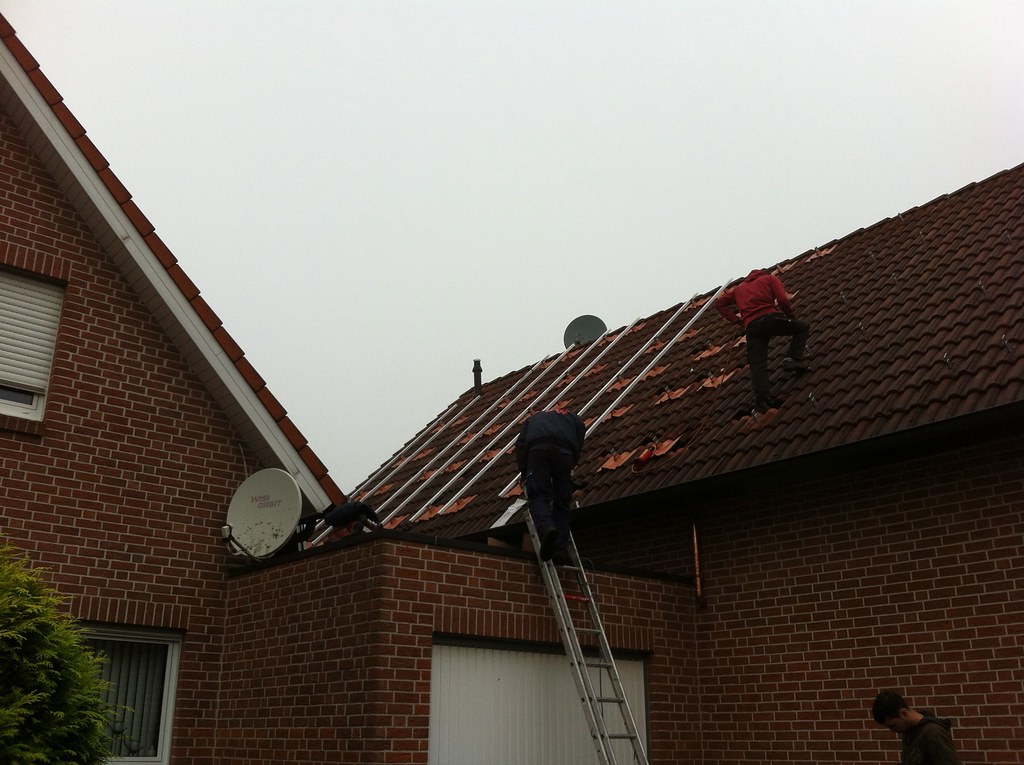
A well-structured solar proposal software workflow bridges the gap between PV system design and a smooth installation handoff.
Scoop Solar
Best for: Sales-focused solar teams that want a purpose-built pipeline and proposal tool and are already satisfied with their separate ops workflow.
Pros: Purpose-built for solar sales with strong lead management, pipeline tracking, and proposal features. Solar-native terminology and workflow stages. Easier to adopt than generic CRMs for solar-specific use cases.
Cons: Sales-only. After the contract is signed, your ops team works in a different system. This is the handoff gap that costs solar companies jobs, customer satisfaction scores, and crew efficiency every week.
Manual Proposals (PowerPoint / Google Slides)
Best for: Single-person operations quoting fewer than five jobs per month with no immediate plans to scale.
Cons: Everything. Quality varies by rep. No financing integration. Proposals take 45–90 minutes each. No pipeline tracking. No post-sale handoff. This is not a real business system — it's a placeholder until you implement one.
Why the Post-Sale Handoff Is the Real Differentiator
Most solar proposal software comparisons focus entirely on the proposal itself: design quality, presentation format, financing options. Those things matter. But the cost that goes unmeasured is what happens after the customer signs.
In a typical solar operation using separate sales and ops tools, closing a deal triggers a manual handoff process. The rep exports the proposal data, attaches it to an email, or logs it in a shared spreadsheet. The project manager rebuilds the job record in the ops system: same customer name, same address, same system specs, same financing terms — re-entered from scratch. By the time the installation hits week two, there are often two versions of the job record in circulation, and no one is fully confident which one is current.
SubcontractorHub eliminates this entirely. When a rep closes a job in the Sales Velocity pipeline, a project record opens in project management automatically — same data, same platform, same login. There is no export, no re-entry, and no version control problem. Permit status, crew scheduling, and customer updates flow from the same record the rep built in the field.
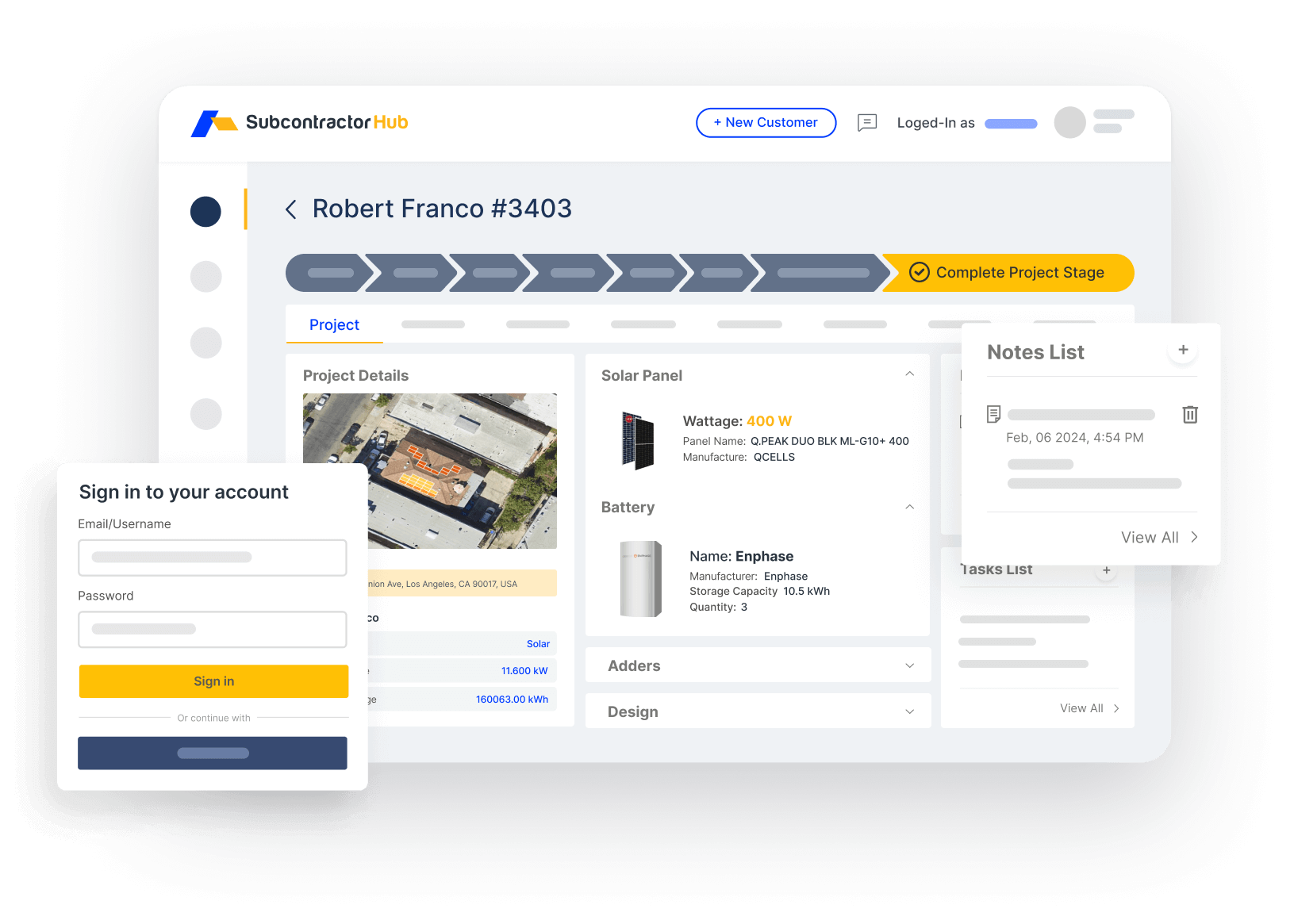
Sales Velocity: every solar proposal tracked through the pipeline — reps, stages, and close rates visible to managers in real time
Financing Integration: The Feature Most Teams Undervalue
Solar is almost always a financed purchase. The question isn't whether your customer needs financing — it's whether they can access it at the moment of decision or whether they have to go through a separate application process that introduces a 24–72 hour gap before a decision.
The best solar proposal software handles financial modeling inside the proposal itself — showing customers month-by-month payment breakdowns, loan term comparisons, and projected energy savings side by side with system cost. This is what turns a site visit into a signed contract.
SubcontractorHub integrates with over 10 financing partners — including Sungage, LightReach, and IGS Solar — directly inside the proposal workflow. Customers see monthly payment options alongside the total system cost, apply in the same session, and get a credit decision before the rep leaves the driveway.
This matters because the financing step is where deals stall. When a customer says “send me the loan link and I'll look at it tonight,” that is not a close. Embedded financing turns “I'll think about it” into “I'm approved — let's sign.”
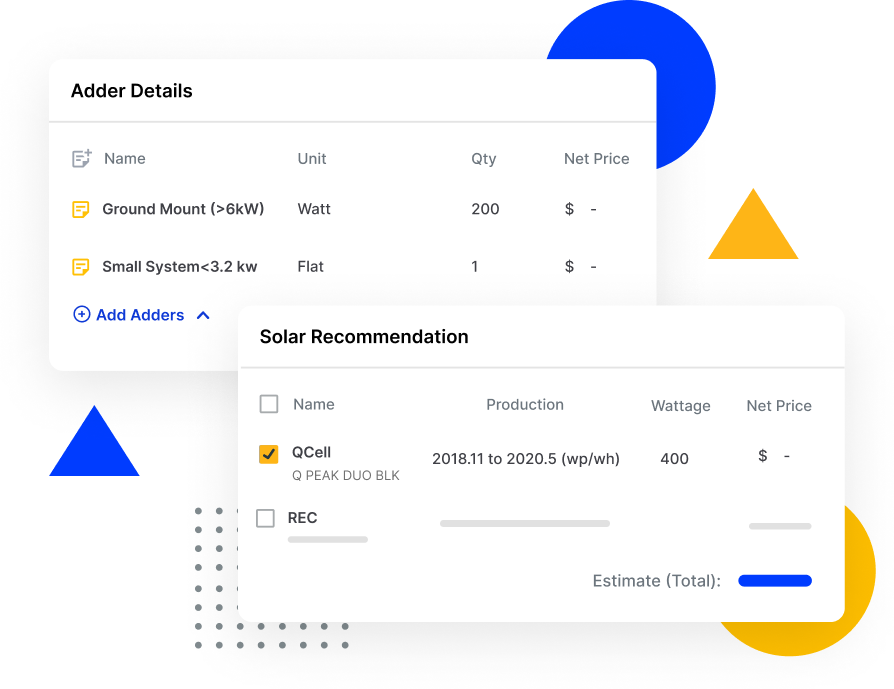
EasyQuote: solar system adders with financing — customers see monthly payment impact of each upgrade before signing
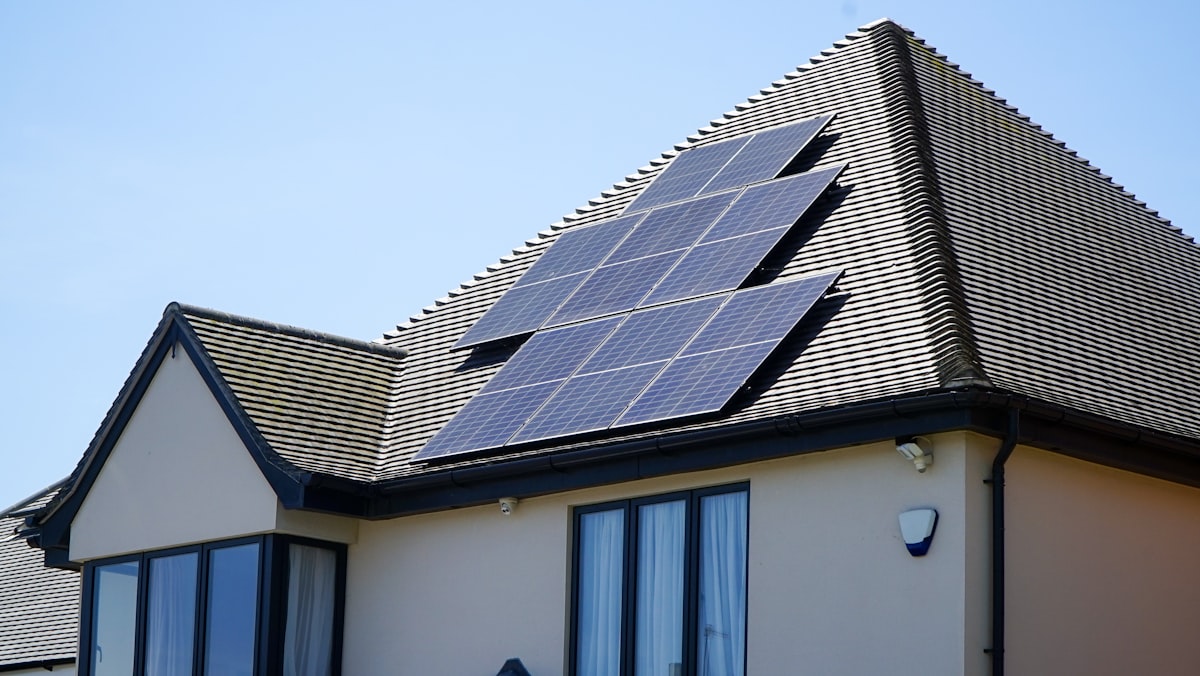
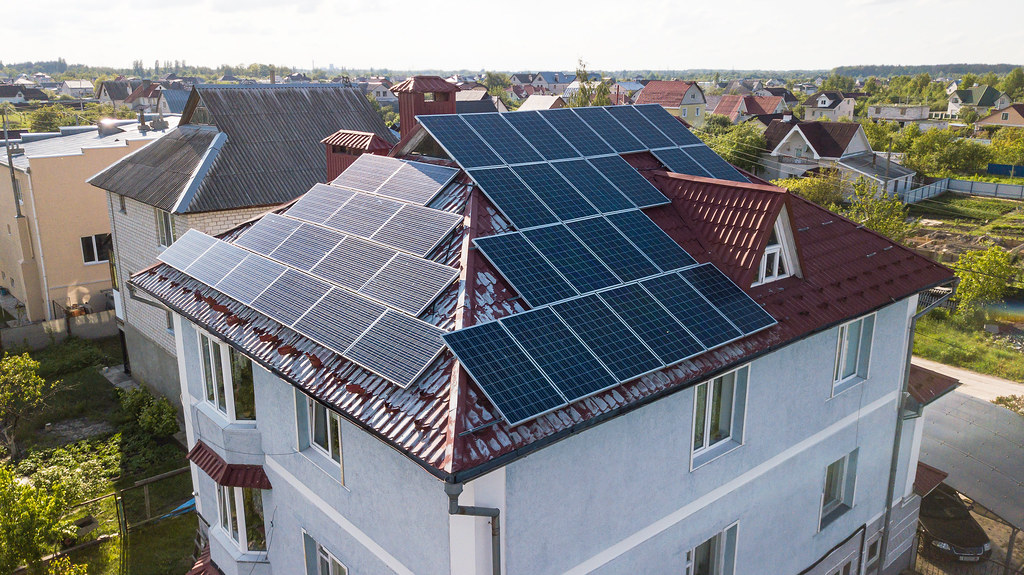
The right solar proposal software connects the aerial design view to a signed customer agreement in one seamless workflow.
See EasyQuote in Action
Book a 30-minute demo. We'll build a live solar proposal from scratch and walk through financing integration and the post-sale project handoff.
Book a Free DemoCommercial and C&I Solar Proposals: Where Residential Tools Break Down
Almost every “best solar proposal software” comparison online — including most of the tools in it — is written for residential rooftop work: a homeowner at the kitchen table, a consumer loan, a same-day signature. If you bid commercial and industrial (C&I) projects, that is the wrong shape entirely. The proposal is a bid document, the buyer is a committee, and the numbers that decide the deal are not the ones a residential tool calculates.
Here is what actually changes when the project moves from a 9 kW roof to a 500 kW carport or a 2 MW ground-mount:
- The savings model is demand charges, not kWh offset. Residential proposals compare a utility bill to a loan payment. C&I customers are billed on time-of-use energy plus a demand charge set by their peak 15-minute interval — sometimes with a demand ratchet that holds that peak for a year. A proposal that shows only annual kWh offset misses the number the facility manager cares about, and it will lose to a competitor who models the rate schedule properly.
- Financing has no FICO score in it. There is no consumer lender. C&I deals close on cash-plus-incentives, a power purchase agreement (PPA), an energy services agreement, a capital lease, or C-PACE. The economics run on the federal ITC, MACRS accelerated depreciation, and any state or utility incentive — which means the proposal needs an after-tax cash flow and payback schedule, not a monthly payment box.
- Interconnection is a schedule risk you have to disclose. Residential systems clear net-metering paperwork in weeks. A C&I system may need a utility interconnection study, a single-line diagram stamped by a PE, and a queue position that adds months. Commercial buyers expect that timeline and its contingencies in the proposal; leaving it out reads as inexperience.
- You are responding to a spec, not presenting a design. Plan-and-spec RFPs come with bid forms, alternates, unit pricing, allowances, and often a bid bond and a hard submission deadline. Aerial-imagery auto-design does not answer any of that. The deliverable is a bid package assembled to someone else's format.
- Public and institutional work adds labor compliance. School districts, municipalities, and federally funded projects bring prevailing wage and Davis-Bacon requirements with certified payroll reporting. Those wage rates have to be priced into the bid up front — discovering them after award turns a won project into a margin problem.
- You get paid on a schedule of values, not at completion. Commercial solar bills progressively against AIA G702/G703 pay applications tied to a schedule of values, with 5–10% retainage held until closeout. The proposal you sign becomes the SOV you invoice from, so the line-item structure you set at bid time determines whether billing is straightforward or a monthly argument.
- The sale does not end at signature. C&I buyers negotiate production guarantees and multi-year O&M or monitoring contracts alongside the install. Those obligations belong in the proposal, and they need to survive into the operations system after the deal closes.
The practical consequence: most solar teams that do both residential and commercial end up running the commercial side in spreadsheets, because the proposal tool cannot express a schedule of values, an alternate, or an after-tax payback. That is workable at two bids a quarter and a liability at twenty.
SubcontractorHub is built around the mixed-portfolio case. Residential quotes run through EasyQuote with consumer financing attached, while commercial bids use line-item estimates that carry into progress billing and change orders in project management — the same records the crew and the office work from. If you run roofing or HVAC alongside solar, those bid the same way in the same platform rather than in a second system. Related reading: progress billing and schedule of values and managing change orders.
What to Avoid When Choosing Solar Proposal Software
- Tools that require a design team before a proposal can be sent. If your reps have to submit a site survey to a design team and wait 24 hours before a proposal can go out, you are losing same-day close opportunities every single week. Field-ready quoting should be the standard in 2026.
- Proposal tools with no financing integration. If a customer has to leave the proposal flow to apply for financing, you have introduced a drop-off point. Every extra step between a verbal “yes” and a signature costs deals.
- Sales-only tools with no ops handoff. If your solar proposal software's data doesn't follow the job into installation, someone on your team is re-entering it. That is a real cost — both in admin time and in errors that cause delays, customer complaints, and rework.
- Solar-only tools if you run other trades. If you also do roofing or HVAC, a solar-only proposal tool means a second (or third) tool for those trades. Running proposals for all three verticals from one platform is both operationally cleaner and easier for your reps to learn.
Related Guides
If you're evaluating the broader software stack alongside proposal tools:
- Best CRM for Solar Contractors: Full comparison of solar CRM platforms for managing leads, pipelines, and rep performance.
- Sales Velocity: How SubcontractorHub's pipeline CRM connects to EasyQuote and project management.
- Solar Quoting Software: Turning a design and a financing option into a priced, signable quote on site.
- Project Management: How the post-sale handoff works after a proposal closes in SubcontractorHub.
- ServiceTitan Alternatives: For solar teams evaluating enterprise platforms vs. purpose-built options.
- Best Roofing CRM Software: If you run roofing alongside solar, see how the same platform handles both trades.
- Best Solar Sales Software in 2026: Comparison of the top solar sales tools for managing reps, pipelines, and close rates.
- Best Solar Installer Software in 2026: Full breakdown of software built for solar installation teams, from permitting to final inspection.
Frequently Asked Questions
What is the best solar proposal software in 2026?
SubcontractorHub (EasyQuote) is the best solar proposal software in 2026 because it combines AI-assisted proposal generation, built-in financing from 10+ lenders, and a direct handoff to installation project management — all in one platform. Reps can produce a complete proposal in under 10 minutes in the field.
What should solar proposal software include?
Solar proposal software should include AI or design-tool integration for system sizing, built-in financing presented at signing, branded digital proposal output, e-signature capability, and a direct handoff to project management so proposal data doesn't need to be re-entered after the sale.
How long does it take to create a solar proposal with proposal software?
With SubcontractorHub (EasyQuote), most reps produce a complete branded proposal in under 10 minutes in the field. Manual proposals built in PowerPoint typically take 45–90 minutes per quote and introduce frequent errors.
Can solar proposal software integrate with financing?
Yes. SubcontractorHub integrates with Sungage, LightReach, IGS Solar, Enfin, and other major solar financing partners directly inside the proposal workflow. Customers can apply and get approved without leaving the proposal session.
Is solar proposal software different from solar CRM software?
Solar proposal software focuses on the quoting and presentation step. Solar CRM software manages the broader pipeline: leads, follow-ups, and close tracking. SubcontractorHub combines both: the proposal tool (EasyQuote) sits inside the sales pipeline (Sales Velocity), so proposal data flows directly into the pipeline record.
What is the best commercial solar proposal software?
Commercial and C&I solar proposals need capabilities residential tools do not have: demand-charge and time-of-use savings modeling, after-tax economics using the ITC and MACRS depreciation, PPA and C-PACE structures instead of consumer loans, interconnection study timelines, and bid packages that follow a plan-and-spec RFP format. SubcontractorHub handles commercial bids as line-item estimates that carry into AIA G702/G703 progress billing against a schedule of values with retainage, while residential quotes still run through EasyQuote with consumer financing attached — so mixed-portfolio teams do not need a second system.
How is a commercial solar proposal different from a residential one?
A residential solar proposal compares a utility bill to a monthly loan payment for a single homeowner deciding on the spot. A commercial proposal is a bid document for a committee: it models time-of-use rates and demand charges rather than kWh offset, presents after-tax payback using the ITC and MACRS instead of a consumer payment, discloses utility interconnection study timelines, responds to RFP bid forms with alternates and unit pricing, prices prevailing wage or Davis-Bacon labor on public work, and sets the line-item structure used for progress billing after award.
Solar Software, Proposal Tools, Contractor Sales