
Best Solar Sales Software in 2026: A Contractor's Guide
By SubcontractorHub Editorial Team·Published June 2026 · Updated September 2026
Quick Answer
The best solar sales software in 2026 is SubcontractorHub for contractors who want AI-powered proposals, pipeline management, embedded financing, and project management in a single platform. Unlike solar-only tools, SubcontractorHub handles roofing and HVAC in the same dashboard — so contractors expanding into multiple trades don't need to manage separate systems. If your team is losing deals to slow quotes or a chaotic handoff from sales to installation, book a demo to see how it works.
The solar industry has one of the longest and most complex residential sales cycles in home improvement. A typical solar deal involves multiple site visits, utility bill analysis, design and permitting timelines, financing discussions, and a proposal that has to be accurate enough for the customer to commit $25,000–$80,000 on the spot. The wrong software at any step of that process adds days to the sales cycle and bleeds close rates.
This guide breaks down what the best solar sales software should do, compares the platforms contractors are actually using in 2026, and tells you exactly when SubcontractorHub is — and isn't — the right call.
What Solar Sales Software Should Actually Do
Solar sales is not the same as inside sales. Your reps are driving to homes, sitting across from homeowners, and making a pitch that needs to hold up under real-time objections about price, financing, roof condition, and utility savings. Whether your team does door-to-door solar sales or works exclusively with booked appointments, the software that supports the field sales process needs to do more than track contacts.
A purpose-built solar sales platform should handle:
- On-site proposal generation: reps should be able to build an accurate, branded solar proposal at the homeowner's kitchen table — not back at the office two days later
- Embedded financing options: customers need to see monthly payment scenarios in the same proposal, not as a separate follow-up from a financing partner
- Sales pipeline CRM: managers need a real-time view of every lead, proposal out, and financing application — without chasing reps for updates. A solar CRM built for field teams surfaces the right data at the right stage, so nothing slips between follow-ups
- Lead management and sales automation: from the first knock to a signed contract, lead management should be automatic — routing new leads to reps, triggering follow-up tasks, and keeping the pipeline clean without manual data entry
- Seamless handoff to operations: when a deal closes, all the job details — scope, system design, customer info, financing terms — should flow directly into project management without re-entry
- Multi-trade support: solar contractors increasingly add roofing and HVAC; the platform should handle all three without requiring a separate CRM for each trade
Most tools in the market do one or two of these well. The platforms that do all of them in a single login are rare — and that gap is exactly where SubcontractorHub's solar platform was built to compete.
5 Things to Evaluate Before You Buy Solar Sales Software
- Can reps generate a proposal on-site, without calling the office? If the answer is no, you're leaving close rate points on the table. Every hour between the first meeting and the proposal is an hour for the homeowner to talk to a competitor.
- Is financing built into the proposal or bolted on afterward? Presenting financing as a follow-up step loses deals. The best solar sales software lets reps show monthly payment options inside the proposal and handle the application before they leave the driveway.
- How does the sold-job handoff actually work? Ask the vendor to walk you through exactly what happens the moment a contract is signed. If the answer involves exporting a spreadsheet or re-entering job details into a separate project management tool, that's a hidden operational cost.
- Does it handle roofing or HVAC if you add those trades? The fastest-growing solar companies are bundling solar with roofing replacements and HVAC upgrades. A single-trade platform creates a new tool sprawl problem the moment you expand.
- What does the mobile experience look like? Your reps are in driveways and living rooms, not at desks. If the software doesn't work well on a tablet in the field, it won't get used consistently — and inconsistent CRM data is worse than no CRM data.
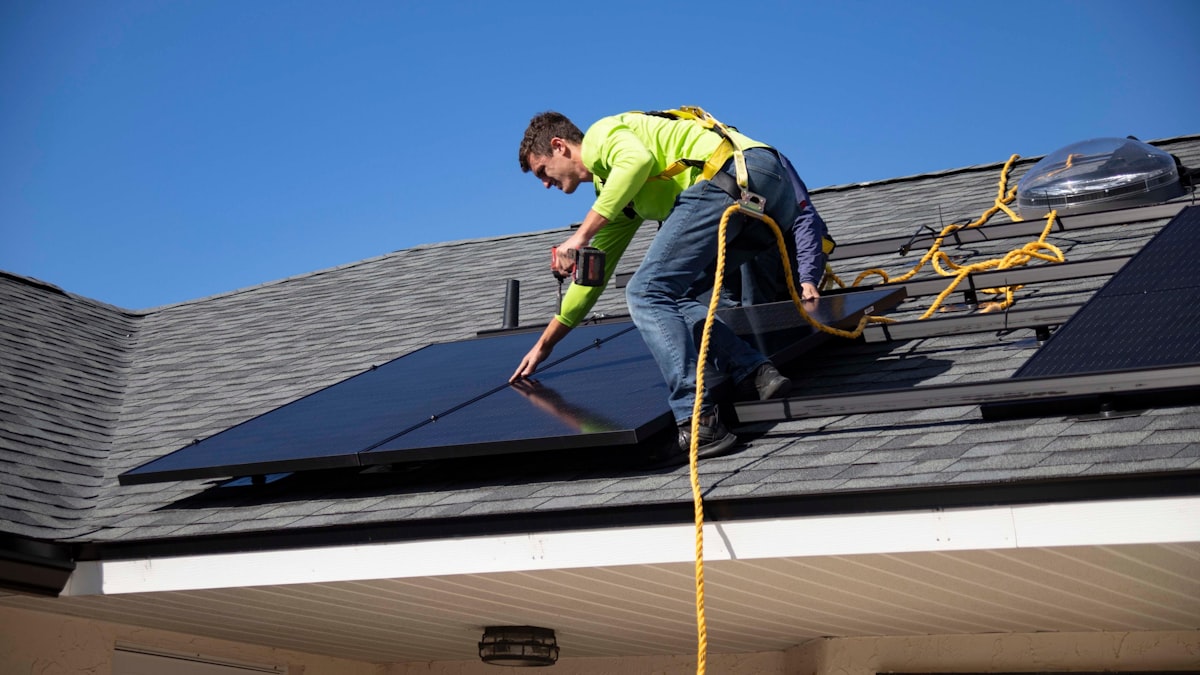
The best solar sales software lets reps generate accurate proposals and collect signatures during the homeowner consultation — before leaving the driveway.
SubcontractorHub
See How Top Contractors Close More Jobs
AI proposals, sales pipeline, and project management — all in one platform.
- ✓AI-powered proposals in the field
- ✓CRM built for contractor sales
- ✓Project tracking from sale to install
30 minutes. No commitment.
Head-to-Head: Best Solar Sales Software in 2026
Platform-by-Platform Breakdown
Scoop Solar
Pros: Strong project management workflow for solar installations; widely used among mid-size residential solar installers; solid integration with design tools.
Cons: Financing is not embedded — reps must use a separate lender portal; solar-only (no roofing or HVAC if you expand); proposal generation is limited compared to platforms built around on-site closing. Teams that run active door-to-door solar sales campaigns often outgrow Scoop within the first year as lead management and sales automation needs increase.
SolarNexus
Pros: Good end-to-end workflow from lead to PTO; strong among commercial and mid-market solar installers; reasonable project management depth.
Cons: Proposal experience is functional but not optimized for on-site residential closing; no financing integration; single-trade only. Not built for contractors who sell at the door and need to close at the table. Solar proposal software quality matters most when reps are competing against other companies on the same street — SolarNexus falls short here.
JobNimbus
Pros: Popular among roofing and solar teams; approachable pricing for smaller operations; decent mobile app for field use.
Cons: Project management is shallow for solar workflows (permit tracking, multi-phase installations); no embedded financing; most teams end up adding third-party tools within 12 months. See our full JobNimbus alternatives comparison.
Field sales teams that close residential solar deals on-site need solar proposal software that works from a tablet — not back at the office.
Why SubcontractorHub Wins for Solar Sales Teams
The core problem with most solar sales software is that it was built for project tracking, not closing. SubcontractorHub was built from the opposite direction: starting with the moment a rep walks into a homeowner's home and needs to generate a compelling proposal before they leave. When teams evaluate the best solar sales software for high-volume field sales operations, this distinction is the one that changes close rates.
EasyQuote lets solar reps build a complete, branded proposal on a tablet — system size, production estimates, financing options, and a signature field — without calling the office or waiting for a designer to run numbers. The proposal goes from conversation to signed contract without the homeowner ever leaving the table.
EasyQuote: build complete solar proposals on-site and collect a signature before leaving the driveway
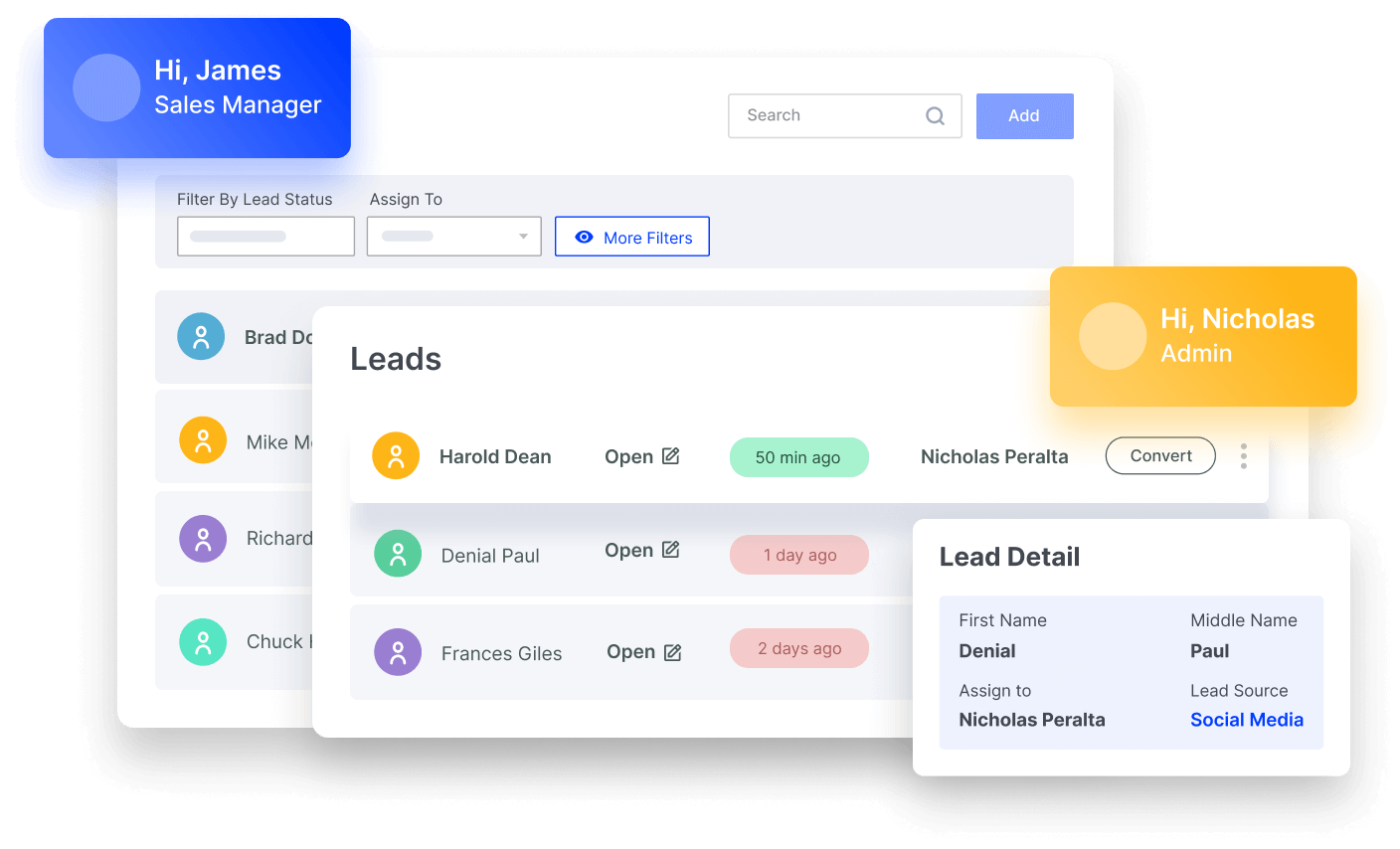
Sales Velocity gives sales managers a live view of every lead, every proposal out, and every financing application in the pipeline. No status calls, no spreadsheet updates — the data is current because reps are logging activity in the same tool they use to close. As a solar CRM, Sales Velocity is purpose-built for the way residential solar teams actually sell: territory mapping by rep, lead management from first contact through financing approval, and sales automation that keeps follow-ups from falling through the cracks.
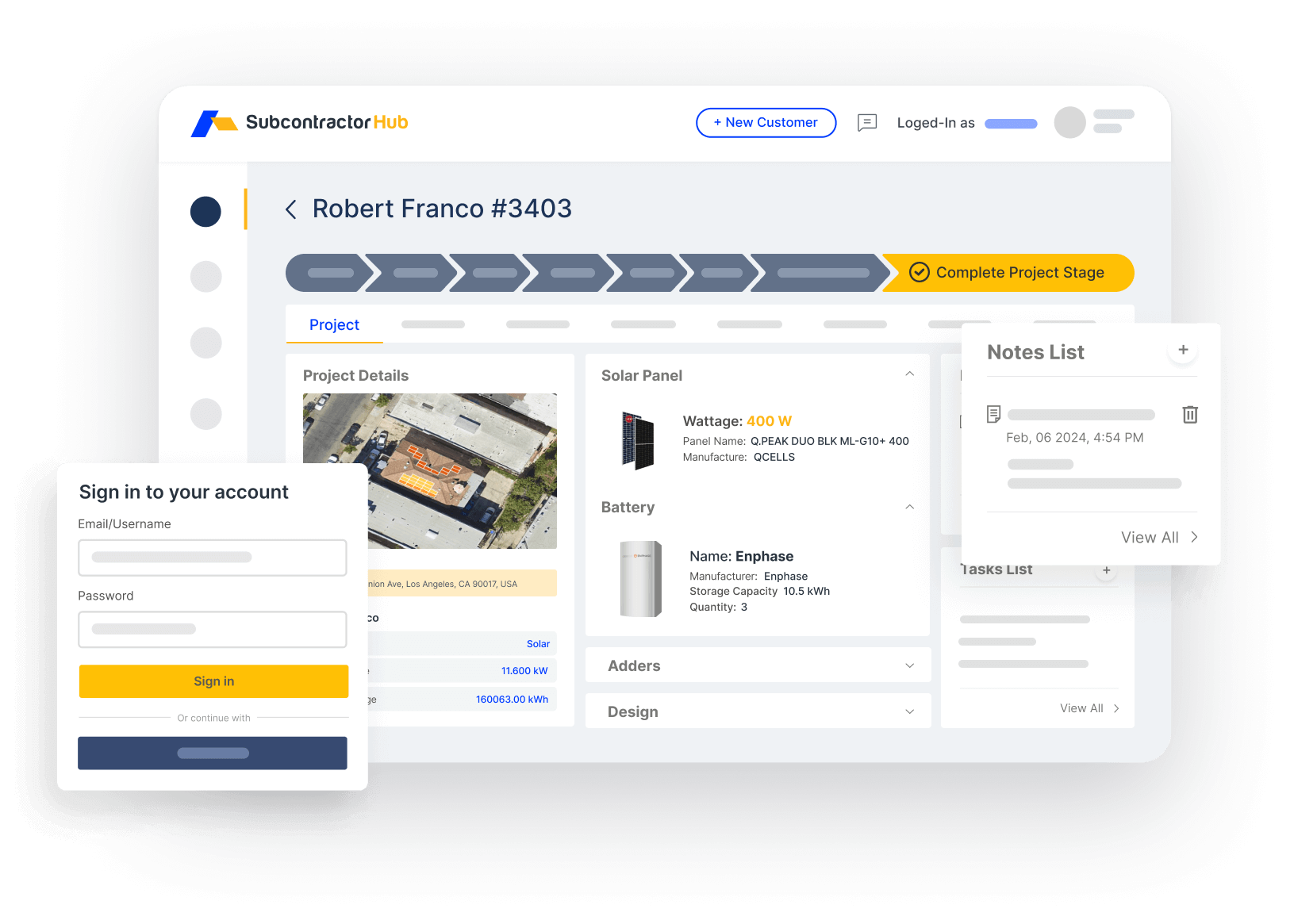
Sales Velocity: track every solar lead from first knock to signed contract in real time
When a solar deal closes, Project Management picks up automatically. Permit tracking, equipment ordering, installation scheduling, inspection milestones, and PTO — all the details from the sale carry over without re-entry. The ops team gets a ready-to-run project the moment the contract is signed.
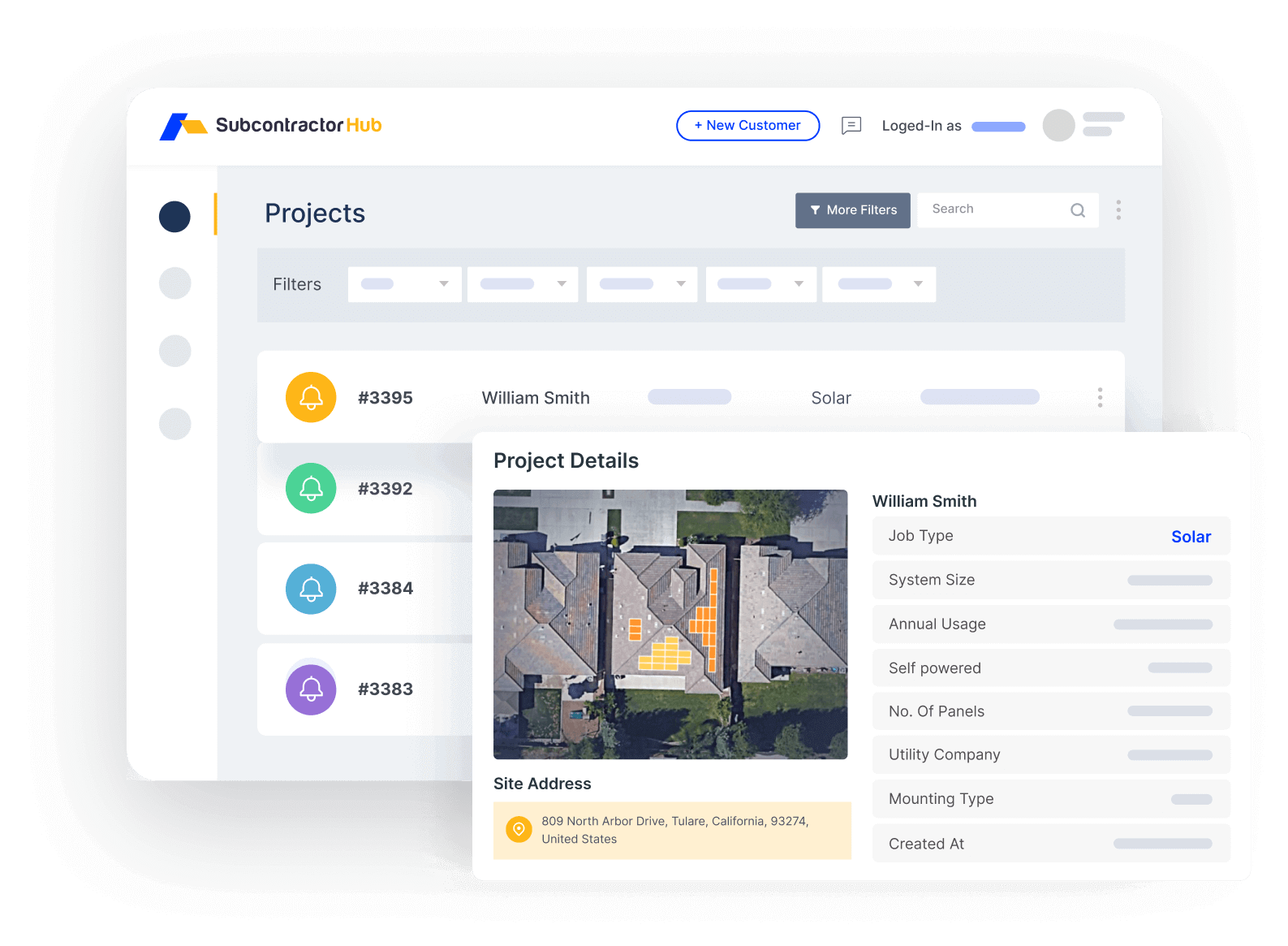
Project Management: track solar installations from permit to PTO in the same platform where the deal was closed
For contractors expanding from solar into roofing or HVAC, the platform already handles all three trades. Your team doesn't need to learn a new tool. Your data stays where it is. You just unlock the new trade.
What Residential Solar Sales Software Needs That Commercial Does Not
Most buyers searching this category are running a residential operation, and residential solar sells in a fundamentally different shape from commercial. The deal is won in a single sitting, in someone's kitchen, usually on a tablet, and usually on the strength of a monthly payment rather than a system price. A platform built around a commercial procurement cycle — long RFP windows, multiple stakeholders, staged approvals — will feel wrong in that moment no matter how capable it is on paper.
Four things separate a tool that works in a residential close from one that does not:
- It works offline, on a tablet, in a driveway. Rural roofs and thick walls are where cell coverage disappears. If the proposal will not load, the rep is selling from a PDF and a calculator.
- Financing is in the proposal, not a separate errand. The homeowner is buying a monthly payment. If the rep has to leave the app to run a credit application, the close slips to a second appointment — and second appointments are where residential deals die.
- Canvassing and appointment-setting feed it directly. In a door-to-door operation, the setter and the closer are different people. Their handoff has to happen inside the system, with the territory, the notes and the appointment attached, or leads quietly evaporate between them.
- The signed deal becomes an install job automatically. Site survey, design, permitting, interconnection, inspection — residential solar has a long tail after the signature. Re-keying a sold job into a second system is where the cancellation rate comes from.
When you demo, ask the vendor to run one residential deal end to end: knock to appointment, proposal to financing approval, signature to install schedule. How many separate tools the rep touches on that path is the whole answer. If you also want to compare the design-and-simulation side of the stack, that is a different category of product and worth evaluating separately from the sales platform.
Who SubcontractorHub Is NOT For
- Commercial-only solar installers who don't run a direct-to-homeowner sales process. Commercial solar has different procurement cycles that don't map to SubcontractorHub's residential-installation workflow.
- Solo operators with fewer than 3 reps. The platform is built for teams. The ROI compounds with reps, managers, and ops staff.
- Contractors who only need a basic CRM. If you just need contact tracking and follow-up reminders, a simpler tool will cost less. SubcontractorHub replaces an entire stack — not just a spreadsheet.
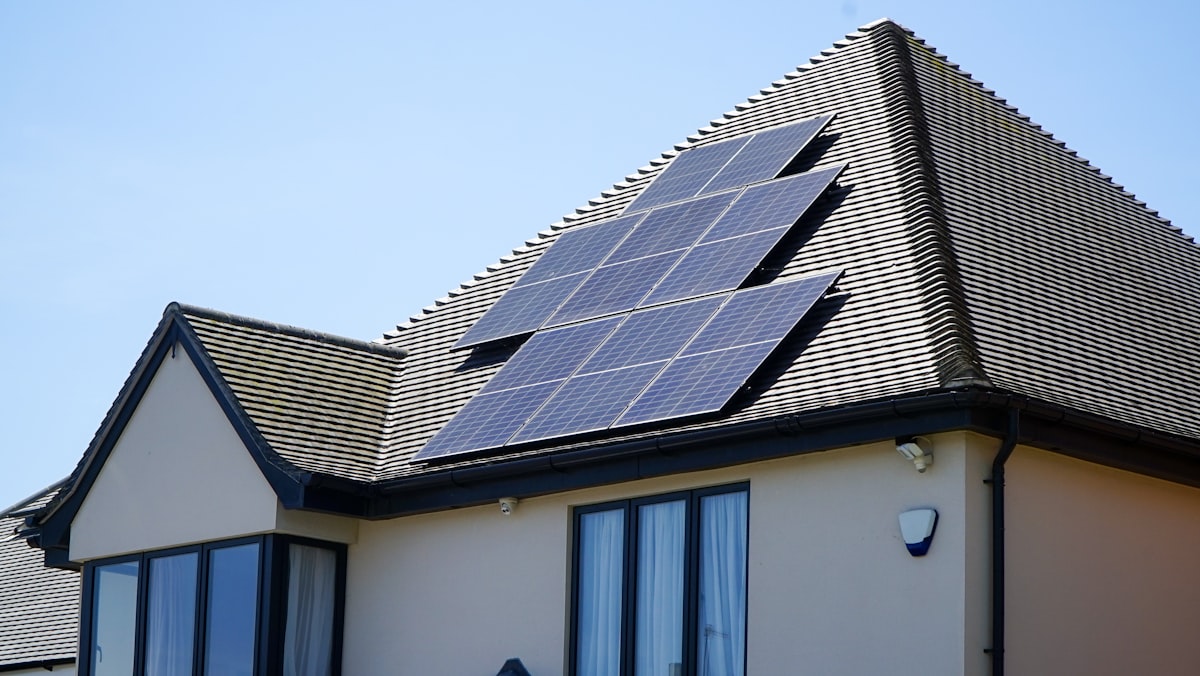
Scaling a residential solar business requires best solar sales software that connects field sales, solar design software, and project management in one platform.
Frequently Asked Questions
What is the best solar sales software for residential installers?
Residential solar is closed in one sitting, on a tablet, on a monthly payment, so the platform has to hold up in that moment. The four things that matter are: it works offline in a driveway with poor coverage, financing runs inside the proposal rather than as a separate application, canvassing and appointment-setting hand off to the closer inside the system, and a signed deal becomes an install job automatically without anyone re-keying it. SubcontractorHub was built around that residential path. Tools designed for commercial procurement cycles handle long RFP windows and staged approvals well but feel wrong at a kitchen table.
How should a solar contractor evaluate sales software on a demo?
Ask the vendor to run a single residential deal end to end in front of you: knock to appointment, proposal to financing approval, signature to install schedule. Count how many separate tools the rep has to touch along that path, and count how many times data gets typed in twice. Feature lists rarely distinguish these platforms; the number of handoffs does. Also ask what happens when the tablet loses signal mid-proposal, because that is the failure mode reps hit most often in the field.
What is solar sales software?
Solar sales software is a platform that helps solar installation companies manage leads, generate proposals, track their sales pipeline, and close deals faster. The best tools include on-site proposal generation, embedded financing, CRM pipeline tracking, and a clean handoff to project management — purpose-built for how solar contractors sell.
What is the best solar sales software in 2026?
SubcontractorHub is the top solar sales software for contractors who want AI-powered proposals (EasyQuote), a built-in CRM pipeline (Sales Velocity), embedded financing, and project management in one platform. It's also the only major platform that handles solar, roofing, and HVAC in the same dashboard.
How does solar sales software help close more deals?
By shortening the quote-to-close window. Reps who can generate an accurate, branded proposal on-site — with financing options included — close faster and at higher rates than reps who follow up with a PDF two days later. Pipeline visibility also lets managers spot stalled deals and coach before they go cold.
Is solar sales software different from solar CRM software?
They overlap significantly. A solar CRM tracks leads and contacts. Solar sales software typically includes the CRM plus proposal generation, financing integration, and sales analytics. SubcontractorHub covers all of it in one login.
Can solar sales software handle roofing and HVAC too?
Most solar-specific tools are single-trade. SubcontractorHub handles solar, roofing, and HVAC. If your company is expanding into multiple trades — or already runs more than one — you can manage everything in one platform without separate CRMs.
Related Reading
What SubcontractorHub Does for Solar Contractors
If your solar team is losing deals to slow proposals or a broken handoff from sales to installation, SubcontractorHub was built to fix exactly that. Book a demo and we'll show you a live workflow: AI-assisted quote, signed contract, project launched — in under 30 minutes.
Book a DemoSolar Software, CRM, Contractor Tools