
Roofing Sales
What Is a Good Close Rate for Roofing Sales? (2026 Benchmarks)
Published June 2026 · Updated September 2026 | 9 min read
If you're running a roofing sales team and wondering whether your close rate is where it should be, the short answer is: it depends on your lead type. A 20% close rate on cold canvassing leads is excellent. A 20% close rate on warm storm referrals means you're leaving money on the table.
This guide breaks down real roofing sales close rate benchmarks by lead source, explains the variables that move the number, and covers the highest-ROI fixes — the ones that actually work without hiring more people.

A strong roofing sales close rate starts with a well-qualified homeowner meeting and a proposal presented in person.
Roofing Close Rate Benchmarks by Lead Type (2026)
Not all roofing leads are created equal. Grouping your close rate across all lead sources hides the most important signal: which channel is underperforming. Your overall roofing sales close rate is only meaningful when broken out by lead source.
| Lead Source | Average Close Rate | Top Performer Range |
|---|---|---|
| Storm / insurance restoration (referral) | 45–60% | 65–75% |
| Storm / insurance restoration (D2D) | 30–45% | 50–60% |
| Customer referral (retail) | 35–50% | 55–65% |
| Paid digital / inbound call | 20–30% | 35–45% |
| Cold D2D canvassing | 10–20% | 25–35% |
| Third-party lead (Angi, HomeAdvisor) | 10–15% | 20–25% |
The most important takeaway: your overall company close rate is a lagging metric. The leading metrics are close rate by lead source and close rate by rep. Once you can see those two breakdowns, you know where to focus.
Why Close Rates Vary So Much in Roofing
1. Lead intent
A homeowner whose insurance company just approved a $15,000 claim is not the same buyer as someone you knocked on cold. Intent determines ceiling. Proper lead qualification — confirming damage, insurance status, and decision-making authority before the appointment — is the first step in any sales process that consistently converts leads. Your close rate on pre-qualified inbound leads will always be higher than cold canvass, and that's fine. Don't benchmark them against each other.
2. Speed of follow-up
This is the most underrated variable in roofing sales. Research consistently shows that leads contacted within 5 minutes of the appointment close 4–8× more often than leads followed up after 24 hours. For roofing specifically — where multiple companies are often canvassing the same storm-hit street — the rep who follows up first wins.
A disciplined follow-up strategy matters as much as the initial sales pitch. If your reps leave an appointment and the next contact is a voicemail 48 hours later, that's where your closing rate is dying.
3. In-person vs. remote quoting
Roofing jobs closed with a signed proposal at the appointment close at 2–3× the rate of jobs where the proposal is emailed afterward. When the rep leaves without a decision, the homeowner shops. That's table stakes for D2D teams: close at the door or the number falls fast.
Tools like EasyQuote let reps generate a complete branded proposal on a tablet at the home — so there's no reason to leave without a number in front of the homeowner.
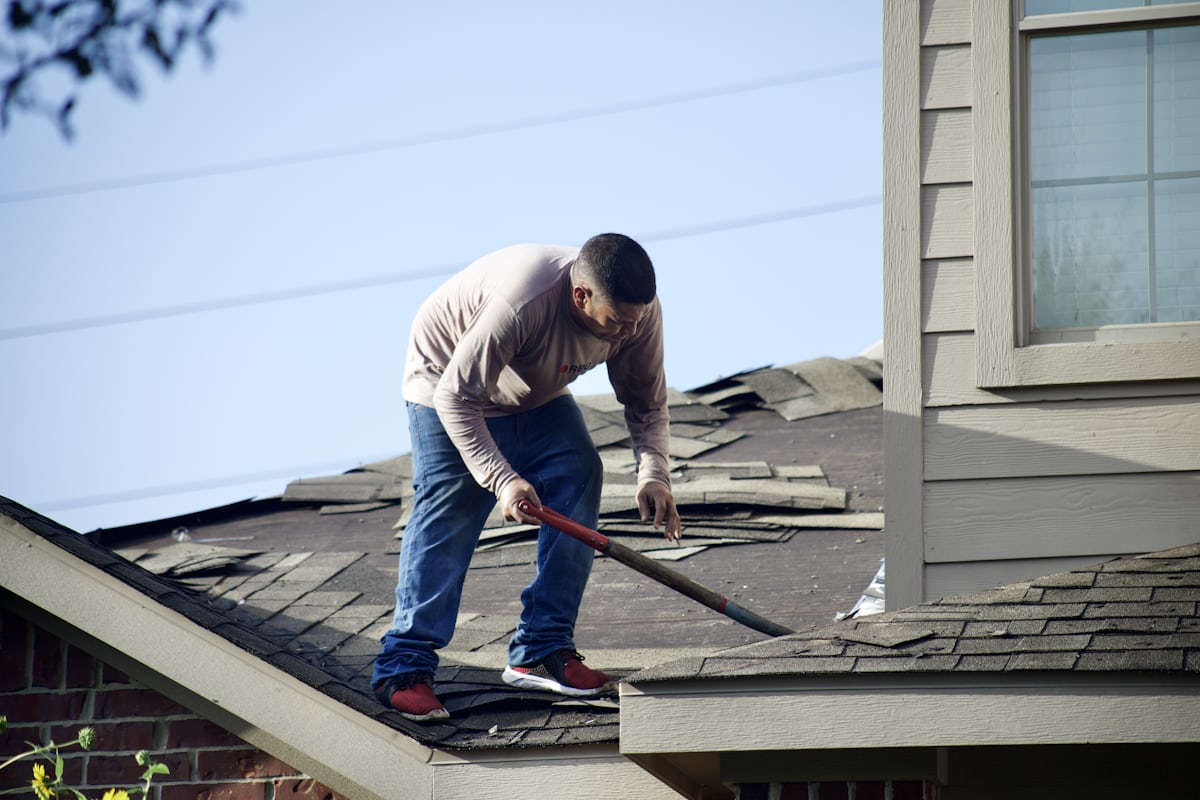
Thorough roof inspections improve lead qualification and give sales reps the credibility to convert leads at a higher closing rate.
4. Financing availability
According to industry data, offering financing at point-of-sale increases close rates by 15–25% on retail roofing jobs. The math is simple: a $12,000 roof that's $180/month is a different conversation than $12,000 due on completion. Contractors who present financing every time — not just when the customer asks — convert leads at a meaningfully higher rate.
SubcontractorHub's roofing sales platform includes built-in financing from 10+ lenders, presented directly in the proposal — so the rep never has to make a separate phone call to qualify someone.
5. Rep experience and training
First-year roofing reps typically close 10–15% of appointments. Reps with 2–3 years of experience in the same market, with the same product, typically close 25–35%. The difference is handle time on objections, knowledge of competitive alternatives, and comfort with silence after presenting price. Strong objection handling — especially around price and timing — is the skill that separates an average sales rep from an elite one.
How to Calculate Your Roofing Close Rate
The formula is straightforward:
Example: Your team ran 120 appointments last month and closed 34 jobs. 34 ÷ 120 = 0.283 → 28.3% close rate.
The more useful version: break this out by lead source and by rep in your roofing CRM dashboard. If rep A is closing 38% and rep B is closing 14% on the same lead source, that's a coaching problem — not a lead quality problem. A good roofing CRM makes this comparison instant instead of a manual spreadsheet exercise.
Free Calculator
Sales Conversion Rate Calculator →
See exactly what a 5, 10, 15, or 20-point improvement in close rate means for monthly revenue and gross profit — with a side-by-side comparison table.
The 4 Highest-ROI Levers to Improve Your Roofing Sales Close Rate
1. Same-day follow-up automation
Set up an automated follow-up strategy that triggers within 2 hours of a rep leaving an appointment without a signed contract. The sequence should include: a personalized text, a follow-up call reminder, and the proposal link. Reps who let this run manually miss the window consistently. A structured follow-up strategy built into your sales process is the single fastest way to improve your roofing sales close rate without changing anything else.
2. Present financing every time
Train reps to present the monthly payment before the total project cost — not after. "This system runs about $180 a month with our financing" lands differently than "$12,500 — but we do have financing available." Sequence matters. This one adjustment to your sales pitch can shift your sales conversion rate by 10–15 percentage points on retail jobs.
3. Leave a physical or digital proposal
Homeowners who have a written proposal reference it when comparing quotes. Homeowners who don't have one are starting from scratch when the competitor arrives. Every appointment should end with a proposal in the homeowner's hands — paper or digital, signed or not.
4. Track close rate by rep in real time
If your reps can't see their own close rate in a dashboard, they don't have a performance feedback loop. Close rate visibility by itself — without any manager intervention — has been shown to improve individual rep performance by 10–15% within 60 days. Sales Velocity gives every rep their own conversion dashboard and gives managers team-wide leaderboards.
Close Rate Benchmarks by Rep Experience
| Rep Stage | Typical Close Rate | Primary Coaching Focus |
|---|---|---|
| New (0–6 months) | 8–15% | Presentation consistency, objection scripts |
| Developing (6–18 months) | 15–25% | Financing fluency, follow-up discipline |
| Experienced (18+ months) | 25–40% | Lead source optimization, ticket size |
| Elite | 40%+ | Referral generation, training peers |
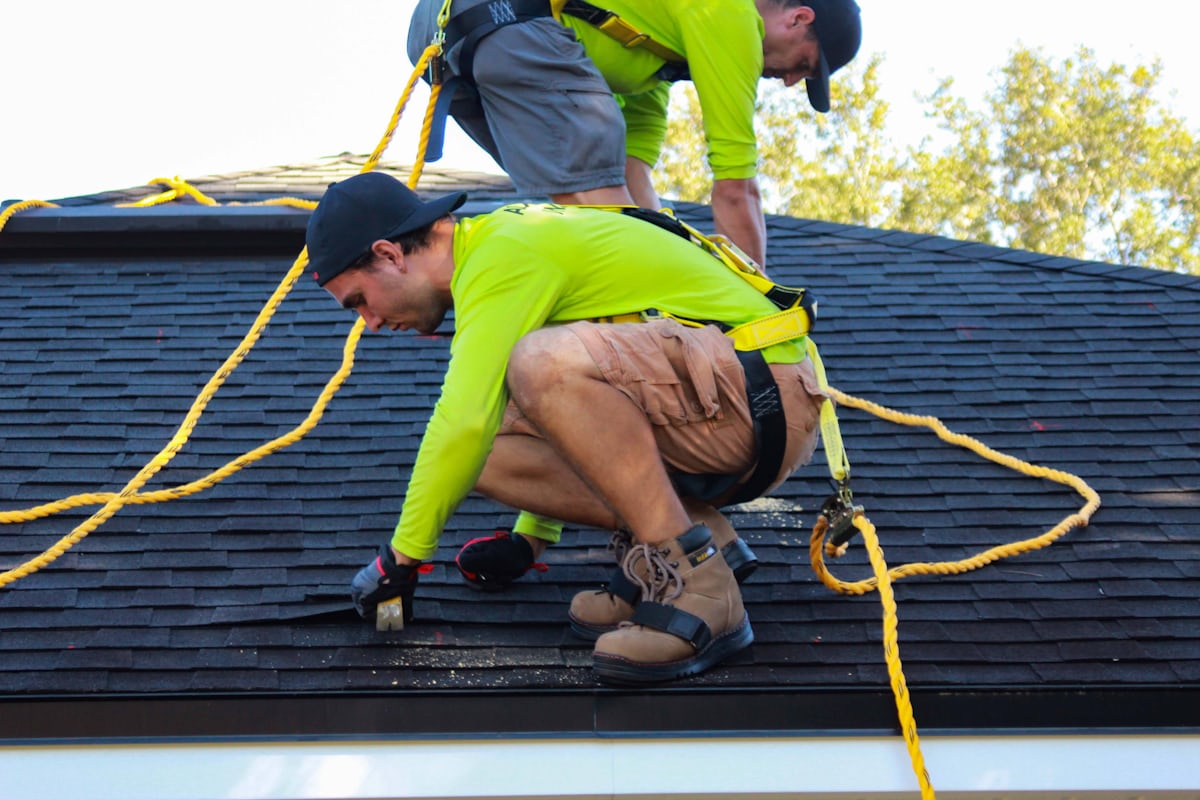
Sales rep performance and roofing sales close rate improve significantly with experience, consistent coaching, and CRM software tracking.
Contractor Close Rate Benchmarks Beyond Roofing
Close rate is not comparable across trades, and contractors who benchmark against a number they read in another trade's article usually reach the wrong conclusion. The two things that move the benchmark most are ticket size and urgency. A failed water heater is an emergency with a low ticket, so it closes at a rate no roofing replacement will ever match. A solar install is a large, deliberate, financed purchase competing against three other bids, so it closes far lower — and that is normal, not a performance problem.
| Trade | Typical close rate range | What drives it |
|---|---|---|
| Plumbing & drain (emergency) | Highest of any trade | Urgent need, small ticket, little or no comparison shopping |
| HVAC service & repair | High | Tech is already on site with the diagnosis in hand |
| HVAC replacement | Moderate | Large ticket, financing-sensitive, usually 2–3 bids |
| Roofing — storm / insurance | Moderate to high | Claim creates urgency and covers most of the cost |
| Roofing — retail replacement | Moderate | Deliberate purchase, heavy bid comparison |
| Solar | Lowest of the group | Long consideration cycle, complex financing, many competing bids |
Use this table to sanity-check the segment you are in, not to set a target. The comparison that actually matters is your own close rate against your own number last quarter, split by lead source and by rep — that is the only version of the metric where a change means something you can act on. The same measurement discipline applies whichever trade you run: contractors tracking the same funnel in HVAC contractor software or on the solar side are looking at different absolute numbers and the same underlying levers.
The Tool Stack That Protects Your Close Rate
The three technology gaps that most consistently drag down roofing close rates:
- No in-field quoting tool — reps leave appointments to call back with a number. By then, a competitor has shown up.
- No automated follow-up — reps manually remember (or forget) to follow up on open estimates.
- No close rate dashboard — managers have no visibility into which reps are lagging until the month closes.
SubcontractorHub's roofing CRM software addresses all three: in-field proposals via EasyQuote, automated follow-up sequences through Sales Velocity, and rep-level close rate dashboards visible to both managers and reps in real time. For roofing contractors serious about improving their roofing sales close rate, CRM software that tracks every step of the sales process is the foundation.
Frequently Asked Questions
What is a good close rate for roofing sales?
30–40% is a solid benchmark for pre-qualified leads. For storm/insurance restoration leads, 50–60% is achievable. For cold D2D canvassing, 15–25% is good. The key is tracking by lead source — not blending them into one number.
What is the average roofing contractor close rate?
The industry average across all lead types is roughly 20–25%. Top-performing teams with strong follow-up systems, in-field quoting, and financing options typically see 35–45%.
How do I improve my roofing sales close rate?
The highest-ROI fixes: (1) automate same-day follow-up so no lead goes cold, (2) present financing at every appointment, (3) close in field with a tablet proposal rather than emailing a quote later, (4) give reps visibility into their own close rate in real time.
What close rate should D2D roofing reps hit?
New D2D reps typically close 10–15% of set appointments. Experienced reps in active storm markets close 35–50%. Elite reps with strong follow-up discipline and financing fluency hit 50%+ on insurance restoration leads.
See Your Team's Close Rate in Real Time
SubcontractorHub gives every roofing sales team a live close rate dashboard by rep, by lead source, and by date range — so you can stop guessing and start coaching on real data.
Book a Demo →SubcontractorHub
See How Top Contractors Close More Jobs
AI proposals, sales pipeline, and project management — all in one platform.
- ✓AI-powered proposals in the field
- ✓CRM built for contractor sales
- ✓Project tracking from sale to install
30 minutes. No commitment.