
Best Roofing Software for Contractors in 2026: An Honest Buyer's Guide
By SubcontractorHub Editorial Team·Published June 2026·Updated September 2026

Quick Answer
The best roofing software for contractors in 2026 is SubcontractorHub for teams that need AI-powered quoting, a built-in sales CRM (Sales Velocity), and full project management in a single platform. AccuLynx is the go-to for pure insurance restoration operations. Jobber is the fastest starting point for small teams focused on scheduling and invoicing. If you're running a roofing business and tired of paying for tools that don't connect, SubcontractorHub was built for this problem. Book a demo to see it in action.
There's no shortage of roofing software in 2026. What's in short supply is roofing software that actually does what it promises without requiring three other tools to fill the gaps.
This guide covers what roofing contractors actually need from software, compares the leading platforms head-to-head, and gives you an honest read on where each tool wins — and where it falls short.
What Roofing Software Actually Needs to Do
Most roofing contractors in 2026 are running a patchwork of tools: a CRM for leads, a separate estimating tool, spreadsheets for scheduling, and QuickBooks for invoicing. Every time data moves between those systems, something breaks. A missed update, a re-entered job, a handoff that nobody confirmed.
Before evaluating any platform, define what your business actually needs to run:
- Lead and pipeline management: From first contact (knock, referral, or web lead) through follow-up, proposal, and close. See our roofing CRM guide for a deep dive on pipeline-focused tools, or our roofing lead management software guide for lead-tracking specifics.
- Roofing estimating software and proposals: Fast, accurate quotes generated in the field — not calculated manually back at the office. Proposals and proposal generation should flow directly from your measurements into a branded document the homeowner can sign on the spot. See our roofing estimating software guide for a breakdown of dedicated estimating tools.
- Scheduling and dispatch: Assigning jobs to crews without back-and-forth texts and calls. The best roofing software for contractors makes scheduling and dispatch visible to everyone — field reps, PMs, and office staff — without anyone needing to ask.
- Job management and project tracking: Post-sale milestone tracking — permits, material orders, inspections, final sign-off. Strong job management means nothing falls through the gap between the sale and the install.
- Insurance workflow support: Supplement tracking, adjuster notes, approval status tied to the job record. Some platforms also pull aerial measurements and roof measurements directly from EagleView or similar providers to speed up estimates.
- Invoicing and job costing: Getting paid without switching to a different app. Invoicing and job costing in the same platform as your production data means you always know whether a job is profitable before you close it out. See our roofing invoice software guide for a breakdown of billing-focused tools.
The question is not just which platform does these things — it's which platform does them inside one login, without forcing you to buy a Zapier account to connect them.
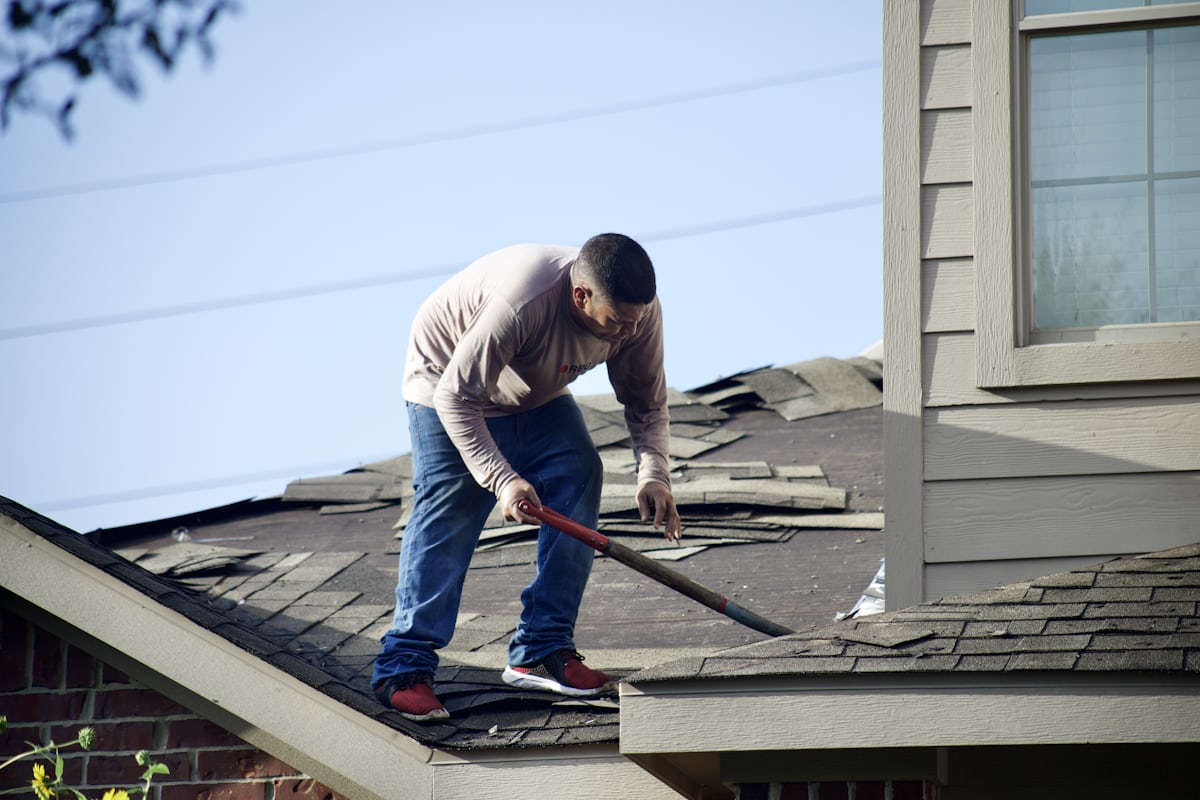
Modern field service management tools let contractors document roof inspections and generate proposals without leaving the job site.
5 Questions to Ask Before You Buy
- Does it replace tools or just add another one? Vendors love to say “all-in-one.” Ask directly: does estimating live in the same database as your CRM and project management? Or does it require a sync, an integration, or a third-party connector?
- What does the handoff from sale to production look like? When a job closes, does the system automatically create a project record, alert the PM, and pull the scope from the proposal? Or does someone re-enter everything manually?
- Does your field team actually have a mobile app? A tool your reps and crews won't use in the field is worthless. Ask to see the mobile experience before you commit.
- What's the real price at your team size? Per-user pricing adds up. A platform at $79/user/month sounds reasonable until you have 15 reps, 3 PMs, and 2 admins on the account.
- Can it handle multiple trades? If you're adding solar or HVAC to your roofing operation — or plan to — check whether the platform supports those workflows or forces you to buy a second tool.
SubcontractorHub
See How Top Contractors Close More Jobs
AI proposals, sales pipeline, and project management — all in one platform.
- ✓AI-powered proposals in the field
- ✓CRM built for contractor sales
- ✓Project tracking from sale to install
30 minutes. No commitment.
Head-to-Head: Best Roofing Software Platforms in 2026
Platform-by-Platform Breakdown
SubcontractorHub
Best for: Roofing contractors who want a single platform for quoting, CRM, project management, and multi-trade expansion.
Pros: AI-powered quoting via EasyQuote and Sales Velocity covers the full sales cycle; a genuine project management module handles the post-sale phase with milestone tracking and crew coordination; multi-trade support means you can add solar or HVAC without switching platforms; built-in financing integrations let reps present payment options on the spot.
Cons: Built for teams — not ideal for one- or two-person operations who only need basic scheduling. Pricing is not published publicly; requires a demo call for a quote.

The best roofing software for contractors enables reps to present proposals and close deals directly with homeowners in the field.
AccuLynx
Best for: Insurance restoration contractors with established Xactimate and EagleView workflows.
Pros: Deep insurance supplement workflow; well-integrated with EagleView aerial measurement for roof measurements; widely adopted in the storm restoration niche with a large user community and training ecosystem.
Cons: Roofing-only — no solar or HVAC support; no native AI quoting; pricing starts at $100+/user/month; contractors expanding beyond pure insurance restoration consistently hit its ceiling. See our full AccuLynx alternatives breakdown.
JobNimbus
Best for: Small to mid-size roofing contractors who want a roofing CRM with basic project tracking at an approachable price.
Pros: Widely adopted in the roofing industry; large community; solid mobile app; good insurance workflow support; lower entry price than AccuLynx.
Cons: Project management depth is limited — most users supplement with third-party tools for material ordering and installation scheduling; no AI quoting; single trade. Most growing teams outgrow it within 18 months. See our full JobNimbus alternatives breakdown.
Jobber
Best for: Small roofing operations (1–5 people) focused on scheduling, invoicing, and basic customer communication.
Pros: Clean, fast interface; transparent pricing from $49/month; good mobile app; quick onboarding for small teams; reliable scheduling and payment processing.
Cons: Built for service-call businesses, not installation contractors; no project management depth for multi-day jobs; no AI quoting; no insurance supplement workflow; no solar or HVAC support. See our full Jobber alternatives breakdown.
ServiceTitan
Best for: Large roofing and home service businesses with complex operations and budget for enterprise software.
Pros: Extremely deep feature set; handles large-scale field service management with sophisticated dispatch, pricebook management, and marketing automation; strong reporting.
Cons: Year-one costs of $35,000–$65,000 put it out of reach for most small and mid-size roofing contractors; steep learning curve; long implementation timelines. See our full ServiceTitan alternatives breakdown.
Why SubcontractorHub Is the Best All-in-One Roofing Software
The dirty secret of most roofing software: they're built for one part of the business and bolted on everywhere else. AccuLynx is a strong CRM and insurance tool — but its project management is an afterthought. Jobber is a solid scheduling app — but it was built for plumbers and electricians, not installers managing multi-week roofing jobs.
SubcontractorHub was built from the ground up for installation contractors who run a complete sales and production operation. That's what separates it as the best roofing software for contractors who are serious about scaling. Here is what that looks like in practice:
Free Roofing Calculators
Roofing Waste Factor Calculator →
Enter measured squares, roof complexity, pitch, and shingle type to get the right waste percentage and total bundles to order.
Roofing Material Cost Calculator →
Estimate material and installed cost by shingle type, pitch, underlayment, and accessories.
Convert rise and run into pitch ratio, slope angle in degrees, area multiplier, and rafter length — with a full pitch reference chart.
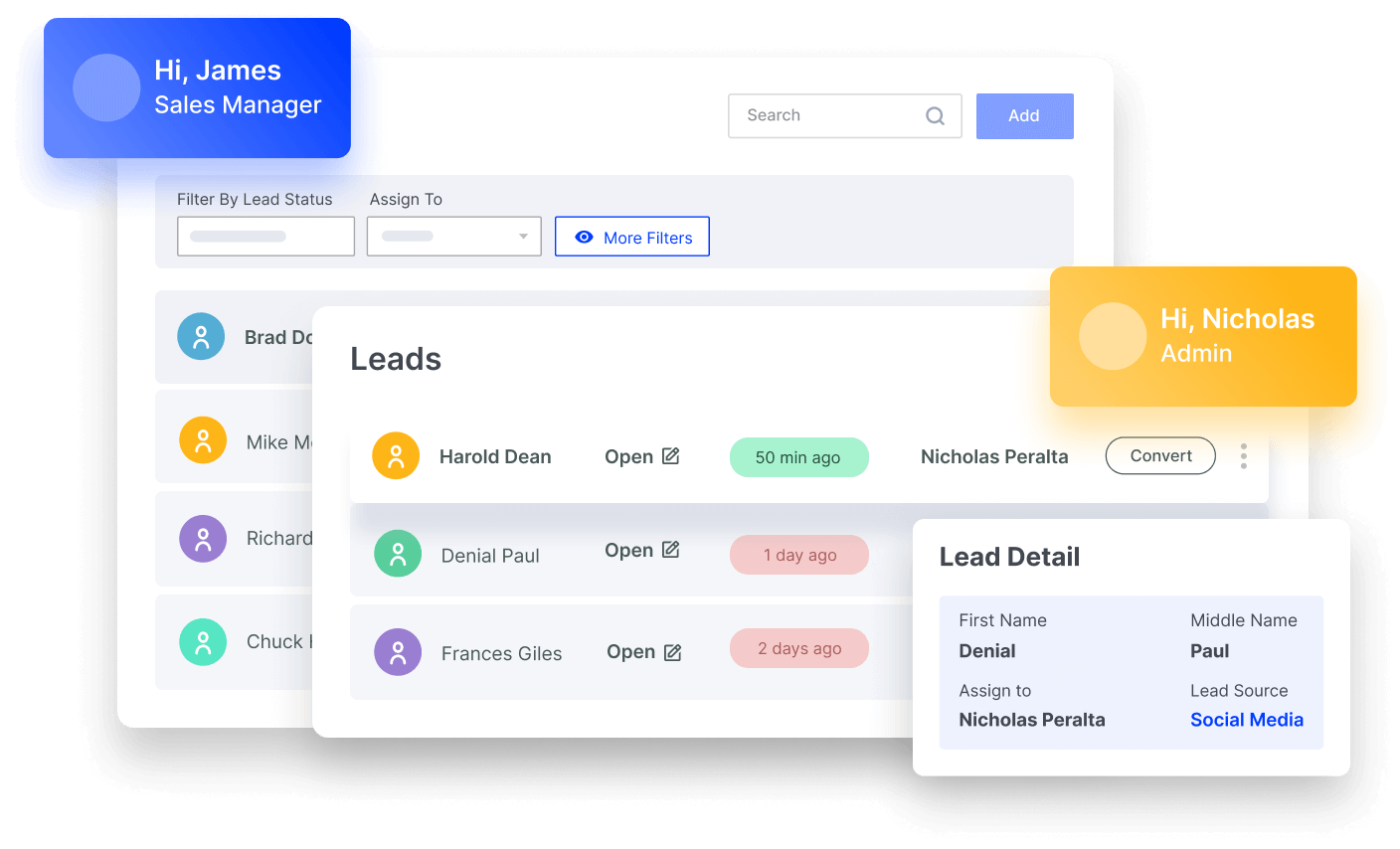
EasyQuote: generate AI-assisted roofing proposals before leaving the homeowner's driveway
EasyQuote generates AI-assisted roofing proposals in minutes. A rep in the field can produce a branded, accurate quote on a tablet before they leave the homeowner's driveway — no calls to the office, no waiting on pricing, no emailing PDFs. For a full breakdown of estimating-focused options, see our roofing estimating software guide.
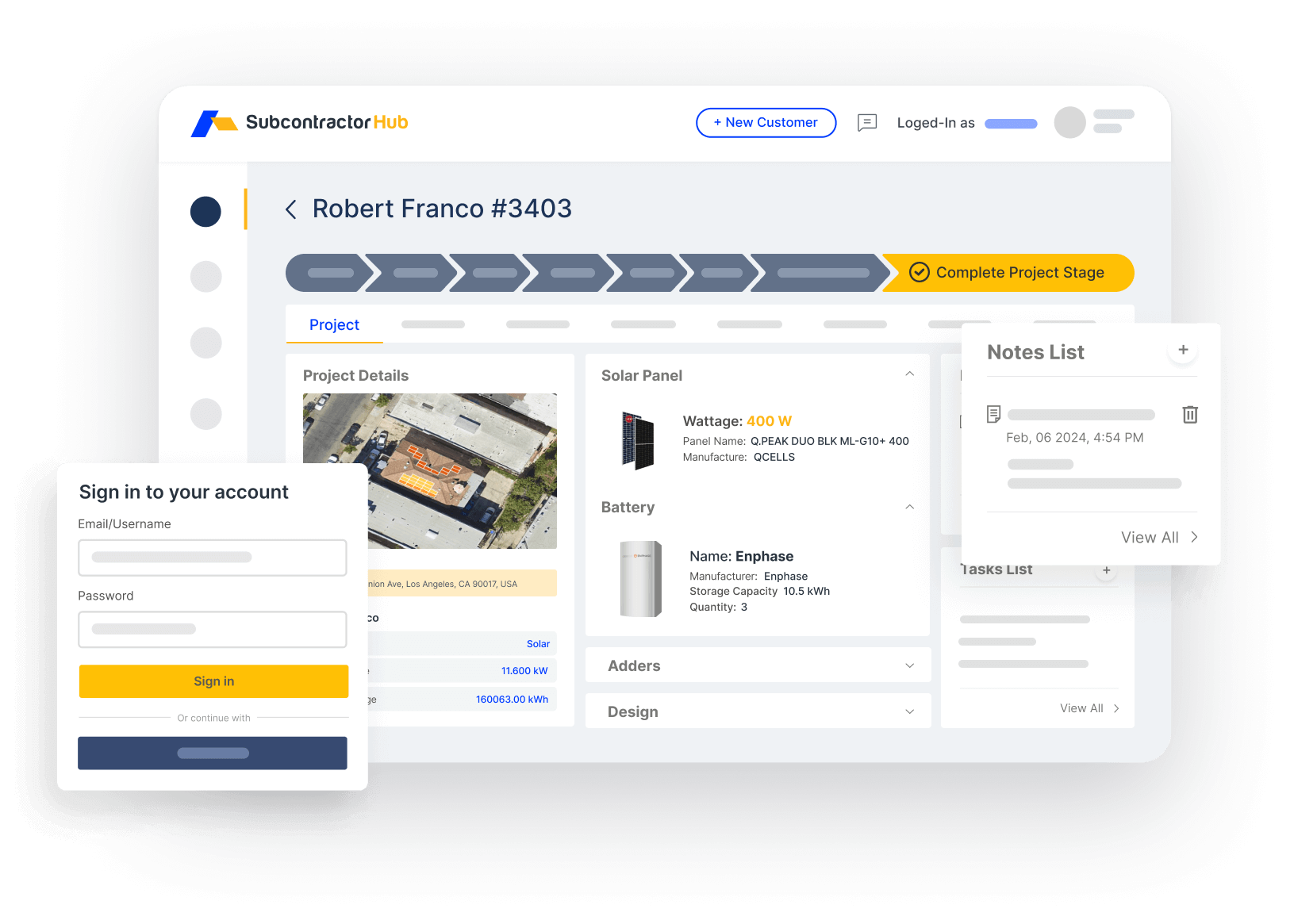
Sales Velocity: track every roofing lead from first knock to signed contract
Sales Velocity is a roofing-native CRM that tracks every lead from first contact through signed contract. Pipeline views, automated follow-up sequences, and rep dashboards give sales managers full visibility without chasing their team for updates. For a CRM-specific comparison, see our roofing CRM software guide.
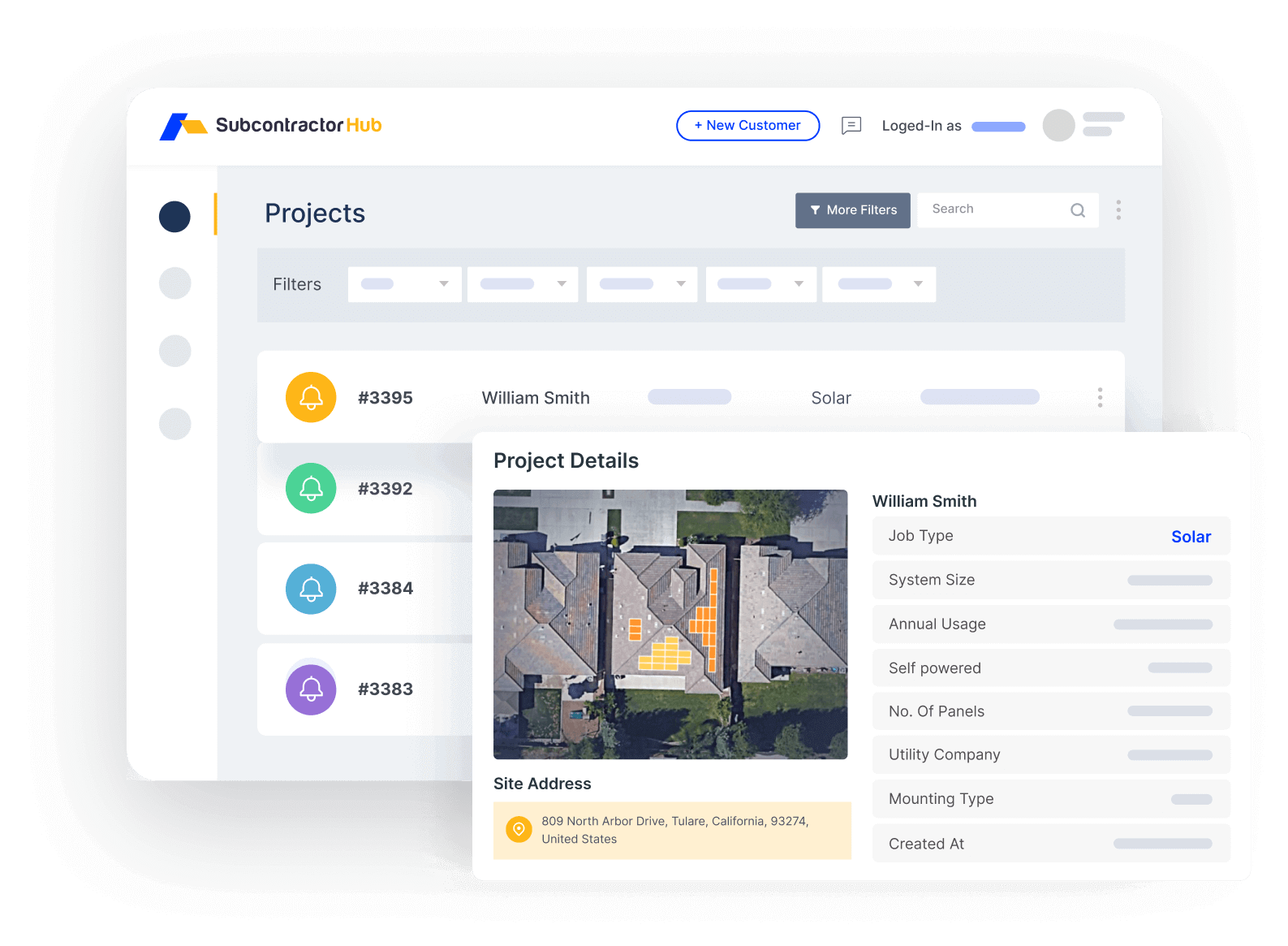
Project Management: from signed contract to final inspection, all in one platform
Project Management picks up the moment a job is sold. Crew assignments, material orders, inspection scheduling, and milestone tracking all live in the same platform where the sale was closed — no re-entering data, no tracking down the job file, no missed handoffs.
For roofing contractors who are also adding solar or HVAC, the same platform handles all three. Your team doesn't need a new login. Your data stays in one place. You just turn on the new trade.
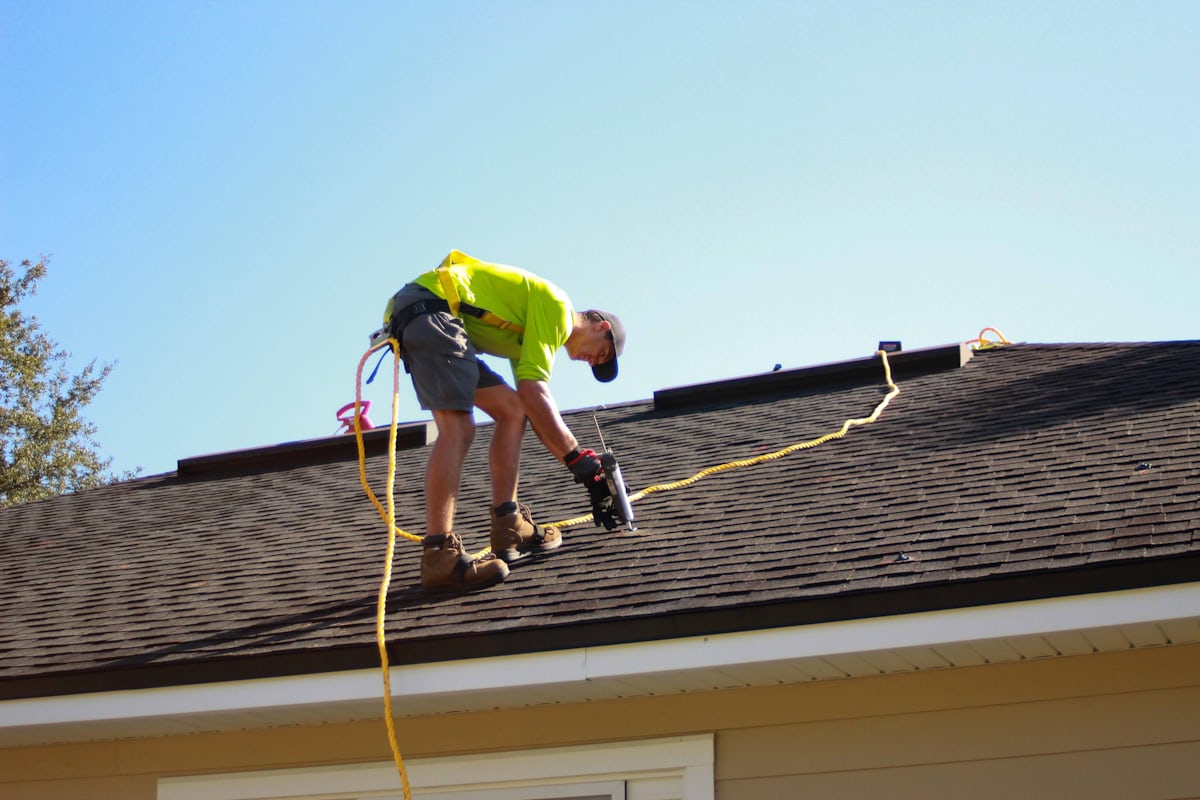
Top roofing contractor software keeps shingle installations on schedule by connecting job management, crew dispatch, and invoicing in one place.
Cloud-Based Roofing Software vs. Desktop: What Changed by 2026
Every platform on this list is now cloud-based, which was not true five years ago. The distinction still matters when you are comparing construction software for roofing contractors, because “cloud-based” covers two very different architectures and only one of them survives a day on a roof.
A browser-only tool needs a live connection. Crews working a tear-off in a rural subdivision or inside a commercial building lose the app the moment signal drops, and the photos and measurements taken in that window are gone. Cloud-based roofing tools built around a native mobile app cache the job locally and sync when the connection returns, so the production manager sees the field report without the crew retyping it that evening.
Three questions separate the two when you demo:
- Does the mobile app work offline, or is it a wrapper around the website? Ask the rep to put a phone in airplane mode during the demo and upload a photo.
- Who owns the data if you leave? Cloud-based means the vendor holds your job history. Confirm there is a full export, not just a CSV of contacts.
- What happens during an outage? Published status pages and uptime history are a fair proxy for how seriously a vendor treats reliability.
Who SubcontractorHub Is NOT For
- One-person or two-person operations. The platform is built for teams. If you are a solo roofer who needs scheduling and invoicing, Jobber will cost less and do what you need.
- Pure insurance restoration shops locked into Xactimate. If your entire workflow is built around Xactimate and EagleView with no plans to expand into retail roofing or add solar, AccuLynx serves that niche better.
- Enterprise operations requiring custom procurement. SubcontractorHub is built for growing contractors — not Fortune 500 facilities teams.
Frequently Asked Questions
What is the best roofing software for contractors in 2026?
For contractors who want quoting, CRM, and project management in one platform, SubcontractorHub is the best roofing software in 2026. For pure insurance restoration, AccuLynx is a strong specialty tool. For small teams focused on scheduling and invoicing, Jobber is an approachable starting point.
What features should roofing contractor software have?
The best roofing software should cover lead and pipeline management, AI-assisted estimating and proposals, crew scheduling, job costing, insurance supplement tracking, project milestone management, and a mobile app your field team actually uses.
Is there roofing software that also handles solar and HVAC?
Yes. SubcontractorHub is purpose-built for multi-trade contractors running solar, roofing, and HVAC from one platform. Most roofing-specific tools are single-trade and require a separate system when you add another vertical.
How much does roofing software cost in 2026?
Jobber starts at $49/month for small teams. AccuLynx charges $100+/user/month. ServiceTitan can run $35,000–$65,000 in year one for larger operations. SubcontractorHub pricing is customized by team size — see subcontractorhub.com/plan.
What is the difference between roofing CRM software and roofing project management software?
A roofing CRM manages leads, pipeline, and the sales process from first contact to signed contract. Project management software handles what happens after the sale — scheduling crews, ordering materials, tracking inspections. SubcontractorHub combines both in a single platform, eliminating the data gap between sales and operations.
What SubcontractorHub Does for Roofing Contractors
If you're running a roofing operation and tired of stitching together tools that don't talk to each other, SubcontractorHub was built for this problem. Book a demo and we'll walk you through a live workflow in under 30 minutes: AI-assisted quote, signed contract, scheduled crew.
Book a DemoRoofing Software, Contractor Tools, CRM