
Roofing Sales
The Roofing Sales Process Step by Step (2026 Playbook)
Published June 2026 · Updated September 2026 | 11 min read
The roofing sales process isn't complicated — but the difference between an average team closing 20% and an elite team closing 40% almost always comes down to how consistently they execute each step. This guide covers every stage from first contact to signed contract, with the benchmarks and tools top companies use in 2026.
The 7-Step Roofing Sales Process
Step 1: Lead Generation
Roofing leads come from a handful of reliable sources, ranked by close rate:
- Storm canvassing (D2D) — highest close rate, best cost per acquisition. Reps are on the street in a storm-hit area within 24–48 hours of a weather event.
- Customer referrals — second-highest close rate. Past customers who refer a neighbor are pre-sold on your company before you arrive.
- Paid search — "roof replacement [city]" and "roofing contractor near me" capture high-intent buyers. Cost per lead runs $80–$250 depending on market.
- Nextdoor / neighborhood Facebook groups — increasingly effective after storm events; low cost.
- Ambassador programs — paying past customers a referral fee for sending you neighbors. SubcontractorHub has a built-in Ambassador program for this.
The lead source sets the ceiling for your close rate. Track your close rate by source from day one — don't blend them into a single number. Building a strong pipeline of qualified prospects is the foundation every step of the roofing sales process depends on.

The first impression made at a homeowner's door sets the tone for the entire roofing sales process.
Step 2: Initial Contact and Appointment Setting
The window between a homeowner expressing interest and a competitor arriving at their door is measured in hours in active storm markets. The goal of initial contact is one thing: get on the calendar before they agree to see someone else.
- Call within 5 minutes of a digital lead submitting their information. Wait times beyond 30 minutes drop contact rate by over 60%.
- For D2D: the appointment IS the initial contact — move directly to the inspection offer at the door.
- Confirm appointments by text with a link to your company page. Reduces no-shows by 30–40%.
Step 3: Roof Inspection and Damage Assessment
This is where trust is built. A thorough, professional roof inspection — with documentation — differentiates you from the roofing company who just eyeballed the shingles from the driveway. A detailed inspection report is also the foundation of a compelling roofing estimate.
- Take photos of every damaged area and share them with the homeowner in real time — on your tablet, right there.
- Explain what you're seeing in plain language, not contractor jargon. "These shingles are no longer protecting the decking" lands better than "granule loss and impact fractures."
- For insurance claims: document everything with GPS-stamped photos. Walk the homeowner through what the adjuster will look for.
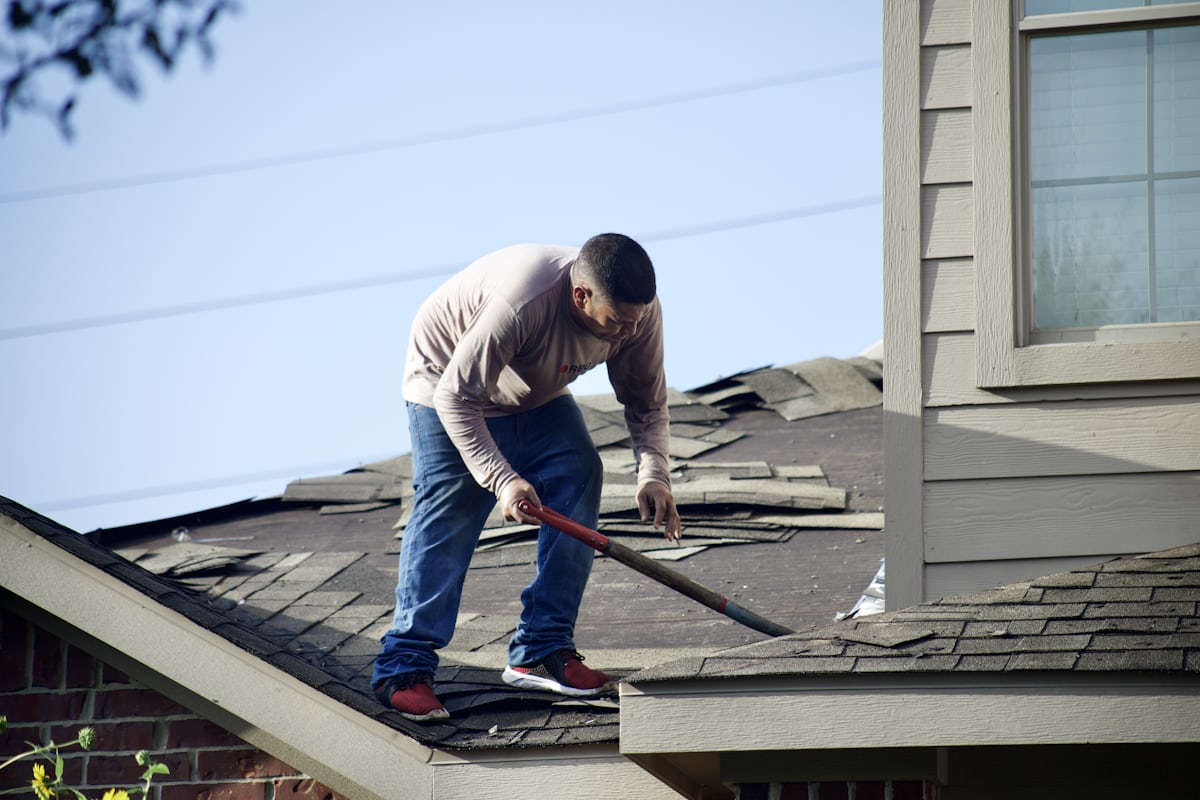
A thorough roof inspection with photo documentation builds homeowner trust and strengthens your roofing estimate.
Step 4: Proposal Presentation
This is the highest-leverage step. Proposals presented in person, at the appointment, close at 2–3× the rate of proposals emailed after the fact. The goal is to leave the appointment with a signed contract or a specific return appointment — not an open-ended "I'll think about it."
What a strong roofing proposal includes:
- Itemized scope of work (materials, removal, decking, flashing, permit)
- Timeline and crew scheduling
- Warranty terms — both manufacturer and workmanship
- Financing option presented as monthly payment, not just total cost
- Signature line — so closing is a natural next step, not a separate conversation
Tools like EasyQuote let reps generate a complete branded roofing quote on a tablet in the field in minutes, with financing pre-built in.
Step 5: Objection Handling
The four most common roofing sales objections and how top reps handle them:
| Objection | What the Homeowner Means | Effective Response |
|---|---|---|
| "I need to think about it" | Not enough urgency yet, or price concern not surfaced | "What part would be most helpful to go over again?" — surface the real concern |
| "That's too expensive" | Price is real, or they haven't seen financing | Present the monthly payment. Then anchor to cost of delay: leaks, interior damage, denied claims. |
| "I want to get other quotes" | Lack of trust or differentiation | "That's smart. Here's exactly what to compare us on: warranty, materials, and your crew." Leave your proposal in hand. |
| "I need my spouse here" | Decision not ready | Reschedule immediately. Do not leave without a specific return appointment. |
Step 6: Contract Signing and Deposit Collection
The close. Top teams close the deal at the appointment — paper or e-signature on a tablet. Best practices:
- Collect a deposit at signing (typically 10–30% of project cost). Deposits dramatically reduce cancellation rates.
- E-signatures via the proposal tool are faster, cleaner, and eliminate the "I didn't realize what I signed" problem later.
- Immediately send a confirmation text/email with the signed contract and project timeline.
If the homeowner doesn't sign at the appointment, the follow-up sequence starts immediately — not the next day. A structured follow-up cadence (same evening, then 24 hours, then 72 hours) recovers a significant percentage of prospects who didn't sign on the spot.
Step 7: Handoff to Project Management
The sales process ends at the signed contract — but what happens next determines your referral rate. A clean handoff from sales to production is the difference between a customer who refers three neighbors and a customer who leaves a 1-star review.
- The project record should be created automatically from the signed proposal — no manual data entry, no dropped details.
- The customer should receive an intro message from the project manager within 24 hours of signing.
- Installation milestones (permit filed, materials ordered, crew scheduled) should be visible to the sales rep so they can answer customer questions without calling ops.
SubcontractorHub's project management module creates the project automatically from the signed proposal and gives both reps and PMs real-time milestone visibility.
Sales-to-Production Handoff Checklist for Roofing
Step 7 is where most roofing companies lose margin, and it is the step least likely to be written down. The handoff is a transfer of information, not a notification — the project manager needs everything the rep learned on the roof, not just a signed contract in a shared folder. Work through this checklist on every job before the file leaves sales.
| Handoff item | Owner | Due by | Why it matters |
|---|---|---|---|
| Signed contract, scope of work and change-order terms attached to the project record | Sales rep | At signing | Prevents scope disputes once the crew is on site |
| Full inspection photo set, measurements and any drone or satellite report | Sales rep | At signing | The PM should never need a second trip to measure |
| Material selection confirmed: shingle line, color, ventilation, underlayment, drip edge | Sales rep | Within 24 hours | Colour changes after ordering are the most common margin leak |
| Financing or insurance status: approval amount, carrier, claim number, deductible | Sales rep | Within 24 hours | Production should not schedule against unfunded work |
| Site access notes: gate codes, pets, driveway load limits, dumpster and staging location | Sales rep | Within 24 hours | Avoids a crew standing idle on install morning |
| Customer expectations the rep set verbally — timeline, noise, landscaping, clean-up | Sales rep | Within 24 hours | Undocumented verbal promises drive most 1-star reviews |
| PM introduction message sent to the customer | Project manager | Within 24 hours | Closes the silence gap right after the deposit clears |
| Permit filed and material order placed | Project manager | Within 3 days | The two items that most often push an install date |
| Install date confirmed and visible to the original sales rep | Project manager | Within 5 days | Lets the rep answer customer questions without calling ops |
Two measurements tell you whether the handoff is actually working: handoff completeness (the share of jobs where every row above was filled in before production started) and time from signature to confirmed install date. Track both by sales rep. A rep with a high close rate and a consistently incomplete handoff is moving their cost onto the production team, and that cost does not show up anywhere in the sales numbers.
Roofing Sales Process Timeline: How Long Each Step Should Take
| Step | Storm/Insurance | Retail |
|---|---|---|
| Lead to appointment | Same day | 1–3 days |
| Inspection | 20–45 min | 30–60 min |
| Proposal presentation | Same appointment | Same appointment |
| Decision / follow-up | Same day – 48 hrs | 3–10 days |
| Contract to installation start | 3–10 business days | 1–3 weeks |
Free Calculators
Sales Conversion Rate Calculator →
Model what happens to monthly gross profit when close rate improves by 5–20 points — with the same leads and marketing spend.
Price Increase Impact Calculator →
See how many jobs you can afford to lose from a price increase and still come out ahead in gross profit.
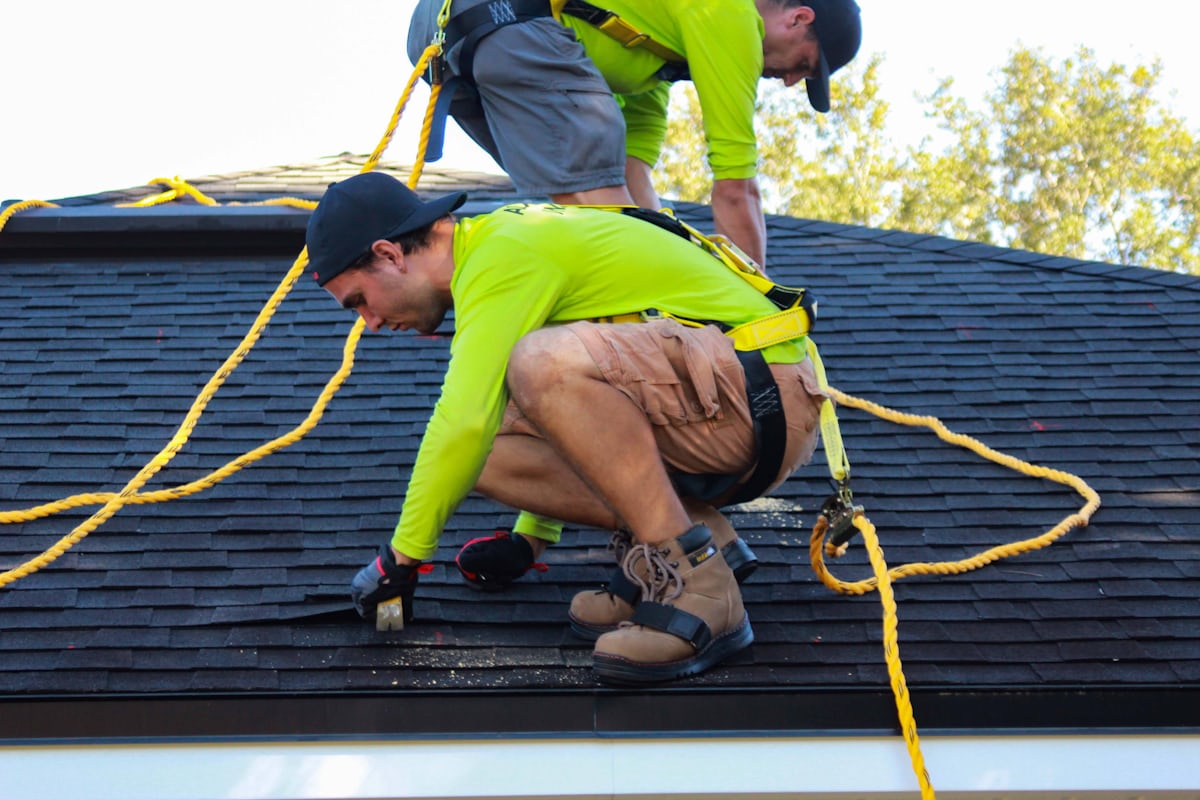
A well-executed roofing sales process ends with a smooth handoff to the crew and a satisfied homeowner.
The Technology Stack for a High-Performing Roofing Sales Team
In 2026, the gap between a team with the right tools and one running on spreadsheets and phone calls is roughly 10–15 percentage points of close rate. The right CRM and pipeline management software lets you track every prospect from first contact through close, so no lead falls through the cracks. Here's what matters:
- In-field proposal tool — generates branded proposals on a tablet at the appointment. No emailing numbers later. See EasyQuote.
- CRM with pipeline stages matching your sales process — not a generic CRM retrofitted for construction. See Sales Velocity.
- Automated follow-up sequences — triggered the moment a rep leaves an appointment without a signed contract.
- Rep performance dashboards — close rate by rep, by lead source, by week. Visibility creates accountability.
- Seamless ops handoff — project created from signed proposal, customer notified automatically. See Project Management.
Frequently Asked Questions
What is the roofing sales process step by step?
The 7 steps are: (1) lead generation, (2) initial contact and appointment setting, (3) roof inspection and damage assessment, (4) proposal presentation with financing, (5) objection handling, (6) contract signing and deposit collection, (7) handoff to project management. Top teams compress steps 3–6 into a single appointment.
How long does a roofing sales cycle take?
For storm/insurance restoration: 1–3 days from first contact to signed contract. For retail roofing: 5–14 days on average. Offering financing at the appointment is the single biggest lever for compressing retail sales cycles.
What is the best lead source for roofing contractors?
Storm canvassing has the best close rate and cost per acquisition. Customer referrals are second. Paid search captures high-intent buyers but at a higher cost per lead. Track close rate and revenue per lead by source to know where to allocate more budget.
How do I build a repeatable roofing sales process?
Document each step, assign a target timeline and outcome for each, build a CRM pipeline that mirrors those stages, create follow-up templates for open appointments, and track close rate by rep and by lead source weekly. Repeatability comes from visibility — you can't manage what you can't see.
Build a Repeatable Roofing Sales Process
SubcontractorHub gives roofing sales teams in-field quoting, automated follow-up, rep performance dashboards, and a seamless handoff to project management — all in one platform.
Book a Demo →SubcontractorHub
See How Top Contractors Close More Jobs
AI proposals, sales pipeline, and project management — all in one platform.
- ✓AI-powered proposals in the field
- ✓CRM built for contractor sales
- ✓Project tracking from sale to install
30 minutes. No commitment.