
Free Calculator
Roofing Labor Cost Per Square Calculator
Estimate roofing labor cost per square based on roof complexity, pitch, tear-off, and region — so you know what to expect before the first bid arrives.
Built by SubcontractorHub — the software roofing contractors use to quote, finance, and run every job.
Book a Demo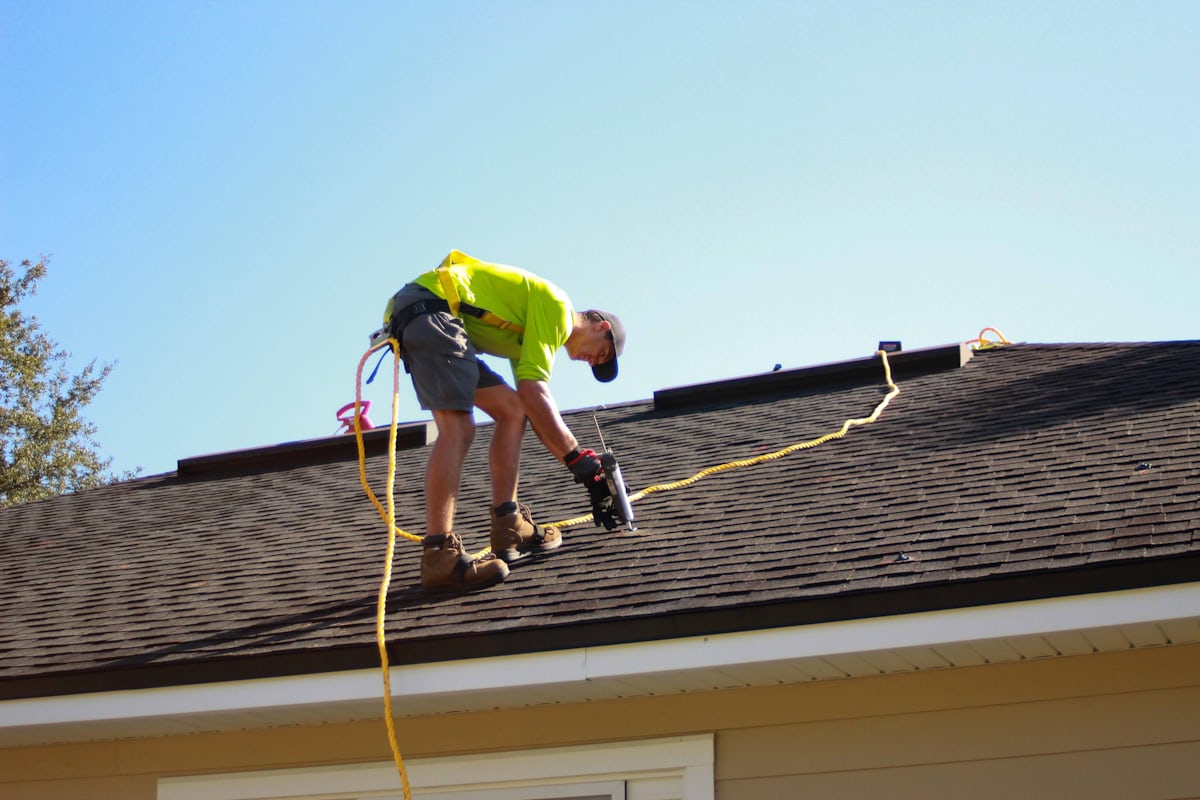
Estimate Your Roofing Labor Cost
Enter your roof size, complexity, pitch, and region to see a realistic labor cost range.
1 square = 100 sq ft. Divide your total roof area by 100.
📋 Important: All calculator results are ballpark estimates
The figures shown are approximate estimates based on typical averages and should be used for general planning purposes only. They are not a substitute for a professional assessment or written contractor quote. Actual costs, savings, and results will vary significantly based on your specific circumstances, local market conditions, equipment choices, and contractor pricing. Always confirm any estimate with a licensed contractor, financial advisor, or qualified professional before making purchasing or financial decisions.
How Roofing Labor Costs Are Set
Roofing labor cost per square: 2026 benchmarks
As of 2026, asphalt shingle roofing labor typically runs $150–$300 per square — which is $1.50–$3.00 per square foot, since one roofing square covers 100 sq ft. Both figures describe the same labor, just in different units, and they exclude materials. Steeper pitches, tear-offs, and premium materials push the number higher. Use these ranges as a sanity check against the calculator above and any bids you receive:
| Scenario | Labor cost per square | Labor cost per square foot |
|---|---|---|
| Simple gable roof, low pitch (4:12), no tear-off | $150–$200 | $1.50–$2.00 |
| Standard roof, moderate pitch (6:12), single-layer tear-off | $200–$275 | $2.00–$2.75 |
| Complex roof, steep pitch (12:12), two-layer tear-off | $300–$450 | $3.00–$4.50 |
| Metal or tile (specialty labor) | $400–$800+ | $4.00–$8.00+ |
Regional labor markets vary widely — high-cost metros can run 30–50% above these ranges. The calculator adjusts for region so you get a number closer to your local market.
Roofing labor cost per square foot vs. per square
These two numbers get mixed up constantly, and the difference is a factor of 100. A roofing square is 100 square feet of roof surface — the trade’s standard unit. A square foot is one square foot. So labor at $225 per square is $2.25 per square foot for the identical job.
To convert between them: divide the per-square rate by 100 to get the per-square-foot rate, or multiply the per-square-foot rate by 100 to get the per-square rate. A 2,400 sq ft roof is 24 squares, so at $2.25 per square foot the labor runs about $5,400.
Watch for this when comparing bids. A quote reading “$250” means something very different per square than per square foot, and a homeowner comparing a per-square-foot quote against a per-square quote can misread a competitive bid as ten times too expensive. Always confirm which unit a number is in before you compare it.
Labor is quoted per square, not per hour
Roofing contractors almost always price labor by the roofing square (100 sq ft of roof surface), not by the hour. This lets them bid predictably regardless of crew size or how fast the job goes. When comparing bids, make sure you understand what's included in each line item — some contractors bundle tear-off and installation; others break them out separately.
Pitch is the biggest variable in labor cost
A roof with a 12:12 pitch (45-degree angle) requires fall protection equipment, slower pace, and often additional crew members compared to a 4:12 pitch. The extra safety time and physical difficulty add 20–50% to labor on steep roofs. If you have a steep roof, always get bids from contractors with steep-slope experience — it's a specialty that commands a premium for good reason.
Tear-off adds a meaningful line item
Most local codes allow one re-roof (installing new shingles over existing), but two layers must be torn off before a new install. A two-layer tear-off adds roughly $50–$70 per square in labor versus no tear-off. It also increases the disposal cost (dumpster and dump fees), which may be billed separately.
What's never included in a labor-only estimate
- Roofing materials (shingles, underlayment, ridge cap, starter strip)
- Decking replacement for rotted or damaged boards
- Flashing at chimneys, walls, skylights, or plumbing penetrations
- Gutters or gutter guards
- Permit fees ($150–$500 depending on jurisdiction)
- Disposal / dumpster fees if not bundled into the bid
From Roof Measurements to a Signed Proposal
SubcontractorHub helps roofing contractors create professional proposals, collect deposits, and manage jobs from lead to payment.
Book a Free DemoFrequently Asked Questions
How much does roofing labor cost per square?
Roofing labor typically costs $150–$300 per square (100 sq ft) for a standard asphalt shingle job. That range widens based on roof pitch, complexity, region, and whether tear-off of old shingles is included. Steep or complex roofs can push labor to $350+ per square.
How much is roofing labor per square foot?
Roofing labor runs about $1.50–$3.00 per square foot in 2026 for a standard asphalt shingle job, before materials. Low-pitch roofs with no tear-off sit near $1.50–$2.00 per square foot; steep, complex roofs with a two-layer tear-off reach $3.00–$4.50, and metal or tile specialty labor can run $4.00–$8.00+. These are the same rates as the per-square figures contractors usually quote, just divided by 100.
What is the difference between per square and per square foot in roofing?
A roofing square is 100 square feet of roof surface, so the two units differ by a factor of 100. Labor quoted at $225 per square is $2.25 per square foot for the same work. Divide a per-square rate by 100 to get the per-square-foot rate. Roofing contractors almost always quote per square, while homeowners tend to search per square foot, which is why the same job can look wildly mispriced if you compare the two numbers directly.
Is tear-off labor included in the per-square rate?
It depends on the contractor. Many roofing bids show labor as a single per-square figure that includes tear-off and installation. Others break it out separately — typically $35–$65 per square for tear-off of one layer. Always confirm what's included in any quote you receive.
How long does it take to roof a house?
A typical 25–30 square residential roof takes a crew of 3–4 workers one full day on a simple, moderate-pitch job. Complex roofs with dormers and skylights, or very steep pitches, can take 2–3 days. Larger homes (40+ squares) typically take 2 days minimum.
What's not included in a roofing labor estimate?
Labor estimates typically cover installation of shingles, underlayment, and ridge cap. Not usually included: decking replacement ($2–$4/sq ft for rotted boards), new flashing at chimneys or walls, gutters, skylights, or ventilation upgrades. Get a line-item quote to see exactly what's covered.
Why do steep roofs cost more in labor?
Steep roofs require safety equipment (harnesses, scaffolding), slow down the crew's work pace, and increase fall risk. Contractors factor in longer job duration, higher insurance costs, and additional materials like steep-slope underlayments. Very steep roofs (13:12+) can cost 40–50% more in labor than a standard 6:12 pitch.
Win More Roofing Jobs
Send professional proposals, collect digital signatures, and track every job in one platform built for roofing contractors.
Get a Free DemoAll calculations are ballpark estimates based on typical roofing labor rates and should be verified with licensed roofing contractors in your area before making any financial decisions. All calculations are estimates based on historical information and should be verified by the user. This tool is provided as a free service for planning purposes only and is not a substitute for a professional assessment, a supplier quote, or applicable local code requirements.