
Best Roofing Estimating Software in 2026: An Honest Buyer's Guide
Published March 2026 · Updated September 2026 · 14 min read
Quick Answer
The best roofing estimating software in 2026: SubcontractorHub EasyQuote for AI proposals + CRM + project management in one login; AccuLynx for insurance restoration shops using Xactimate; Roofr for polished e-signature proposals at low cost; EagleView for aerial measurement data. The biggest mistake contractors make is buying a measurement tool when they actually need a full proposal-to-close platform.
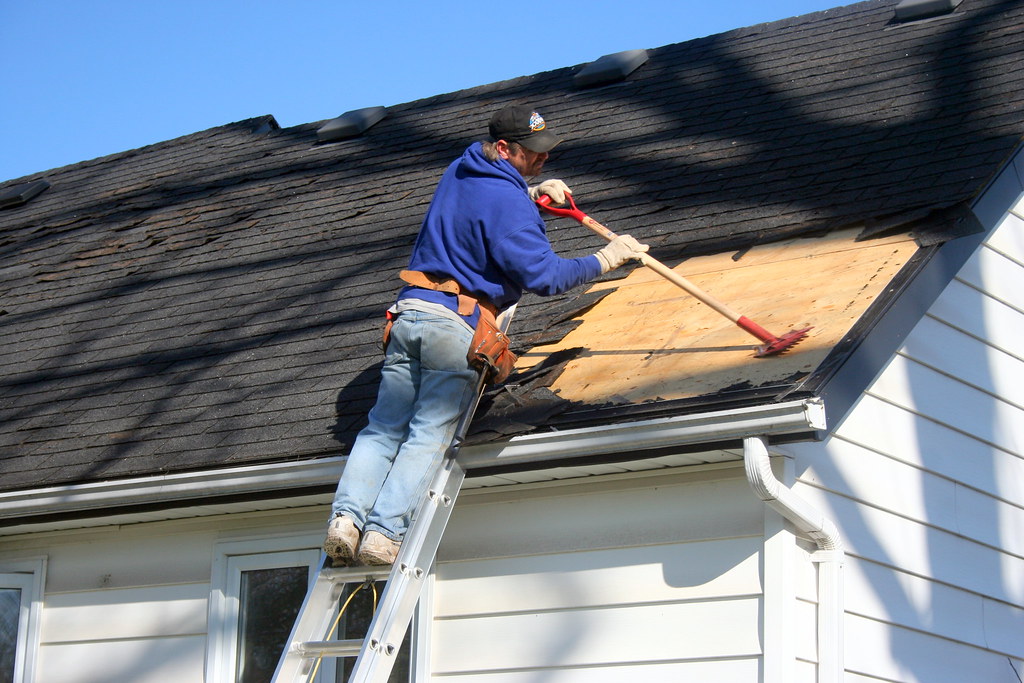
Sending a roofing estimate used to mean a clipboard, a calculator, and hoping the homeowner said yes before your competitor showed up. Today, the best roofing estimating software lets you generate a branded, professional proposal — with materials, labor, and financing options — in minutes from a tablet on the driveway.
But there are dozens of tools on the market, from standalone aerial measurement platforms to full CRM suites. This guide cuts through the noise with honest assessments of the top options in 2026, based on what actually matters for roofing businesses.
What to Look for in Roofing Estimating Software
Before comparing tools, get clear on which problem you're actually solving:
- Proposal quality: Can you generate branded, professional roofing proposals the homeowner will actually read and sign — with e-signatures built in?
- Speed: How fast can you go from roof measurements to a sent proposal? Minutes, not hours. A good mobile estimating app lets your sales rep close on the driveway.
- Measurement integration: Does it pull aerial data from EagleView, Roofr, or GAF QuickMeasure automatically? Roof takeoff software that syncs directly to your estimate eliminates manual re-entry errors.
- Material costs: Does the platform use a live price catalog so material costs in your estimates reflect current supplier pricing?
- Financing options: Can the customer see and apply for financing directly inside the proposal?
- CRM integration: Is the estimate connected to a lead record so follow-ups are automatic?
- Multi-trade support: If you do solar or HVAC too, does the same platform handle all three?
- Insurance workflow: If you do storm restoration, does it integrate with Xactimate?
Top Roofing Estimating Software: At a Glance
| Platform | Best For | Starting Price | AI Proposals | Xactimate | Multi-Trade |
|---|---|---|---|---|---|
| SubcontractorHub | Roofing, solar & HVAC | See plans | ✅ EasyQuote | ❌ | ✅ All three |
| AccuLynx | Insurance restoration | ~$250/mo+ | Partial | ✅ Native | ❌ Roofing only |
| JobNimbus | Small roofing crews | ~$25/user/mo | ❌ | Partial export | ❌ |
| Roofr | Residential retail | Free / $249/mo | Partial | ❌ | ❌ |
| Leap | Growing retail teams | ~$99/mo | ❌ | ❌ | Limited |
| EagleView | Aerial measurement | $15–$50/report | ❌ Measurement only | ✅ Export | ❌ |
| Xactimate | Insurance claims | ~$99/mo+ | ❌ | ✅ Native | ❌ |
1. SubcontractorHub — Best All-in-One for Roofing Contractors
SubcontractorHub's EasyQuote module is built for roofing contractors who are done juggling separate tools for proposals, CRM, and project management. You enter the job details once — square footage, materials, labor, and financing options — and EasyQuote generates a branded, professional proposal in minutes. Customers can review and apply for financing directly inside the document.
Unlike AccuLynx or JobNimbus, which are roofing-only platforms, SubcontractorHub supports solar and HVAC in the same login. If you're diversifying trades — or already running multiple verticals — that means one database, one workflow, and one reporting dashboard for the whole business.

EasyQuote: roofing estimates built from a live price catalog — material options, financing, and e-signature on one screen
✅ Pros
- AI-powered proposals from minimal inputs
- CRM + project management + estimating in one platform
- EagleView aerial measurement integration
- Built-in financing options (GoodLeap, LightReach, and more)
- Supports roofing, solar, and HVAC
- Ambassador referral program for lead generation
❌ Cons
- Not designed for Xactimate insurance workflows
- Best fit for retail and subcontract roofing — not storm restoration
Best for: Roofing contractors who also do solar or HVAC, or who want to replace multiple tools with one platform. See SubcontractorHub pricing.
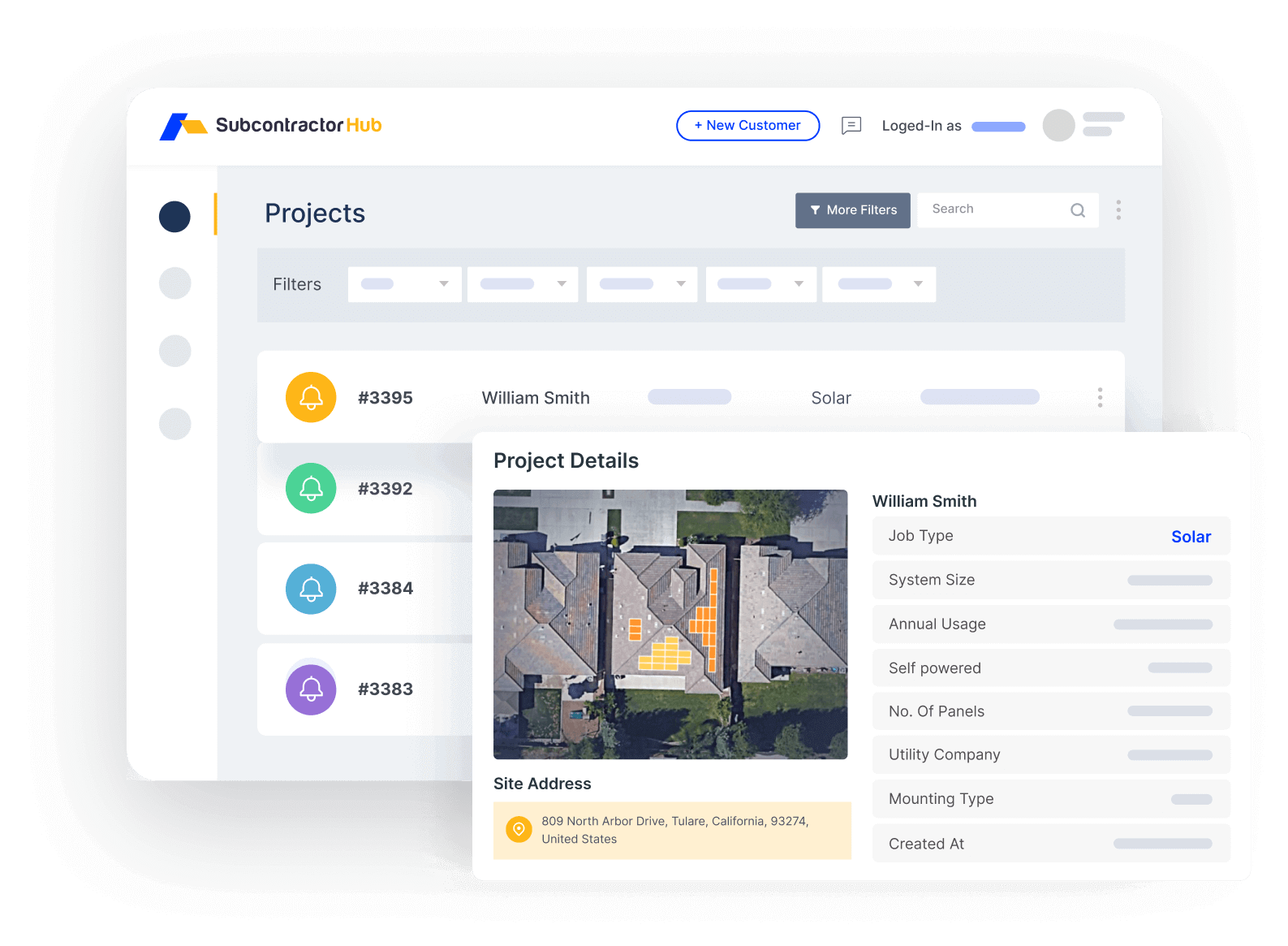
SubcontractorHub project management: roofing jobs flow from signed estimate to crew scheduling and final inspection — no re-entry
2. AccuLynx — Best for Insurance Restoration Shops
AccuLynx is purpose-built for residential roofing contractors who run insurance restoration operations. It integrates with Xactimate, tracks supplements, and manages adjuster communications inside the job record. If your revenue comes primarily from storm damage work, AccuLynx offers the deepest workflow support available.
✅ Pros
- Deep Xactimate integration
- Supplement tracking built in
- Insurance adjuster communication workflows
- Material ordering via ABC Supply & Beacon
❌ Cons
- Roofing-only — no solar or HVAC support
- $250+/month — expensive for small teams
- Pricing requires a sales call
Best for: Insurance restoration shops doing $3M+ annually. Considering AccuLynx? See all AccuLynx alternatives.

The best roofing estimating software lets roofing contractors close deals on the spot — with roofing proposals the homeowner can sign before you leave the driveway.
3. JobNimbus — Best Budget Option for Small Roofing Crews
JobNimbus is a popular entry-level choice for small roofing teams that need basic job tracking and simple estimates without a steep price tag. It offers a Kanban-style pipeline, digital estimates, and Beacon integration for live material pricing. What it lacks is automation, AI proposals, and any support for additional trades.
✅ Pros
- Affordable starting price
- Simple setup with low learning curve
- Beacon live material pricing integration
- Basic Xactimate export support
❌ Cons
- No AI proposal generation
- Limited CRM automation
- Roofing-only
Best for: Crews of 1–10 who need the basics. Growing past JobNimbus? See JobNimbus alternatives.
4. Roofr — Best Value for Residential Retail Roofers
Roofr combines aerial roof measurement with e-signature proposals in one product at a price that's hard to beat. The free Starter tier gives you basic measurement; the $249/month Essentials plan adds proposals, instant booking, and a contractor marketplace. It's purpose-built for residential retail — not insurance restoration, and not multi-trade operations.
✅ Pros
- Free Starter tier available
- Built-in measurement + proposal tool
- Clean e-signature proposal templates
- Instant booking portal for customers
❌ Cons
- No CRM or project management
- Limited financing integration
- Not built for multi-trade operations
Best for: Solo roofers or small residential retail shops who want polished proposals at the lowest possible monthly cost.
5. Leap — Best for Growing Retail Roofing Sales Teams
Leap focuses on the sales side of roofing — digital measurements, proposal creation, e-signatures, and a configurable pricebook. It's popular with retail roofing companies that need a clean sales workflow without the complexity of enterprise software. It integrates with several financing providers, which matters for closing larger tickets.
✅ Pros
- Clean proposal and sales workflow
- Configurable pricebook
- E-signatures and digital contracts
- Financing integrations for larger tickets
❌ Cons
- No AI proposal generation
- Limited project management features
- Primarily a sales tool, not a full CRM suite
Best for: Retail roofing teams of 5–30 focused on closing retail residential sales.
6. EagleView — Best Aerial Measurement Tool
EagleView is not estimating software in the traditional sense — it's the industry-standard aerial roof measurement tool. A single EagleView report ($15–$50 depending on detail level) delivers precise square footage, pitch, valleys, ridges, and hips. Most roofing platforms — including SubcontractorHub — integrate directly with EagleView to pull measurement data into estimates automatically. This aerial measurements capability eliminates the need to climb every roof before generating an estimate.
✅ Pros
- Industry-standard aerial measurement accuracy
- Widely accepted by insurance carriers
- Integrates with most major roofing platforms
- Eliminates manual measurements and ladder climbing
❌ Cons
- Not a proposal or CRM platform
- Per-report costs add up at high volume
- Needs a separate tool for proposals and follow-up
Best for: Any roofing contractor who needs precise aerial measurements — used alongside a full estimating and CRM platform.
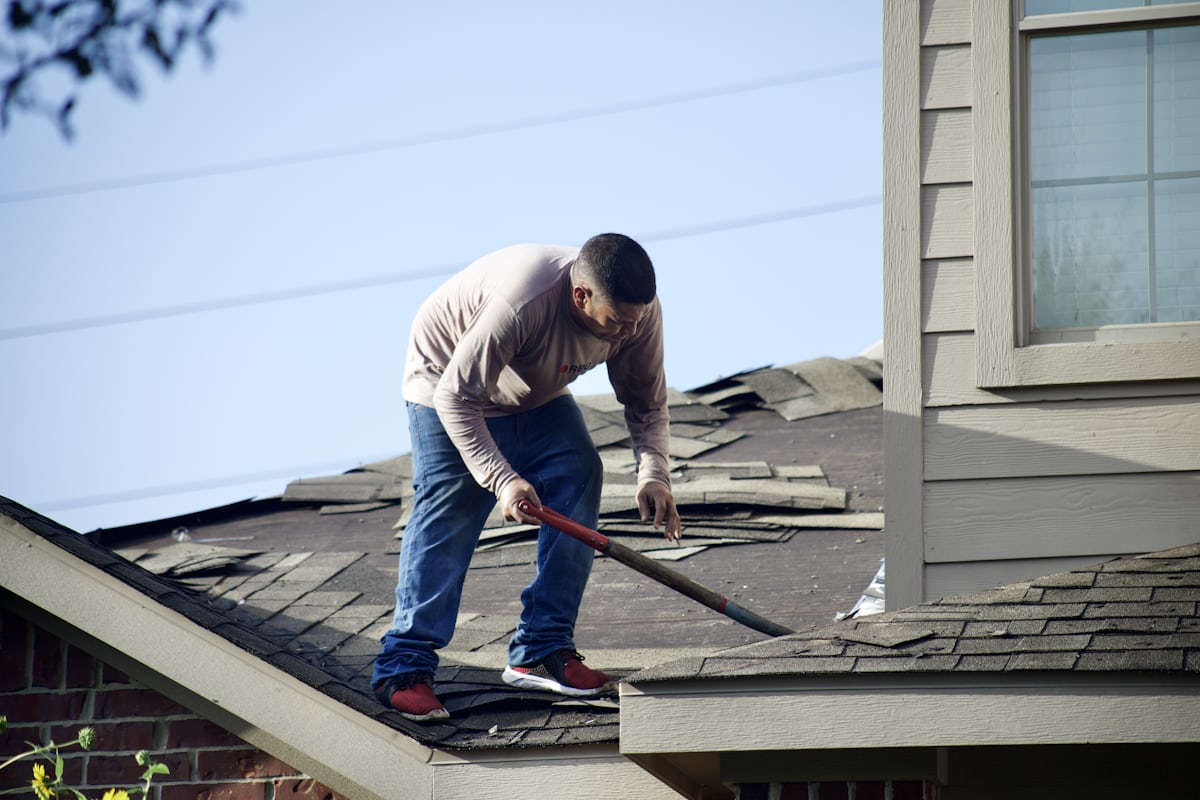
Roof takeoff software and aerial measurements let roofing contractors skip manual ladder climbs and build accurate estimates faster.
7. Xactimate — Best for Insurance Claims Estimating
Xactimate, owned by Verisk, is the claims-estimating standard that insurance carriers require for large-loss and supplement submissions. If you run high-volume storm restoration work, Xactimate is non-negotiable — no alternative comes close to carrier acceptance. That said, it's not a CRM, not a sales tool, and doesn't replace a platform like AccuLynx or SubcontractorHub for managing leads and production.
✅ Pros
- Insurance carrier standard — no real alternative
- Deep database of line items and pricing
- Required for most supplement claim submissions
❌ Cons
- Steep learning curve
- Not a CRM or project management tool
- Not useful for retail or subcontract roofing
Best for: Insurance restoration contractors — used alongside AccuLynx or another CRM.
Roof Measurement Tools Compared: EagleView vs. Hover vs. iRoofing vs. RoofSnap vs. Pix4D
Measurement is a separate purchase from your estimating platform, and it is the one most contractors get wrong \u2014 either paying per-report for jobs that never close, or trusting a free takeoff on a complex roof and eating the difference. Here is how the main options actually differ, including for siding takeoffs, which several of these handle differently from roofing.
- EagleView \u2014 the insurance-industry standard. Aerial imagery, per-report pricing, and the reports adjusters recognize without argument, which is the real reason to pay for it. Highest cost per measurement and a turnaround wait, but if you are documenting a claim, that credibility is the product. Integrates with most roofing platforms including AccuLynx and SubcontractorHub.
- Hover \u2014 built from photos your rep takes on a phone, and it returns a 3D model of the whole exterior rather than a roof-only report. That makes it the strongest of this group for siding, windows, and full-exterior jobs, where a roof-only takeoff leaves you re-measuring. Requires someone on-site walking the house, which EagleView does not.
- iRoofing \u2014 bundles measurement with a sales presentation and a shingle visualizer, so it competes less on measurement precision and more on closing the homeowner in the living room. Subscription rather than per-report, which suits high-volume retail shops that would otherwise rack up report fees on jobs they never sell. Siding takeoff is available but secondary to roofing.
- RoofSnap \u2014 the value option, with self-measurement from aerial imagery plus optional ordered reports, and estimating and contracts built in. It is the cheapest way to get a defensible roof takeoff, and the trade-off is that self-measuring accuracy depends on your team's care rather than a vendor's guarantee.
- Pix4D \u2014 drone photogrammetry, not a roofing product. You fly the property and it builds a survey-grade model. Genuinely the most accurate option here and the right answer for commercial, low-slope, and complex multi-building work \u2014 but it needs a drone, a licensed pilot, and processing time, so it is overkill for residential replacements.
- Plnar \u2014 smartphone-based interior and exterior capture aimed primarily at the insurance and restoration workflow rather than roofing sales. Worth knowing if your work mixes interior damage scoping with exterior takeoff; not a substitute for a roof measurement provider on replacement work.
The short version: EagleView if you are fighting adjusters, Hover if you sell siding and exteriors, iRoofing or RoofSnap if per-report fees are eating your margin on unsold jobs, Pix4D if you bid commercial. Note that this is a different question from "EagleView vs. AccuLynx" \u2014 that comparison mixes categories, since AccuLynx is the business platform and EagleView is the measurement source that feeds it. Most roofing contractors run one of each.
What's New in Roofing Estimating Software in 2026
Updated September 2026. Several meaningful shifts have happened in the roofing estimating software market since early 2026 that affect which platform is the right fit for your business:
- AI-generated proposals are now table stakes for installation contractors. Platforms that required manual line-item entry in 2024 now generate full proposals from a few inputs. SubcontractorHub's EasyQuote and Roofr's proposal builder have both improved dramatically — reps can generate a multi-option, branded proposal on a tablet in under 5 minutes on the customer's driveway.
- Job costing is the next frontier. The biggest gap for roofing estimating platforms in 2026 is the step after the proposal closes. Most tools still don't connect what was quoted to what was actually spent. Platforms that close this loop — so you can compare estimated material costs to actual supplier invoices per job — are becoming a key differentiator. See our guide to roofing job costing software for a full breakdown.
- Financing integration is driving close rate differences. Retail roofing contractors offering financing at the point of sale (GoodLeap, Sungage) are consistently outperforming those who present financing as a follow-up option. The platforms that embed financing inside the proposal — not as a separate step after signing — are seeing the largest lift in close rates.
- Pricing increases across the board. AccuLynx has increased to ~$300+/month for most plans. Leap has moved upmarket. Roofr remains the most affordable entry point for small retail shops. ServiceTitan continues at $245–$400+/tech/month for enterprise-level shops.
- May 2026 Google Core Update completed June 2. Content emphasizing genuine contractor experience and specific product comparisons (not generic platform lists) is performing better post-update. This guide reflects those changes.
Commercial Roofing Estimating Software: Why Residential Tools Fall Short
Nearly every "best roofing estimating software" list — most of this guide included — is written for residential retail and insurance restoration. Commercial and low-slope roofing is a genuinely different estimating problem, and most of the platforms above were not built for it. If you bid schools, warehouses, retail centers, or municipal work, these are the requirements that actually decide whether a tool will work for you:
- Low-slope assemblies, not shingle squares. Commercial estimates are built around TPO, EPDM, modified bitumen, and built-up roofing systems priced per square foot of membrane — plus insulation R-value build-ups, cover board, fasteners, and adhesive coverage rates. A price catalog organized around shingle bundles and squares cannot express a tapered insulation system.
- Takeoff from plans and specs, not aerial imagery. Aerial measurement (EagleView, Roofr) is excellent for a residential ridge-and-valley roof. Commercial bids come off architectural drawings, roof plans, and a spec section — with parapets, curbs, drains, expansion joints, and penetrations counted individually.
- Bid-day workflow and multi-round pricing. Commercial work is competitively bid against a due date, usually through a general contractor or a plan room. You need bid tracking, alternates and unit prices, and the ability to revise a number fast when addenda drop — not a one-shot homeowner proposal with an e-signature line.
- Progress billing, AIA pay applications, and retainage. A residential job is deposit-plus-final. A commercial reroof bills monthly against a schedule of values, typically on an AIA G702/G703 pay application, with 5–10% retainage held until closeout. Estimating software that can't carry the estimate into a schedule of values forces you to rebuild the entire budget in a spreadsheet every billing cycle.
- Prevailing wage, certified payroll, and bonding. Public and institutional work adds prevailing-wage rates, certified payroll reporting, and payment or performance bonds. These change your labor cost per hour and belong in the estimate — not discovered after award.
- Warranty and manufacturer certification. NDL (no dollar limit) manufacturer warranties require certified applicators and specified assemblies. The estimate has to reflect the certified system, not the cheapest equivalent.
The practical read: if commercial is a small share of your revenue, keep your residential platform and build commercial bids in a spreadsheet or a dedicated takeoff tool. If commercial is most of what you do, you want a platform oriented to project and contract management rather than homeowner proposals — see commercial roofing software and roofing job costing software for how the commercial workflow differs. Contractors running both sides of the business usually pair a retail platform for the residential pipeline with a takeoff tool for commercial bid days.
How to Choose the Right Roofing Estimating Software
The right pick depends on your revenue model:
- Insurance restoration shop: AccuLynx + Xactimate is the established stack. Add EagleView for aerial measurements.
- Retail roofing (residential): SubcontractorHub for AI proposals + CRM, or Roofr if you want a lightweight, low-cost start.
- Multi-trade (roofing + solar + HVAC): SubcontractorHub is the only platform built for all three trades in one login.
- Small crew just getting started: JobNimbus or Roofr Starter to learn the workflow, then migrate to a full platform as you grow.
- Commercial / low-slope roofing: None of the residential-first tools above fit cleanly. Prioritize plan-and-spec takeoff plus schedule-of-values and progress-billing support — see the commercial section above for the full requirement list.
Whichever path you choose, the best roofing estimating software for your business is the one your sales team will actually use in the field — whether that means a mobile estimating app on the driveway or a desktop workflow back at the office. Prioritize the tool that fits how your crew actually sells.

Accurate material costs are the foundation of every winning roofing estimate — the best roofing estimating software keeps your price catalog current automatically.
Related Guides
- Best Roofing CRM Software in 2026
- Best AccuLynx Alternatives
- Best JobNimbus Alternatives
- Best Contractor Proposal Software in 2026
- Best CRM for Solar Contractors
- → SubcontractorHub for Roofing Contractors
- → Roofing Contractor Software
- Best Roofing Software for Contractors in 2026
- Best Roofing Business Management Software in 2026
- Roof Repair vs. Replacement Calculator — Data-Driven Decision Tool
- Roof Insurance Claim Calculator — Estimate ACV vs. RCV Payout
Roof Estimating Software, Apps and Programs: Which Term Means What
Contractors search for this category under half a dozen names, and they do not all mean the same thing. Sorting them out first saves buying the wrong category of product.
- Roof estimating software and roofing estimating software are used interchangeably and describe the same thing: a system that turns measurements into a priced, presentable estimate.
- Roof estimating programs usually signals desktop-era, install-on-a-PC software. Almost everything current is browser-based with a mobile companion, so the distinction now matters mainly for whether the office and the field see the same data.
- A roof estimating app generally means the field half — measure or pull an aerial report, build a quote, capture a signature at the house. Some are standalone; the useful ones write back into the same record the office works from.
- Roof takeoff software is the measurement layer only. It produces quantities, not prices. Pairing a takeoff tool with a spreadsheet is the setup most contractors are trying to leave when they start searching this category.
- A roof measurement service is not software at all — you order a report per property. Accurate, but a per-report cost that scales with bid volume rather than a fixed subscription.
- Roof estimator software, roof estimation software and roof calculation software are the same category under different names. The one nuance: "estimator" sometimes means the person, so software for roof estimators occasionally describes a field app for that role — measure, price and present in one visit — rather than an office costing system.
- Roof bidding software and roofing bid software are a genuinely different requirement, not a synonym. They describe managing a competitive submission rather than building the cost. See the next section before you assume an estimating tool covers it — most do not.
Estimating commercial roofs
Everything above assumes steep-slope residential work priced per square. Low-slope commercial work is a different estimate: priced per square foot across multiple roof sections, with membrane assemblies for TPO, EPDM, PVC or modified bitumen, tapered insulation packages, and detail work at curbs, drains and parapets that carries most of the labor. It is bid to a general contractor as a package with alternates and unit prices, then billed monthly against a schedule of values with retainage held back.
If that is the work you are pricing, start with commercial roofing estimating software and the commercial roof estimating guide instead — the residential tools in this comparison do not model sections, assemblies or progress billing.
Metal roofs, siding and multi-trade estimates
Two scope questions come up constantly and are worth asking on any demo. First, metal roofing is panel-and-trim estimating rather than bundles-and-squares: panel lengths, seam type, closures, and flashing detail drive the number, and a tool that only thinks in shingle squares will fight you. Second, most residential roofing companies also sell siding, gutters and windows, and a homeowner replacing a storm-damaged roof frequently buys siding in the same conversation. If your estimating tool cannot put roofing and siding on one proposal, your reps will build the second half in a spreadsheet — which is exactly the workflow the software was bought to eliminate.
Roof Bidding Software vs. Estimating Software: Not the Same Purchase
Every tool compared above is an estimating and quoting tool. That is the right category if your number goes to a homeowner. It is the wrong category if your number goes to someone who is collecting three others — and that difference is why contractors who search for roof bidding software often buy an estimating product and find half the workflow missing.
Estimating is the cost build-up: quantities, material and labor pricing, margin. Bidding is everything wrapped around submitting that cost competitively, on someone else's deadline. A homeowner is not running a bid tab, so residential retail platforms have no reason to build bid-day features and generally have not.
If you bid to general contractors, property managers or school districts, these are the requirements to confirm on a demo — none of them are standard in residential roofing tools:
- A bid calendar with due dates. Invitations to bid arrive with hard deadlines. Missing one costs the job outright, so bid dates belong in the system, not in an estimator's inbox.
- Invitation-to-bid and plan-set tracking. Which GCs invited you, which addenda have been issued, and which drawing revision your quantities came from. Bidding off a superseded plan set is the most common way a roofing bid loses money after award.
- Alternates and unit prices as first-class fields. Commercial bids routinely ask for a base bid plus priced alternates, and unit prices for wet insulation or deck replacement discovered during tear-off. Estimating tools that only output one total force this into a cover letter.
- Scope inclusions and exclusions on the bid form. What you are not carrying — nailers, mechanical curbs, interior protection — is the clause that decides who pays when it shows up in the field.
- Bid bond and prequalification tracking. Public and larger private work requires bonding capacity and prequal paperwork with expiry dates. That is a compliance record, not an estimating feature.
- Hit-rate reporting by GC. Bid volume without a win rate per general contractor means you cannot tell which relationships are worth the estimating hours.
Practically, most roofing companies land in one of three places. If you bid almost entirely to GCs, lead with commercial roofing estimating software and pair it with plan-based roofing takeoff software, because the takeoff and the bid form are where the hours go. If you quote homeowners and bid the occasional commercial reroof, keep a residential platform as the system of record and treat bid-day tracking as a documented manual process rather than buying a second subscription for a handful of bids a year. If you are moving from mostly residential to mostly commercial, the bid calendar is the first thing that breaks — usually well before the estimating math does.
One caution on vocabulary: roofing bidding and proposal software is sometimes used to mean the homeowner-facing presentation layer instead — a proposal a customer reads and signs. That is a different product again, closer to proposal and quoting tools than to bid management. Worth clarifying which one you mean before a sales call, since both get sold under the word "bid."
Frequently Asked Questions
What is the best roofing estimating software in 2026?
The best roofing estimating software in 2026 depends on your business model. SubcontractorHub is the top all-in-one choice for contractors who need AI proposals, a built-in CRM, and project management in one platform. AccuLynx is purpose-built for insurance restoration shops using Xactimate. Roofr is the best value for small residential retail roofers. EagleView remains the industry standard for aerial measurements.
How much does roofing estimating software cost?
Roofing estimating software ranges from free (Roofr Starter) to $350+ per user per month (ServiceTitan). AccuLynx starts around $250/month. Leap and JobNimbus are mid-tier at $25–$100/month. EagleView charges $15–$50 per measurement report. SubcontractorHub pricing is available at subcontractorhub.com/plan and includes AI quoting, CRM, and project management in one subscription.
Can roofing estimating software generate AI proposals automatically?
Yes. SubcontractorHub's EasyQuote module generates AI-powered branded proposals from a few inputs — including material line items, labor, and financing options — in minutes. AccuLynx and JobNimbus offer digital estimates, though their proposal builders are less automated. Roofr and Leap offer templated proposals but no AI generation.
Do I need separate aerial measurement software for roofing estimates?
Not necessarily. SubcontractorHub integrates with EagleView, pulling aerial roof measurements directly into your estimates without leaving the platform. AccuLynx and JobNimbus also offer EagleView integrations. Roofr has its own built-in measurement tool. Standalone measurement tools like EagleView are best used alongside a full estimating platform.
What roofing estimating software is best for Xactimate insurance claims?
Xactimate is the insurance-claim estimating standard — most carriers require it for supplement submissions and large-loss claims. AccuLynx integrates tightly with Xactimate and is the most popular CRM for insurance restoration roofing. SubcontractorHub handles retail and subcontract roofing well but is not designed for Xactimate-driven insurance workflows.
What is the best commercial roofing estimating software?
Commercial and low-slope roofing needs different software than residential retail. The residential-first tools (Roofr, AccuLynx, JobNimbus) are built around shingle squares, aerial measurement, and one-shot homeowner proposals. Commercial estimating requires plan-and-spec takeoff for TPO, EPDM, modified bitumen and built-up assemblies, bid-day tracking with alternates and unit prices, and the ability to carry the estimate into a schedule of values for AIA G702/G703 progress billing with retainage. Contractors doing mostly commercial work should prioritize a plan-based takeoff tool plus a platform built for project and contract management. Contractors running both sides typically pair a residential platform like SubcontractorHub with a dedicated commercial takeoff tool.
Can roofing estimating software handle AIA progress billing and retainage?
Most residential roofing estimating tools cannot. Residential jobs bill as a deposit plus a final payment, so the software has no concept of a schedule of values. Commercial reroofs are billed monthly against a schedule of values on an AIA G702/G703 pay application, with 5-10% retainage held until closeout. If your estimating tool cannot convert the approved estimate into a schedule of values, you will rebuild the budget in a spreadsheet every billing cycle. Confirm schedule-of-values support, percent-complete billing, and retainage tracking before you buy if commercial work is a meaningful share of your revenue.
What is roof bidding software, and is it the same as estimating software?
They overlap but are not the same. Roof bidding software is built around submitting a competitive number to someone who is collecting several: a general contractor, a property manager, or a municipality. That workflow needs a bid calendar tied to due dates, invitation-to-bid tracking, alternates and unit-price schedules, scope-exclusion language, and often bid bond tracking. Roofing estimating software is the cost build-up underneath the bid — measurements, material and labor pricing, and margin. Most residential retail tools (Roofr, JobNimbus, Leap) are estimating and quoting tools with no bid-day features at all, because a homeowner is not running a bid tab. If you are bidding to GCs rather than quoting to homeowners, treat bid management as a separate requirement and confirm it explicitly on a demo.
Is roof estimator software different from roof estimating software?
No — they are the same category, and the search terms are used interchangeably. Roof estimator software, roof estimating software, roof estimation software and roof calculation software all return the same class of product: a system that turns roof measurements into a priced estimate. The only distinction worth noting is that estimator sometimes refers to the person rather than the product, so a phrase like software for roof estimators occasionally means a field app for the estimator role specifically — measure on site, price, and present in one visit — rather than an office costing system. When comparing tools, ignore the naming and check three things: where the measurements come from, whether you control the pricing database, and whether the approved estimate carries forward into the job without re-entry.
What SubcontractorHub Does for Roofing Contractors
If you're tired of building estimates in spreadsheets or PDFs that customers ignore, SubcontractorHub's EasyQuote was built to fix exactly that. Book a demo and we'll show you a live quote from measurement to signed proposal in under 30 minutes.
Book a DemoSubcontractorHub
See How Top Contractors Close More Jobs
AI proposals, sales pipeline, and project management — all in one platform.
- ✓AI-powered proposals in the field
- ✓CRM built for contractor sales
- ✓Project tracking from sale to install
30 minutes. No commitment.
SubcontractorHub
See How Top Contractors Close More Jobs
AI proposals, sales pipeline, and project management — all in one platform.
- ✓AI-powered proposals in the field
- ✓CRM built for contractor sales
- ✓Project tracking from sale to install
30 minutes. No commitment.