
HVAC Flat Rate Pricing Guide 2026: Formulas, Markups, and Price Book Setup
By SubcontractorHub Editorial Team·Published July 2026·Updated September 2026

Bottom line up front: Flat rate pricing only protects your margin if the numbers underneath it are right. Build every price from your loaded labor rate — wage plus taxes, benefits, overhead, and profit — not the hourly wage you pay a tech. Get that number wrong and a whole price book quietly loses money on every ticket.
Flat rate is the fastest-growing pricing model in HVAC for a simple reason: it decouples what you charge from how long a job takes. When a repair goes faster than expected, hourly billing punishes you for being efficient — flat rate rewards it. Contractors who move from time-and-materials to a well-built flat rate price book routinely report 20–40% higher revenue per technician without adding a single lead.
But flat rate is only as good as the math behind it. This guide walks through the exact formula, the markup and labor-rate benchmarks that hold up in 2026, a fully worked example, and how to structure a price book your techs can actually sell from.
1. What HVAC Flat Rate Pricing Actually Is
Flat rate pricing means you charge one fixed, all-inclusive price for a defined task — replace a capacitor, install a condensate pump, perform a cooling tune-up — quoted before the work starts. The price already bundles parts, labor, overhead, and profit. The homeowner sees a single number and approves it up front, so there are no clock-watching arguments and no end-of-job sticker shock.
Compare that to time-and-materials (T&M), where you bill logged hours plus a parts markup. T&M feels “fair,” but it caps your upside: a tech who nails a repair in 25 minutes bills 25 minutes. Flat rate charges for the value and expertise of solving the problem, not the stopwatch — which is why the model consistently lifts average ticket size.
2. The HVAC Flat Rate Formula
Every flat rate price is built from the same equation:
Flat Rate Price = (Parts Cost × Markup) + (Labor Hours × Loaded Labor Rate)
Two inputs decide whether the model works: your parts markup and your loaded labor rate. Get these right and everything downstream is arithmetic.
- Parts markup — 2.5x to 3.5x. A $40 capacitor doesn't get sold for $40. Markup covers truck stock, warranty risk, procurement time, and shrinkage. 3x is the common default; premium markets and hard-to-source parts justify 3.5x.
- Loaded labor rate — usually $95–$200/hr. This is the number most contractors get wrong. It is not the $28/hr you pay the tech. It's that wage plus payroll taxes, workers' comp, benefits, vehicle, insurance, software, office staff, and your target profit — all divided across billable hours.
3. How to Build Your Loaded Labor Rate
The loaded labor rate is where a price book lives or dies. Work it out in four steps:
- Start with the true cost of a tech. A $28/hr wage with taxes, comp, and benefits is really about $40/hr to employ.
- Add overhead per billable hour. Total your monthly overhead — rent, trucks, fuel, insurance, software, office salaries, marketing — and divide by the billable hours your techs actually produce (rarely more than ~1,300 of 2,080 annual hours per tech).
- Add your profit target. Layer 20–25% net profit on top. Profit is a line item, not whatever happens to be left over.
- Divide by billable-hour efficiency. Because only ~60–65% of paid hours are billable, the rate you charge has to absorb the non-billable ones.
Run those numbers and a shop paying $28/hr wages routinely needs a $130–$160/hr loaded rate just to hit target margin. That gap between wage and loaded rate is exactly why T&M contractors “stay busy but broke.” If you'd rather not build the spreadsheet by hand, our free HVAC flat rate calculator turns parts cost, labor hours, markup, and loaded rate into a finished price in seconds.
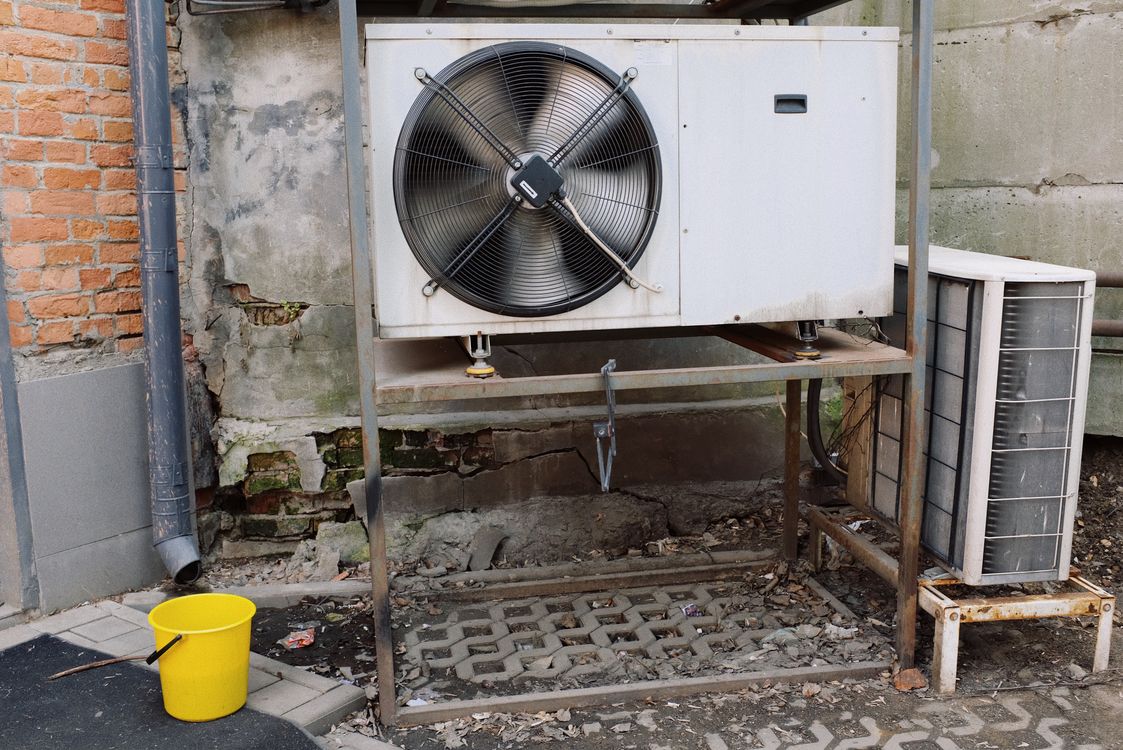
Service/repair work should clear 50–60% gross margin; replacement and install work runs 35–45% — a good price book prices the two tiers separately
4. A Worked Example: Pricing a Capacitor Replacement
Say a run capacitor costs you $40, the job takes 0.5 hours including diagnosis, your markup is 3x, and your loaded labor rate is $150/hr:
- Parts: $40 × 3 = $120
- Labor: 0.5 hr × $150 = $75
- Flat rate price = $120 + $75 = $195 (before any diagnostic/service-call fee)
On T&M, that same 30-minute job might bill $40 in parts plus $75 labor for $115 — nearly $80 left on the table for identical work. Multiply that gap across every ticket a tech runs in a week and the revenue difference is exactly what shows up in the “20–40% more per tech” figure. Add a separate diagnostic/service-call fee (commonly $89–$149) so you're never giving away the windshield time it took to get there.
5. HVAC Flat Rate Pricing Examples: 8 Common Jobs
One example proves the formula; a full set shows you the shape of a price book. Every row below uses the same two assumptions — a 3x parts markup and a $150/hr loaded labor rate — so you can swap in your own numbers and see immediately how the prices move. Diagnostic fee is billed separately.
Notice the tune-up and the capacitor job land on the same $195 despite very different parts costs — that is the formula working as intended, not a mistake. Notice too that the two big-ticket rows would be badly overpriced at a flat 3x: an $850 coil marked up 3x carries $1,700 of margin on a single part. That is exactly why mature price books slide the markup down as part cost climbs, which is the next section.
6. HVAC Parts Markup Chart
A single flat multiplier is the most common price book mistake. Cheap parts have to carry a high multiplier because the real cost is the truck stock, the procurement time, and the warranty risk — not the $12 part. Expensive parts don't need that treatment, and a 3x markup on a compressor prices you straight out of the job. Use a sliding chart instead:
The chart is a starting point, not gospel — a rural shop with a two-hour supply-house round trip earns a higher multiplier on small parts than a contractor with a distributor three blocks away. What matters is that the blended gross margin across your whole price book still clears 50–60% on service work. Run a quarterly check: total parts revenue divided by total parts cost should sit near 2.6x–3.0x even though no single tier uses that number.
7. 2026 HVAC Pricing Benchmarks
Use these as sanity checks, not as your price book — your loaded rate and local market decide the real numbers:
8. How to Structure Your HVAC Price Book
A price book your techs can actually sell from is organized by task, not by part number. Group it into clear tiers:
- Service call / diagnostic — the trip and troubleshooting fee.
- Flat-rate repairs by component — organized by system area (electrical, refrigerant, airflow, controls) so a tech finds the price in seconds.
- Maintenance plans — recurring tune-up agreements that build predictable revenue and first-call loyalty.
- Installation tiers — good/better/best replacement options with financing shown as a monthly payment.
- Indoor air quality add-ons — UV lights, media filters, dehumidifiers presented as one-click upgrades.
HVAC Flat Rate Price Book Template
Whether you build this in a spreadsheet or in software, every line item in a working price book carries the same eight fields. Copy this structure and fill one row per task:
The last column is the one most spreadsheets leave out and the one that saves you. A gross-margin field recalculating on every row turns the price book into its own audit: when a supplier raises a part 20% and nobody updates the sheet, the margin cell goes red before the job goes out the door. A laminated printout can't do that, which is the practical argument for keeping the price book in software rather than in a binder.
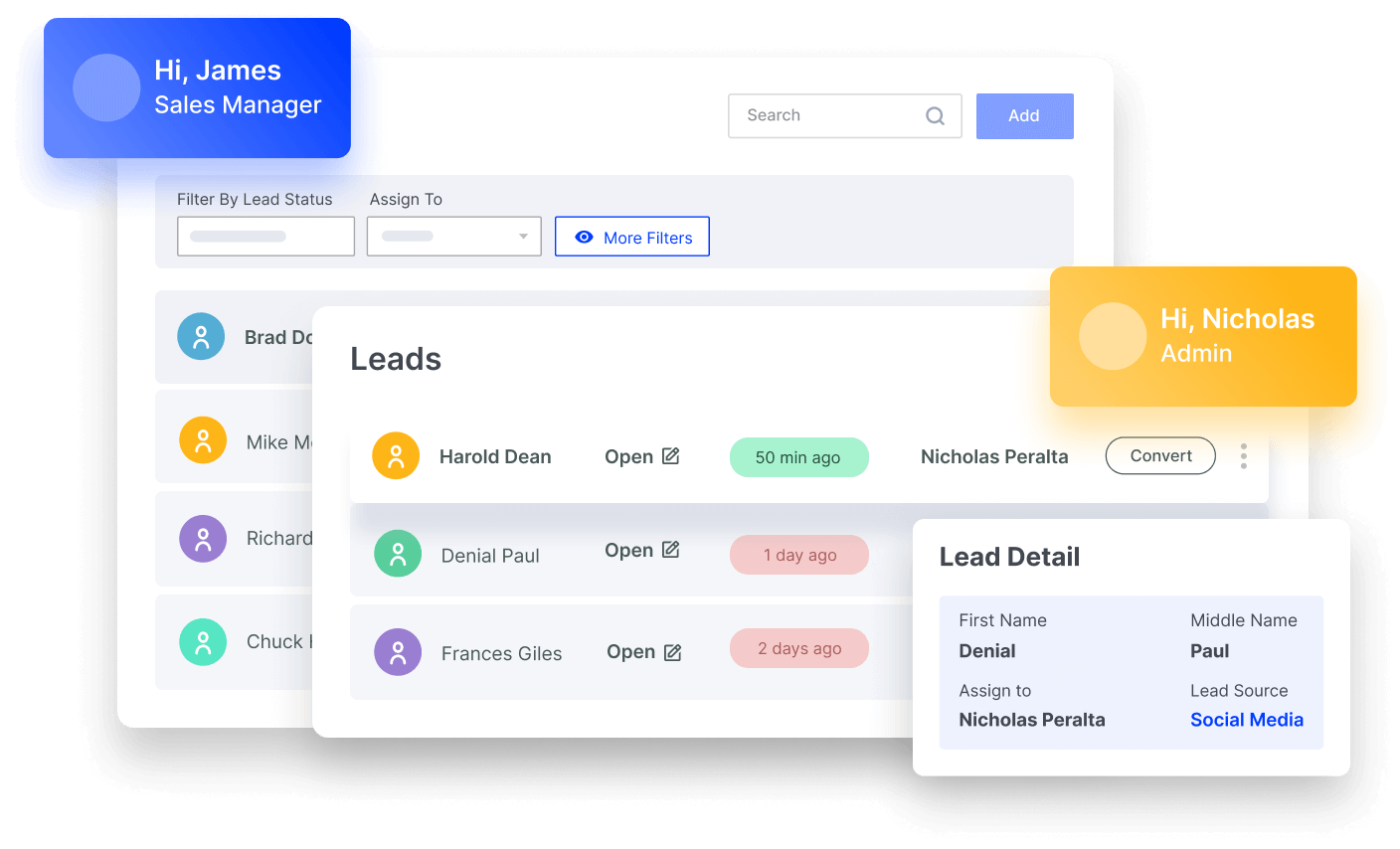
A digital price book presents good/better/best options with monthly payments on the spot — homeowners who see a monthly price close at 20–40% higher rates than those quoted a lump sum
9. HVAC Flat Rate Pricing PDF: Printable Price Books That Don’t Go Stale
A lot of contractors start this project by searching for an HVAC flat rate pricing PDF — a finished, printable price book they can hand to a crew on Monday. It is a reasonable instinct, and it is worth being clear about what that search actually turns up.
There are three kinds of results. Subscription flat rate books from the established pricing providers are professionally maintained and regionally adjusted, licensed per technician and updated on a schedule; pricing varies by vendor and seat count, so quote it directly rather than trusting a number you read on a forum. Manufacturer and distributor pricing sheetsare usually parts-cost references, not customer-facing flat rates — useful as an input to the formula above, not as a price book. And free downloadable PDFs circulating on forums and file-sharing sites are almost always someone else’s numbers from an unknown year and an unknown market.
That last category is where contractors get hurt. A flat rate PDF encodes three things that are specific to the business that made it: its loaded labor rate, its parts costs, and its overhead. Adopt a stranger’s price book and you inherit their cost structure. If their loaded labor rate was $95/hour and yours is $135, every line item in that PDF underprices your work by roughly 30% — and it will keep doing so, invisibly, on every ticket, until someone runs the margin math.
Build your own PDF from the eight-field structure
The practical answer is to generate the PDF rather than download one. Build the table from section 8 in a spreadsheet, then export to PDF whenever your costs change. The export takes a minute and the output is priced for your business:
- One page per system category — electrical, refrigerant, airflow, controls, IAQ. A tech looking up a capacitor should never scroll past ductwork.
- Hide the cost columns in the customer-facing export. Keep two versions from one sheet: an internal PDF showing parts cost, markup tier, and gross margin, and a presentation PDF showing only task name and customer price.
- Put the revision date in the footer. A price book with no date on it is the reason crews quote last year’s numbers. Date every export.
- Sort by frequency, not alphabetically. The dozen tasks that make up most of your service calls belong on page one.
- Re-export on any supplier move over 5–8%. That is the threshold where a stale PDF starts eating real margin.
The deeper issue with any PDF, including a good one you made yourself, is that it is a snapshot. It cannot recalculate when a compressor jumps 20%, it cannot show financing as a monthly payment, and the copy in a truck is stale the moment you fix a price at the office. A printed book is a fine backup and a poor system of record — which is why most contractors who scale past a few trucks end up with pricing that lives in software and export the PDF only for the glovebox.
10. Present Flat Rate Pricing Like a Pro
The best price book in the world loses to the competitor who quotes on the spot. Three presentation moves compound your margin:
- Quote on-site, not later. Same-day proposals close at 40–60% higher rates than emailed follow-ups. A price book on a tablet turns a diagnosis into an approved job before you leave the driveway.
- Always show good/better/best. Three options anchors the middle and lets the homeowner choose up instead of choosing whether to buy at all.
- Lead with the monthly payment. A $9,500 replacement is a wince; “$142/month” is a yes. Embedded contractor financing in the proposal is one of the highest-leverage close-rate levers in the business.
This is where software earns its keep. HVAC contractor software keeps your flat rate price book, tiered options, and financing in one place so every tech presents consistent, profitable pricing — instead of quoting from memory or a laminated sheet from 2023. See how it fits your business on the SubcontractorHub for HVAC page, or dig into dedicated HVAC flat rate software.
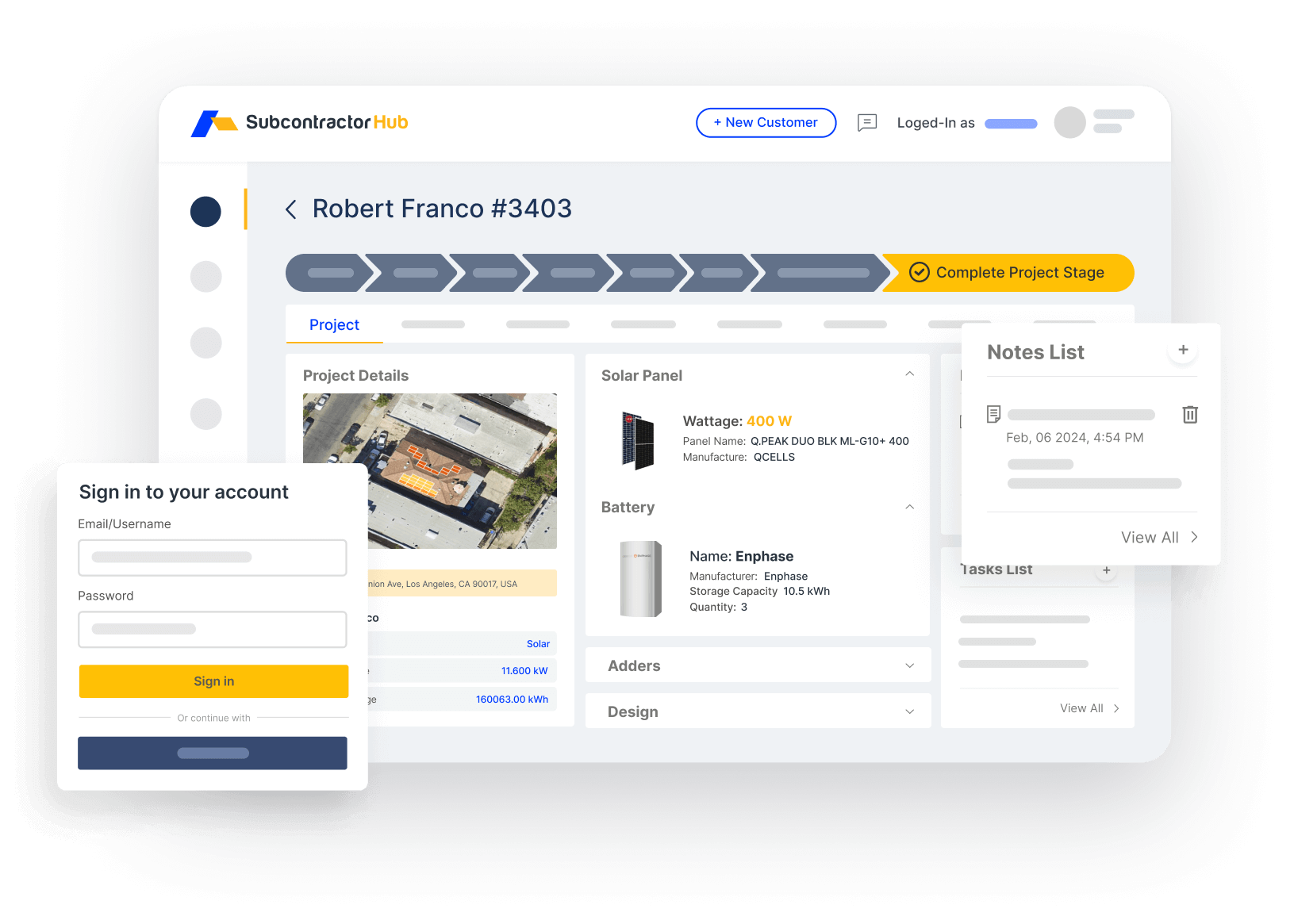
When a flat-rate proposal is approved, it flows straight into the pipeline and on to installation — no re-entering the job between sales and operations
Frequently Asked Questions
What is HVAC flat rate pricing?
Flat rate pricing charges one fixed, all-inclusive price for a defined repair or service, quoted before work begins. The price bundles parts, labor, overhead, and profit, so the homeowner approves a single number up front. Contractors moving from hourly to flat rate commonly see 20–40% higher revenue per technician.
Is there a free HVAC flat rate pricing PDF I can download?
Free flat rate pricing PDFs circulate on contractor forums, but they encode the loaded labor rate, parts costs, and overhead of whoever built them. Adopting one means inheriting a stranger's cost structure — if their loaded labor rate was $95/hour and yours is $135, every line item underprices your work by roughly 30%. Build the eight-field price book structure in a spreadsheet with your own numbers and export it to PDF instead, dating every export and re-exporting whenever supplier costs move more than 5–8%.
What should an HVAC flat rate price book include?
Every line item needs eight fields: a task code, a plain-language task name the homeowner understands, a system category, your true landed parts cost, the markup tier from a sliding markup chart, realistic labor hours including diagnosis and cleanup, the calculated customer price, and an auto-calculated gross margin percentage. The gross margin field is the one most spreadsheets omit and the one that catches underpriced work — flag any service row under 50%. Organize the book one page per system category, sorted by how often the task comes up rather than alphabetically.
How do you calculate an HVAC flat rate price?
Use Flat Rate = (Parts Cost × Markup) + (Labor Hours × Loaded Labor Rate). Typical markup is 2.5x–3.5x and a loaded labor rate usually lands between $95 and $200/hr. Build from true cost, then confirm the price clears a 20–25% net margin.
What is a good profit margin for an HVAC business?
Target 20–25% net profit. Service and repair work should run 50–60% gross margin; replacement work 35–45%. If your flat rates aren't clearing those margins, your loaded labor rate is set too low.
How often should HVAC contractors update their price book?
At least twice a year — most contractors rebuild in January and adjust mid-year in July. Any time supplier pricing jumps 5–8%, or you raise wages, or insurance and fuel climb, your loaded labor rate has moved and the price book needs a refresh.
What is a typical HVAC parts markup?
Slide the markup by part cost instead of using one flat multiplier: under $25 carries 4x–5x, $25–$75 carries 3x–3.5x, $75–$200 carries 2.75x–3x, $200–$500 carries 2.25x–2.5x, $500–$1,000 carries 1.9x–2.2x, and over $1,000 carries 1.5x–1.8x. Cheap parts need the high multiplier to cover truck stock and warranty risk; 3x on a $1,200 compressor prices you out of the job. Blended parts revenue should still land near 2.6x–3.0x of parts cost.
What should an HVAC flat rate price book include?
Eight fields per line item: task code, plain-language task name, system category, true landed parts cost, markup tier, realistic labor hours including diagnosis and cleanup, the calculated customer price, and an auto-calculated gross margin percentage. That last field catches a supplier price increase before the job goes out the door — flag any service row under 50% gross margin.
Is flat rate pricing better than hourly for HVAC?
For most residential service and repair work, yes — flat rate protects margin on fast jobs and lets techs present a clear price on the spot. Hourly still fits open-ended diagnostics, large commercial projects, and unpredictable warranty work.
Related Guides & Tools
- How to Price HVAC Jobs in 2026 (Full Pricing Guide)
- Good, Better, Best HVAC Proposals: Structuring Tiered Options
- Free HVAC Flat Rate Calculator
- Best Flat Rate Pricing Software for Contractors (All Trades)
- Electrical Flat Rate Pricing Guide & Labor Price List
- Plumbing Flat Rate Pricing Guide & Labor Price List
- Best HVAC Flat Rate Software in 2026
- How to Sell HVAC Maintenance Agreements
- HVAC Tune Up Cost in 2026: Real Prices & What’s Included
- HVAC Marketing Guide 2026
- How Much Does HVAC Software Cost?
- How to Train Your Technicians to Sell
- The 8-Week Technician Sales Training Program
- HVAC Proposal Software
- → HVAC Contractor Software Platform
- → SubcontractorHub for HVAC
Turn Your Price Book Into Faster, More Profitable Closes
30-minute demo. See flat-rate pricing, good/better/best proposals, embedded financing, and pipeline-to-project handoff for an HVAC business.
Book a DemoHVAC Pricing, Flat Rate, Contractor Profitability
SubcontractorHub
See How Top Contractors Close More Jobs
AI proposals, sales pipeline, and project management — all in one platform.
- ✓AI-powered proposals in the field
- ✓CRM built for contractor sales
- ✓Project tracking from sale to install
30 minutes. No commitment.