
Best HVAC Business Management Software in 2026: An Honest Guide
By SubcontractorHub Editorial Team·Published June 2026 · Updated September 2026

Quick Answer
The best HVAC business management software in 2026 is SubcontractorHub for contractors who sell and install systems — combining AI proposals, a sales CRM, embedded financing, and installation project management in one platform. For pure service-call businesses, Housecall Pro or Jobber are solid lower-cost options. See the full HVAC platform overview or book a demo to see it live.
Running an HVAC business means managing two separate operations at once: a service business that sends technicians to repair calls and performs maintenance agreements, and an installation business that runs sales reps, builds replacement proposals, closes multi-thousand-dollar jobs, and manages multi-day installs with equipment orders, permits, and inspections.
Most HVAC business management software was designed for the first half of that equation — dispatch, invoicing, repeat-visit scheduling. This guide covers which platforms handle the full picture, and which ones leave gaps that cost you deals and delay installations. Choosing the best HVAC business management software for your company means understanding where each platform excels and where it falls short.
What Real HVAC Business Management Software Needs to Do
If your HVAC business includes any system replacement sales, your software needs to handle more than a service-call dispatcher. Look for platforms that cover all of the following:
- Sales pipeline management: visual stage tracking from first contact to signed contract, so managers know which replacement leads are going cold before they're lost to a competitor
- On-site AI proposal generation: reps build accurate, system-specific quotes on a tablet in the customer's home — with financing options embedded — before leaving the driveway
- Financing integration: customers see monthly payment options during the proposal, not after — closing rates go up when financing is part of the pitch, not a separate follow-up conversation
- Installation project management: tracking permit filing, equipment procurement, crew scheduling, inspections, and commissioning for every system replacement — not just a calendar entry
- HVAC dispatching and work order management: for service teams, the platform needs to handle dispatch, work orders, and HVAC invoicing in one place so nothing falls through the cracks between the office and the field
- Rep performance dashboards: managers need to see pipeline velocity, close rates, and outstanding proposals by rep without asking for a spreadsheet update
- Multi-trade support: for contractors running solar or roofing alongside HVAC, without needing a second platform
Most platforms cover two or three of these. The ones that cover all six are rare. That gap is exactly where HVAC contractor software from SubcontractorHub was built to operate.
5 Questions to Ask Before Choosing HVAC Business Software
- Is it built for installations or reactive service calls? The most important question. Service-call tools close the job when the invoice is sent. Installation platforms track everything from “signed proposal” to “commissioned system” — a 2–6 week gap where things can go wrong.
- Does the proposal generate in the field? If reps have to go back to the office to build a quote, you're losing jobs to whoever arrives next. The best HVAC business management software builds proposals on a tablet at the customer's home — with multiple system options and financing — and collects a signature before leaving. A true HVAC mobile app experience is non-negotiable for field sales teams.
- Is financing embedded or bolted on? Financing as an afterthought means a second conversation, a second follow-up, and a slower close. The best tools present monthly payment options inside the proposal and track financing application status in the sales pipeline.
- What happens the moment a job is sold? In most tool stacks, “sold” triggers a handoff: someone emails or texts operations with the job details, someone re-enters the information into a scheduling tool. Look for platforms where the closed deal automatically creates a scheduled installation project with all proposal details pre-loaded.
- Can it grow with you into solar or roofing? Switching platforms mid-growth costs real money and disrupts your team. A multi-trade platform from day one avoids the migration entirely.

The best HVAC business management software includes a mobile app so technicians can build proposals and manage jobs from the field.
SubcontractorHub
See How Top Contractors Close More Jobs
AI proposals, sales pipeline, and project management — all in one platform.
- ✓AI-powered proposals in the field
- ✓CRM built for contractor sales
- ✓Project tracking from sale to install
30 minutes. No commitment.
HVAC Business Management Software Comparison: 2026
Platform-by-Platform Breakdown
1. SubcontractorHub — Best for HVAC Installation Businesses
SubcontractorHub was purpose-built for contractors who sell and install HVAC systems. The platform combines four modules that most HVAC businesses are currently running as separate tools:
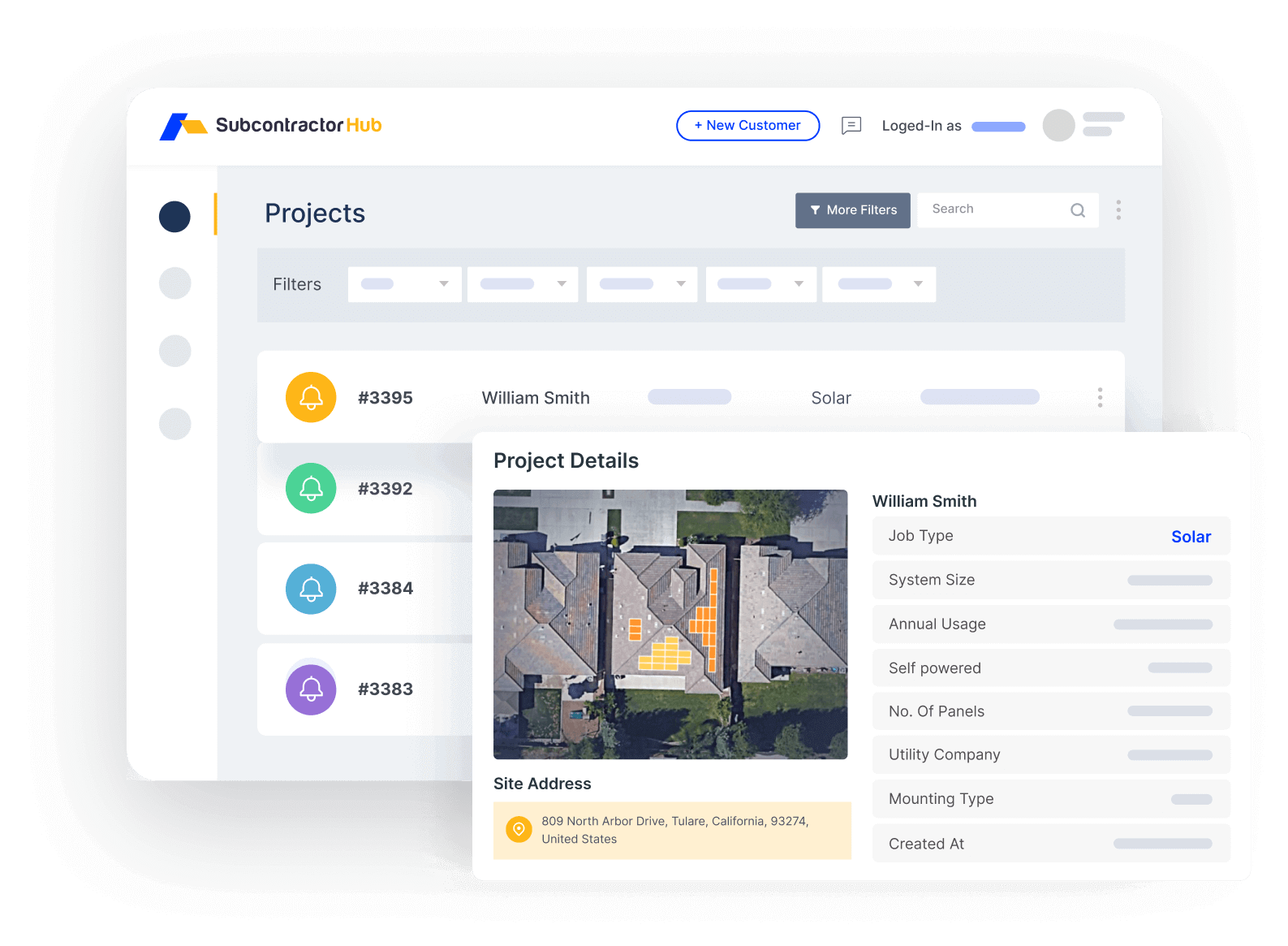
- EasyQuote — AI-assisted HVAC proposals built on a tablet at the customer's home, with multiple system options and financing embedded
- Sales Velocity — visual sales pipeline for tracking replacement leads from first contact through signed contract, with automated follow-up sequences and rep leaderboards
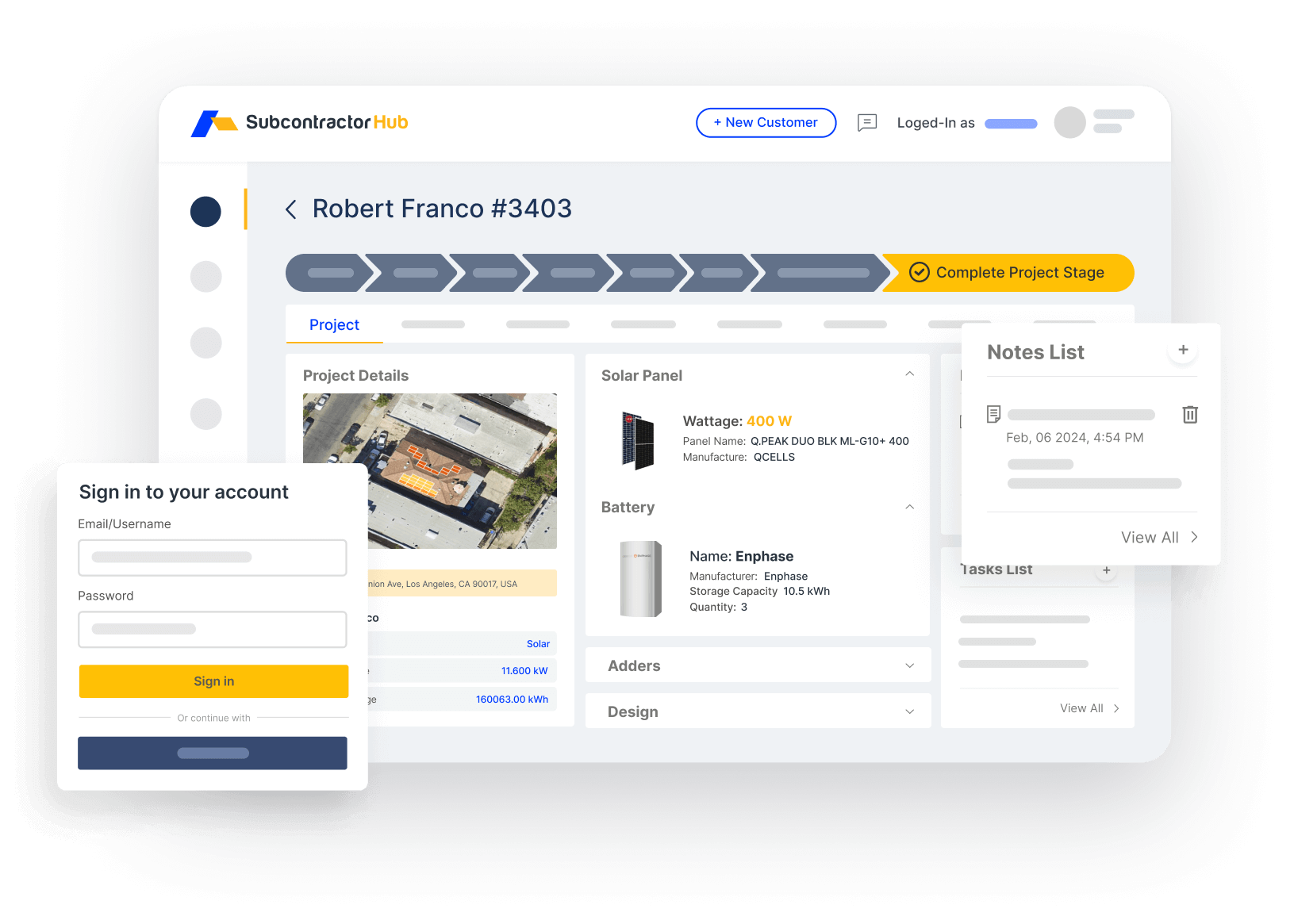
- Project Management — installation-stage tracking (permits, equipment orders, crew scheduling, inspections, commissioning) that auto-populates from the signed proposal with zero re-entry
- Financing Integration — embedded payment options from LightReach, Sungage, Arcadia, and other financing partners tracked inside the pipeline
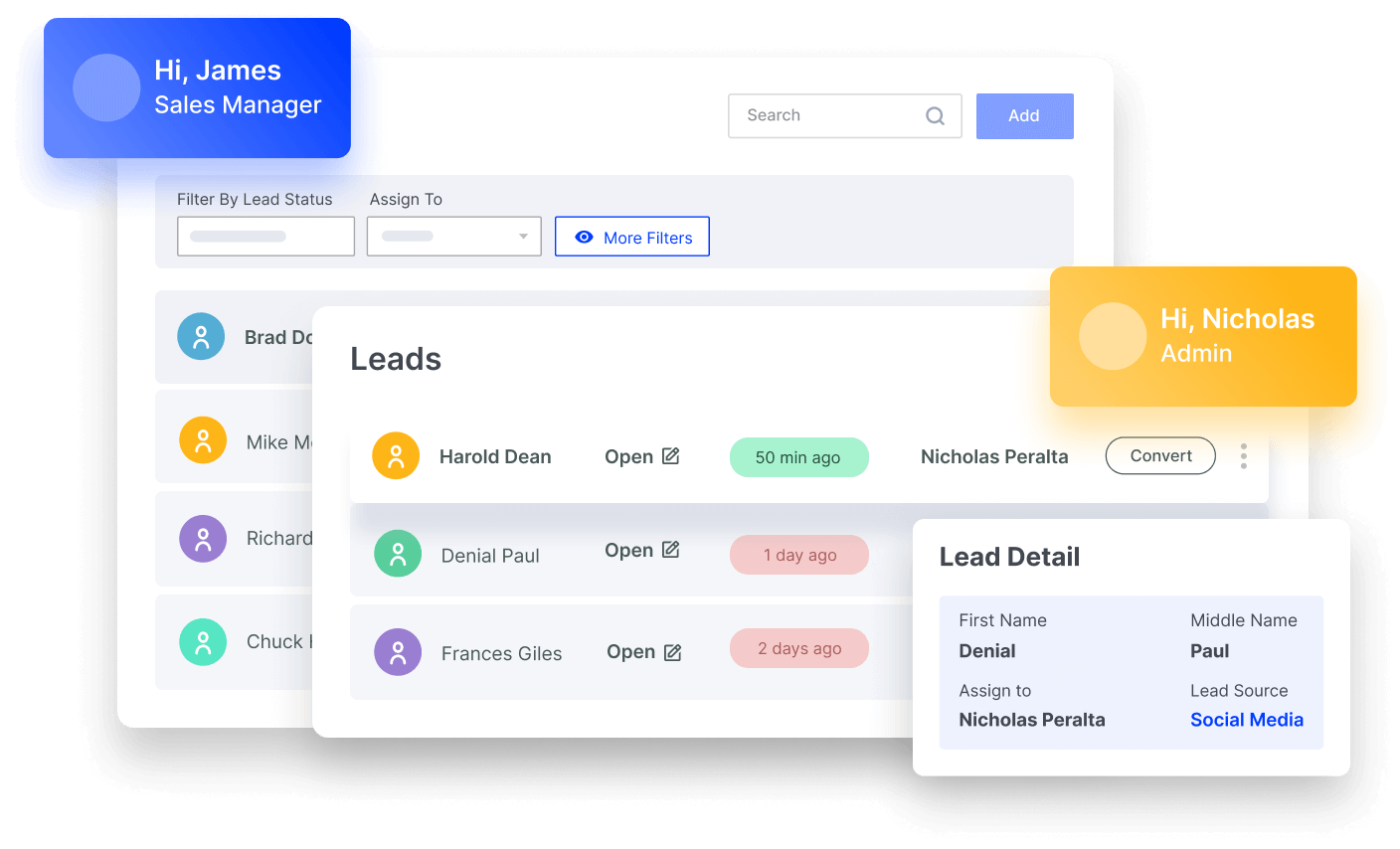
EasyQuote: generate HVAC system replacement proposals before leaving the customer's home
Pros: Covers the full installation business cycle. Genuine multi-trade support for contractors expanding into solar or roofing. Fast onboarding (typically one week vs. ServiceTitan's 6–8 weeks). Sale-to-install handoff is automatic — no re-entry required.
Cons: Not the right fit for pure service-call businesses (repair, maintenance, tune-ups only) — Housecall Pro or Jobber serve that model at a lower price point. Pricing is not public; demo required for a quote.

The best HVAC business management software tracks every installation stage from sold to commissioned, keeping crews and operations aligned.
2. ServiceTitan — Best for Large, Service-Heavy HVAC Operations
Pros: The most mature HVAC platform for companies running 20+ technicians with dedicated dispatch staff. Strong call center tools, robust reporting, and a large integration ecosystem. Installation project management has improved but its core strength is still dispatch and service workflow. Solid HVAC scheduling software and HVAC technician management capabilities for large service fleets.
Cons: Pricing starts at $300–$500+ per technician per month with mandatory onboarding fees of $15,000–$25,000. No multi-trade support for solar or roofing. Field proposal generation is not as fluid as purpose-built tools. See our ServiceTitan alternatives breakdown.
3. Housecall Pro — Best for Small Service-Call HVAC Shops
Pros: Clean, approachable design. Solid automated customer communications — booking confirmations, review requests, technician GPS tracking. Reasonable pricing for solo operators and small teams doing mostly service and maintenance. Covers HVAC scheduling software basics and HVAC invoicing well for service-call volume businesses.
Cons: No installation project management. No multi-stage sales pipeline for replacement jobs. No AI proposal generation. Contractors running D2D sales teams or managing large installation volumes will hit a ceiling quickly. See our Housecall Pro alternatives breakdown.
Sales Velocity: track every HVAC replacement lead from first contact to signed contract
4. Jobber — Best for Very Small HVAC Teams (<5 People)
Pros: Simple interface, fast onboarding, good automated client communication. Solid for quoting service work and scheduling maintenance visits. At $69–$349/month, accessible for small teams.
Cons: No installation project management, no AI proposal generation, no visual pipeline CRM. Jobber manages booked jobs well — it does not manage a sales process from lead to close. See our Jobber alternatives breakdown.
The Real Cost of Disconnected HVAC Business Tools
The average HVAC installation business that hasn't consolidated to a single platform is running at least three to five separate tools. A CRM for leads, a quoting tool (often a spreadsheet or PDF template), a scheduling app, a financing portal, and a project tracker. Contractors evaluating the best HVAC business management software are often shocked to see how much revenue leaks through those handoffs every month.
Every handoff between those tools is an opportunity for data loss. When the rep sells a system and texts the install coordinator with the customer name and equipment model, something gets lost or re-entered wrong. When the financing approval status lives in a separate portal, ops doesn't know when to schedule the crew.
The hidden cost is not just time — it's missed installs from delayed handoffs, overbooking when scheduling isn't synced to equipment availability, and customers who don't hear back fast enough and sign with another contractor. Field service management tools that don't connect the sales side to operations leave contractors managing by text thread instead of by system.

HVAC CRM and field service management software closes the gap between the homeowner consult and the installation crew — no re-entry required.
Project Management: track every HVAC installation from sold to commissioned
SubcontractorHub's HVAC platform closes these gaps by keeping the entire job lifecycle in one system: the proposal that closes the deal auto-populates the install project, including equipment specs, customer address, and financing status. Operations gets a ready-to-schedule project the moment the contract is signed — no re-entry, no dropped details.
For contractors also running solar or roofing, the same platform handles all three trades. One login, one dashboard, one place to see your entire pipeline and job board.
"All-in-One" vs. "ERP": What HVAC Contractors Actually Mean
Two phrases come up constantly when HVAC owners go shopping, and they describe different things. Knowing which one you actually want saves a lot of wasted demo time.
All-in-one means one login covers the work you do every day: the lead pipeline, the proposal, financing, dispatch, the install project, the invoice. The test is whether a job moves from sold to installed to paid without anyone re-keying it into a second system. Most contractors asking for an all-in-one HVAC platform are really asking to stop paying for four tools that do not talk to each other.
ERP means something heavier: general ledger, inventory valuation, purchasing, warehouse management, multi-entity accounting. Real ERP for HVAC usually means a specialist construction or distribution product, and it comes with an implementation timeline measured in quarters. If your accountant is happy in QuickBooks and your pain is that sales, install and billing live in separate places, you want an all-in-one platform, not an ERP — and you will save a great deal of money and time by saying so on the first call.
Where BuildOps and Commusoft Fit
Two platforms come up often enough in HVAC shortlists to be worth naming, even though neither is aimed at the same contractor as the four compared above.
- BuildOps is built for commercial mechanical and specialty contractors — the side of the business that runs service agreements across a portfolio of buildings, quoted projects, and technicians working on contracted equipment rather than homeowner replacements. If most of your revenue comes from commercial maintenance contracts and building owners, it belongs on your list. If you sell residential replacements at the kitchen table, it is aimed past you.
- Commusoft is a field service and job management platform with deep roots in the UK trades market, strong on service scheduling, recurring maintenance and customer communication. Contractors usually shortlist it for the service side of the business rather than for an installation sales pipeline.
The pattern is the same one running through this whole guide: nearly every tool in the category was designed around the service call. If your growth is coming from system replacements — where the money is won in the proposal and lost in the handoff to install — weigh any platform on how well it carries a job from quote to financing to install schedule, not on how quickly it dispatches a repair. Pricing for both BuildOps and Commusoft is quote-based; ask each vendor directly rather than trusting a third-party number.
Who SubcontractorHub Is NOT Right For
- Pure service-call HVAC businesses. If 90%+ of your revenue is repair and maintenance with no real installation sales team, Housecall Pro or Jobber will cover your needs at a lower price point.
- Solo technicians or very small teams. The platform is designed for teams — sales reps, project managers, install crews. ROI compounds with headcount and job volume.
- High-volume call center dispatch operations. If your business runs 50+ service calls per day, ServiceTitan's call center tooling is more mature. SubcontractorHub is optimized for the installation sales cycle, not dispatch throughput.
Frequently Asked Questions
What is the best HVAC business management software in 2026?
For installation-led HVAC businesses, SubcontractorHub covers AI proposals, a sales pipeline, embedded financing, and project management in one platform. For pure service-call operations (repair and maintenance only), Housecall Pro or Jobber are simpler options at lower price points.
What should HVAC business management software include?
Look for: a sales pipeline from lead to signed contract, on-site proposal generation with financing options, automatic sale-to-install handoff, multi-stage installation project tracking (permits, equipment, crew, inspections), and manager dashboards showing rep performance and job status.
How is HVAC business management software different from field service software?
Field service tools handle reactive service calls — dispatch, scheduling, invoicing after a repair. Business management software for installation HVAC companies handles the full replacement lifecycle: lead pipeline, proposals, financing, and multi-week installation project tracking.
How much does HVAC business management software cost?
Jobber starts at $69/month, Housecall Pro from $49/month, and ServiceTitan at $300–$500+/technician/month with a mandatory $15,000+ onboarding fee. SubcontractorHub pricing is available on request — contact for a demo and quote matched to your team size.
What is the best all-in-one software for HVAC contractors?
All-in-one means one login covers the lead pipeline, the proposal, financing, dispatch, the install project and the invoice, with no re-keying between systems. For installation-led HVAC businesses SubcontractorHub covers that full path in a single platform. For businesses that are almost entirely repair and maintenance, Housecall Pro and Jobber cover the day-to-day service workflow at lower price points. The practical test on a demo is whether a sold job reaches the install schedule and the invoice without anyone retyping it.
Does an HVAC business need an ERP system?
Usually not. ERP means general ledger, inventory valuation, purchasing, warehouse management and multi-entity accounting, and implementing one is a project measured in quarters. Most HVAC contractors who say they want an ERP actually want an all-in-one operations platform: their accounting is fine in QuickBooks and the real pain is that sales, installation and billing live in separate systems. Saying that on the first vendor call will save considerable time and money.
What are the best BuildOps or Commusoft alternatives for HVAC companies?
It depends which part of the business you are solving for. BuildOps is aimed at commercial mechanical contractors running service agreements across a portfolio of buildings, and Commusoft is strongest on service scheduling, recurring maintenance and customer communication. If your revenue comes from residential system replacements rather than commercial contracts or repair volume, the closer comparison set is SubcontractorHub, ServiceTitan, Housecall Pro and Jobber, weighed on how well each one carries a job from proposal to financing to install schedule. Pricing for BuildOps and Commusoft is quote-based, so ask each vendor directly.
Can one platform manage HVAC, roofing, and solar?
Most HVAC business management tools are single-trade. SubcontractorHub was built for contractors running HVAC, roofing, and solar in a single login — with shared pipeline, proposal, and project management across all three trades.
Related Guides
- Best HVAC Software for Contractors in 2026
- Best HVAC CRM Software in 2026
- Best HVAC Scheduling Software in 2026
- HVAC Contractor Software Overview
- Best Housecall Pro Alternatives
- Best ServiceTitan Alternatives
- Best Jobber Alternatives
- Best Roofing CRM Software in 2026
- → SubcontractorHub for HVAC Contractors
What SubcontractorHub Does for HVAC Contractors
If you're running your HVAC installation business across three or more disconnected tools, SubcontractorHub was built to replace that stack. Book a demo and we'll walk through a live workflow in under 30 minutes: AI-assisted proposal, signed contract, auto-scheduled installation.
Book a DemoHVAC Software, Business Management, Contractor Tools