
Best HVAC Estimating Software in 2026: An Honest Guide for Installation Contractors
By SubcontractorHub Editorial Team·Published June 2026·Updated September 2026

Quick Answer
The best HVAC estimating software in 2026 is SubcontractorHub EasyQuote for contractors who sell and install HVAC systems. It generates AI-assisted, branded proposals on a tablet before the rep leaves the customer's home — complete with multiple equipment options, embedded financing, and an automatic handoff to the sales pipeline and project management when the job closes. See the full HVAC contractor platform or book a demo to see EasyQuote live.
There are two fundamentally different reasons an HVAC contractor needs estimating software. The first is quoting service work — a repair visit, a tune-up, a diagnostic. The second is quoting a full system replacement: a multi-thousand-dollar job that involves equipment selection, ductwork assessment, financing, and a multi-day installation project after the customer signs.
Most HVAC estimating tools were built for the first use case. This guide focuses on what matters for installation contractors — the ones running a sales team, closing system replacements, and handing projects to an ops team. That is a different software requirement, and most of the market still does not serve it well.
What HVAC Estimating Software Actually Needs to Do
For installation contractors, HVAC estimating software is not just a calculator. It needs to:
- Build accurate proposals in the field. Reps assess the existing system and generate a branded, system-specific proposal before leaving the homeowner's driveway — not hours later from the office.
- Present multiple equipment options. Good-better-best tiering increases average ticket size. The software should let reps show a 16-SEER entry option and a 20-SEER premium option side by side, with pricing for each.
- Embed financing in the estimate. Most residential HVAC replacements are financed. The proposal should show monthly payment options alongside the system price — before the customer asks what it costs per month.
- Feed the sales pipeline automatically. Every proposal sent should create a CRM record, so managers can see which jobs are open, followed up, and going cold.
- Hand off to project management at close. When the customer signs, all the estimate details — equipment, address, financing status, customer info — should flow directly into an installation project record with zero re-entry.
Most platforms cover one or two of these requirements. The best ones cover all five. SubcontractorHub's HVAC proposal software was designed around this exact workflow.

The best HVAC estimating software lets reps build and present accurate HVAC estimates on-site before leaving the homeowner's home.
5 Questions to Ask Before You Choose HVAC Estimating Software
- Where does the estimate get built — office or field? Installation contractors need field-first tools. If your rep has to go back to the truck to type up a quote and email it hours later, you are losing jobs to whoever is quoting on-site.
- Can it show multiple system tiers and financing in one proposal? This is the single biggest driver of close rate on replacement jobs. If the software only produces a single price line with no payment option, it is not built for installation sales.
- Does it connect to a sales CRM? Estimating software that generates a PDF and stops there leaves money on the table. You need pipeline visibility — which proposals are out, which need follow-up, which are stalled.
- What happens after the customer signs? The best platforms auto-create an installation project from the accepted estimate. If your ops team is copying data out of a quote PDF, your estimating software is creating work instead of reducing it.
- Does it support multiple trades? Contractors adding solar or roofing alongside HVAC need a platform that handles all three in one proposal workflow — not a separate quoting tool per trade.
SubcontractorHub
See How Top Contractors Close More Jobs
AI proposals, sales pipeline, and project management — all in one platform.
- ✓AI-powered proposals in the field
- ✓CRM built for contractor sales
- ✓Project tracking from sale to install
30 minutes. No commitment.
Head-to-Head Comparison: Top HVAC Estimating Platforms in 2026
Platform-by-Platform Breakdown
SubcontractorHub EasyQuote
EasyQuote is the estimating engine inside SubcontractorHub, built specifically for HVAC installation contractors who close jobs in the field. Reps build a branded proposal on a tablet using the homeowner's existing system details — equipment tonnage, system age, ductwork condition — and EasyQuote generates accurate system replacement options from your pre-configured pricebook. Producing accurate HVAC estimates on a mobile app in the field — rather than hours later from the office — is what separates the best HVAC estimating software from a general quoting tool.

Best HVAC estimating software runs on a tablet in the field, so reps deliver quotes and quoting decisions before leaving the job site.
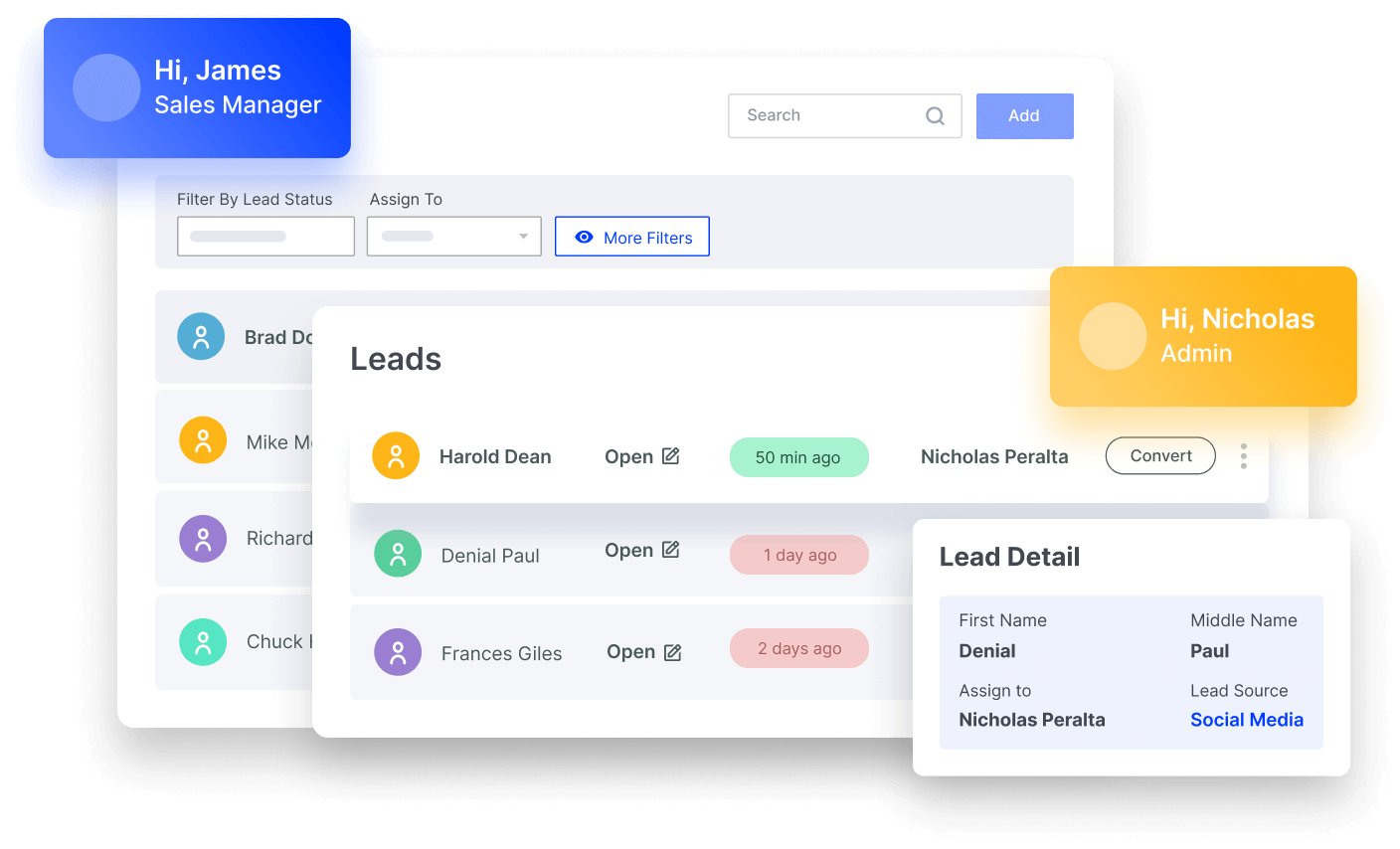
EasyQuote: generate AI-assisted HVAC proposals before leaving the customer's home
What makes it different: Financing options from GoodLeap, Sungage, and LightReach are embedded inside the proposal — reps show monthly payment options alongside the system price, at the kitchen table. When the customer signs, the job instantly creates a pipeline record in Sales Velocity and an installation project in project management. Invoicing is handled downstream once the installation is complete — no re-entry at any stage.
Best for: HVAC installation contractors with a dedicated sales team, doing 10+ replacement jobs per month, who also may be running roofing or solar alongside HVAC.
ServiceTitan
Pros: ServiceTitan's price book and flat-rate pricing tools are mature — built over many years for large HVAC fleets. Good for companies running 20+ technicians with dedicated dispatchers and call center operations. The scheduling and dispatch tools and price book management are genuinely powerful for service work at scale.
Cons: Pricing starts at $300–$500+ per technician per month with mandatory onboarding fees of $15,000+. No multi-trade support for solar or roofing. The estimating workflow is built around technician-driven service calls more than sales-rep-driven installation proposals. See our ServiceTitan alternatives breakdown.
Housecall Pro
Pros: Clean, easy-to-use quoting for service work. Good customer communication automation — booking confirmations, review requests, follow-up messages. Accessible pricing for small HVAC teams doing mostly service calls and maintenance.
Cons: No field AI quoting for system replacements. No installation project management after a job closes. The estimating workflow is designed for quoting a repair or maintenance visit, not a $10,000–$20,000 system replacement with multiple equipment tiers and financing. See our Housecall Pro alternatives breakdown.
Jobber
Pros: Simple quoting workflow, clean interface, easy customer communication. Solid for HVAC teams quoting service visits and sending invoices after. At $69–$349/month, approachable for smaller operations.
Cons: No field AI quoting, no installation-specific proposal workflow, no project management for multi-phase installs. Jobber handles a booked job well after the quote is approved — it does not manage the sales process between lead and signed contract. See our Jobber alternatives breakdown.
Commercial HVAC Estimating and Takeoff Software: A Different Category
Everything above is residential and light-commercial service and replacement work. If you bid commercial mechanical contracts — ductwork fabrication, sheet metal assemblies, piping systems priced off a drawing set — none of those platforms will do the job, and it is worth being direct about why. A field service platform prices a system replacement from equipment selection. A commercial estimating package prices a building from a plan takeoff: every duct fitting counted, every linear foot of pipe measured, labor applied per-fitting from a published labor unit database.
These are genuinely different products, and contractors searching for “HVAC estimating software” land in one camp or the other depending on the work they bid. The main commercial options in 2026:
FastDUCT and FastPIPE (FastEST)
Long-established on-screen takeoff for commercial ductwork and piping. FastDUCT handles sheet metal and ductwork; FastPIPE covers mechanical piping. Built around SMACNA-grade takeoff with labor units applied per fitting. The right tool if your bids come off plan sets and your competition is other mechanical contractors — not the right tool for quoting a homeowner a new condenser.
QuoteSoft
Estimating and takeoff for mechanical and sheet metal work, with notably detailed control over labor and fitting logic on complex sheet metal assemblies. Strong where a shop needs to model its own fabrication labor rather than accept a generic database.
Wendes
Mechanical, plumbing, and ductwork estimating that links the estimate to project accounting — useful when the gap you are trying to close is between the bid and the job cost report rather than inside the takeoff itself.
Trimble Accubid Anywhere
Enterprise-tier mechanical and electrical estimating, with the depth and the implementation burden that implies. Typically found in larger mechanical contractors already running other Trimble products.
How to tell which category you need: if your estimate starts from a drawing set, you need takeoff software — FastDUCT, QuoteSoft, or Wendes. If it starts from a conversation in someone’s home or a walkthrough of an existing system, you need a service and replacement estimating platform like the ones compared above. Shops that do both generally run both, because no single product in 2026 is genuinely good at plan takeoff and at kitchen-table proposal selling. SubcontractorHub sits firmly in the second camp — see HVAC contractor software for what that covers, or SubcontractorHub for HVAC for the full picture.
Why the Estimating-to-Project Handoff Matters More Than the Estimate Itself
Most HVAC contractors focus their software search on the proposal output — how the estimate looks, how quickly it's generated. That matters. But the bigger operational problem is what happens after the customer signs.
In a typical disconnected stack, the sales rep emails the ops coordinator a copy of the signed proposal. The coordinator re-enters the equipment details into a separate scheduling system. Someone else logs the financing status in a spreadsheet. The installation crew gets a work order that may or may not include the actual system specs the customer chose.
Every one of those handoffs is a point of failure. Equipment gets ordered incorrectly. Financing statuses get missed. Install crews show up without the right parts.
In SubcontractorHub, the accepted proposal is the project record. Every detail from the estimate — equipment specs, customer info, financing status, proposal price — flows automatically into installation project management. Operations sees a ready-to-schedule project the moment the signature is captured.

When the best HVAC estimating software connects to project management, technicians get accurate job details the moment the proposal is signed.
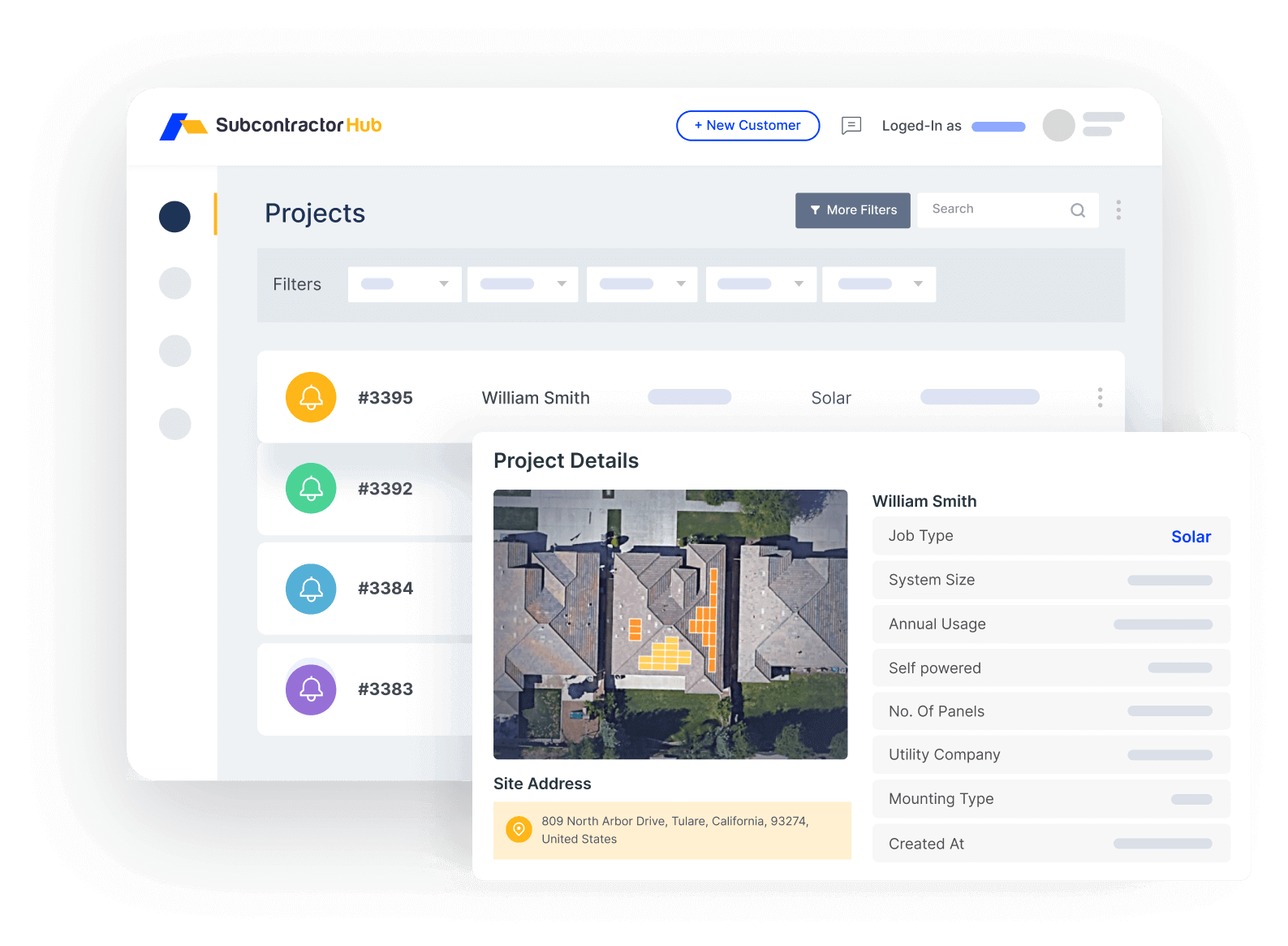
Project Management: every HVAC install tracked from sold to final commissioning
Who SubcontractorHub Is NOT For
- Pure service-call HVAC businesses. If nearly all your revenue comes from repair visits and maintenance contracts with no installation sales team, Housecall Pro or Jobber cover that use case at a lower cost.
- Solo technicians or two-person operations. SubcontractorHub is built for teams — sales reps, project managers, install crews. The ROI scales with headcount.
- High-volume dispatch centers (50+ service calls/day). ServiceTitan's dispatch center tools are more mature for that workflow. SubcontractorHub is optimized for installation sales cycles, not dispatch volume at scale.
Frequently Asked Questions
What is the best HVAC estimating software in 2026?
For HVAC installation contractors, SubcontractorHub EasyQuote generates AI-assisted system replacement proposals in the field — with multiple equipment options, embedded financing, and automatic handoff to the sales pipeline and project management. For pure service-call businesses, Housecall Pro or Jobber cover basic repair quoting at lower price points.
Can HVAC estimating software include financing options?
Yes — the best platforms embed financing directly in the proposal. SubcontractorHub integrates with GoodLeap, Sungage, and LightReach so reps present monthly payment options alongside equipment pricing at the point of sale. Financing-in-the-proposal closes high-ticket HVAC replacement jobs faster.
Does HVAC estimating software connect to project management?
The best platforms do. In SubcontractorHub, when a proposal is accepted, all estimate details flow directly into an installation project record — equipment specs, customer info, financing status — with zero re-entry for the operations team.
What is the best commercial HVAC estimating software?
For commercial mechanical work priced from a drawing set, the established specialists are FastDUCT and FastPIPE (FastEST) for SMACNA-grade ductwork and piping takeoff, QuoteSoft for detailed sheet metal labor and fitting logic, Wendes where the estimate needs to link into project accounting, and Trimble Accubid Anywhere at the enterprise tier. These are a different product category from residential service platforms like ServiceTitan, Housecall Pro, or SubcontractorHub — they price a building from a plan takeoff rather than pricing a system replacement from equipment selection.
What is HVAC takeoff software and do I need it?
HVAC takeoff software counts and measures scope directly off a drawing set — every duct fitting, every linear foot of pipe — and applies labor units per fitting to build the estimate. You need it if you bid commercial mechanical contracts from plans. You do not need it if you sell residential replacements and service, where the estimate starts from a walkthrough rather than a drawing. The simplest test: if your estimate begins with a plan set, you need takeoff software; if it begins with a conversation in a customer's home, you need a service estimating platform.
What does HVAC estimating software cost?
Pricing varies: Jobber starts at $69/month, Housecall Pro from $49/month, ServiceTitan at $300–$500+ per technician per month with a mandatory $15,000+ onboarding fee. SubcontractorHub pricing is available on request — book a demo for a quote matched to your team size.
See EasyQuote in Action
Watch a live demo of SubcontractorHub's AI proposal tool, sales pipeline, and installation project management — built specifically for HVAC installation contractors.
Book a Free DemoRelated Resources
- HVAC Platform Overview
- HVAC Contractor Software
- HVAC CRM Software
- HVAC Proposal Software
- Best HVAC Proposal Software for Contractors in 2026
- Best HVAC CRM Software in 2026
- Best HVAC Software for Contractors in 2026
- Best HVAC Quoting Software in 2026
- How to Price HVAC Jobs in 2026: A Profitable Pricing Guide
- Best Housecall Pro Alternatives
- Best ServiceTitan Alternatives
- Heat Pump vs. Gas Furnace Calculator — 10-Year Cost Comparison
- HVAC Duct Size Calculator — Recommended Round Duct Diameter by CFM
SubcontractorHub
See How Top Contractors Close More Jobs
AI proposals, sales pipeline, and project management — all in one platform.
- ✓AI-powered proposals in the field
- ✓CRM built for contractor sales
- ✓Project tracking from sale to install
30 minutes. No commitment.