
Best Solar CRM Software in 2026: An Honest Comparison
By SubcontractorHub Editorial Team·Published June 2026 · Updated July 2026
Quick Answer
The best solar CRM software in 2026 is SubcontractorHub for installation-first solar companies — visual pipeline, AI proposals with embedded GoodLeap and Sungage and LightReach financing, automated follow-up, rep leaderboards, and a native handoff to project management at contract signing. HubSpot is the most popular generic CRM among solar companies that want full configurability. Salesforce Energy Cloud serves large enterprise installers. For companies that also run roofing or HVAC, SubcontractorHub covers all three trades in one login. Book a demo to see the solar workflow live.
The average cost per solar lead is $100–$300. The average cost per acquisition is $2,000–$4,000. With that kind of spend behind every opportunity in your pipeline, losing deals to slow proposals, poor follow-up, or a broken handoff from sales to project management isn't a minor inconvenience — it's one of the most expensive problems in your business.
This guide compares the real options available in 2026: what each platform actually does for solar installation companies, where each falls short, and which is worth your time depending on how your company operates. If you're ready to see a purpose-built platform, solar CRM software built specifically for installers is what Sales Velocity was designed to be.
SubcontractorHub
See How Top Contractors Close More Jobs
AI proposals, sales pipeline, and project management — all in one platform.
- ✓AI-powered proposals in the field
- ✓CRM built for contractor sales
- ✓Project tracking from sale to install
30 minutes. No commitment.
Solar CRM Software Comparison (2026)
* Competitor pricing estimates sourced from public review sites. Verify current pricing directly with each vendor.
The 5 Best Solar CRM Software Platforms in 2026
SubcontractorHub — Sales Velocity
Best for: Solar installation companies that want a CRM built around their actual pipeline — from first lead through signed contract — with financing embedded at the point of sale and project management ready on the other side of closing. Also the right call for companies running roofing or HVAC alongside solar.
Sales Velocity gives solar sales teams a visual pipeline built around the 2–4 week solar sales cycle, automated follow-up sequences that keep leads warm during the consideration period, rep leaderboards that surface performance without micromanagement, and a proposal tool with GoodLeap and Sungage and LightReach financing embedded so reps can present monthly payment options during the consultation rather than as a follow-up step. The moment a contract is signed, the job opens in project management — same data, same login, no re-entry. Solar contractor software built this way is a different category than a general CRM with solar fields bolted on.
Limitations: Not designed for solo operators or very small teams. The ROI compounds at the rep-and-PM level. If your CRM requirement is purely sales pipeline with no proposal or project management need, simpler tools will cost less.
HubSpot
Best for: Solar companies that want maximum configurability and have the internal ops capacity to build and maintain solar-specific workflows. Popular with larger solar brands that have dedicated RevOps or marketing teams.
Strengths: Extremely flexible pipeline customization, best-in-class marketing automation, strong ecosystem of integrations, freemium entry point for teams exploring CRM adoption for the first time.
Limitations: Nothing solar-specific out of the box. Building an 8–12 stage solar pipeline with proposal generation, financing tracking, and project handoff in HubSpot requires significant configuration time — typically several months — and ongoing admin to maintain. At full Sales Hub pricing ($800+/mo), you're paying enterprise rates for a generic platform.
Salesforce (Energy & Utilities Cloud)
Best for: Large enterprise solar installers and EPCs with dedicated Salesforce admin staff, multi-region operations, and a budget for sustained implementation and customization.
Strengths: The most powerful CRM platform on the market. Energy & Utilities Cloud offers pre-built data models for energy companies. Virtually unlimited customization and integration capability.
Limitations: Extremely expensive to implement and maintain. Custom pricing that typically runs into six figures annually for a solar installation team. Dedicated admin is not optional. For companies under $10M–$15M in annual revenue, Salesforce is almost always overkill and under-delivers on ROI because the configuration burden exceeds the team's capacity to maintain it.
Scoop Solar
Best for: Solar sales teams that want a purpose-built solar platform with strong lead and project tracking and permit management features, and are comfortable managing operations separately after the sale.
Strengths: Built for solar, not adapted from another industry. Good lead and project tracking, permit management workflows, US-based support. Solar-native terminology throughout.
Limitations: Sales and project tracking without a full project management layer. The CRM-to-operations handoff still requires a separate tool in most deployments. No embedded financing. Custom pricing without a published starting point.
JobNimbus
Best for: Roofing companies adding solar as a second trade who want to stay in a familiar tool with some solar pipeline support.
Strengths: Strong roofing roots with growing solar support. Good pipeline visualization. Integrates with solar design tools. Large user community and approachable pricing relative to enterprise alternatives.
Limitations: Roofing is the primary use case; solar is secondary. No AI proposal generation. No embedded financing. Limited installation project management depth for companies running complex solar pipelines at scale. Companies with solar as their primary trade frequently outgrow JobNimbus and face a disruptive migration.
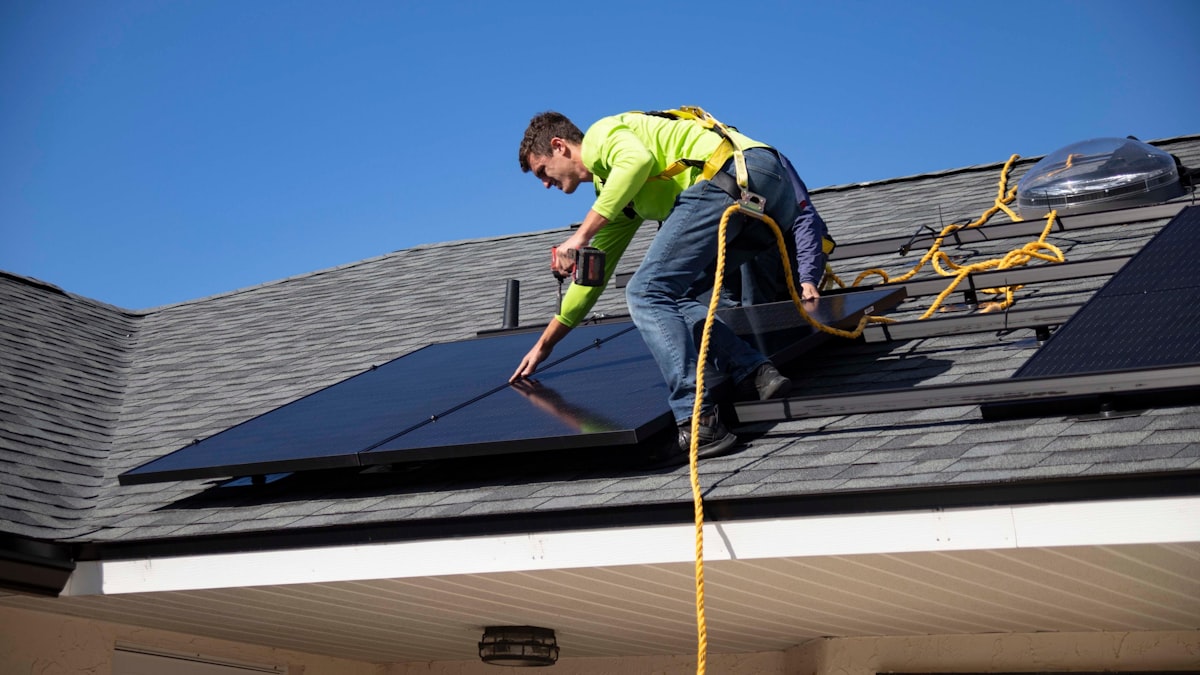
Solar CRM software built for installation manages leads, proposals, financing, and the handoff to project management — all without the configuration overhead of a generic CRM.
Why Solar Has Unique CRM Requirements
Solar installation is genuinely different from what most CRM software was designed to handle. Understanding why helps explain why so many solar companies end up over-configured in HubSpot or under-served by generic tools.
Long sales cycle with many touchpoints. The average solar sales cycle runs 2–4 weeks from first lead contact to signed contract. During that window, a rep may do an in-home consultation, run a proposal, present financing options, answer objections across multiple calls, and schedule a follow-up site visit — all before a decision is made. A CRM that doesn't model this multi-step process with automated follow-up between stages will leave leads going cold during the consideration period.
High customer acquisition costs that punish poor follow-up. At $100–$300 per lead and $2,000–$4,000 per acquisition, every stalled deal is an expensive mistake. The difference between a 25% and a 30% close rate on a high-volume solar team can be hundreds of thousands of dollars annually — and most of that gap comes down to follow-up timing and proposal speed, exactly what a purpose-built solar CRM software is designed to address.
Complex proposals with financing options. A solar proposal isn't a PDF with a line-item total. It needs to present system design, production estimates, savings projections, and financing options (monthly payment at different loan terms, cash price, lease options) in a way a homeowner can evaluate during a consultation. Building that in a generic CRM requires a separate proposal tool, which creates another data handoff point. Solar proposal software embedded directly in the CRM eliminates that gap.
An 8–12 stage pipeline that generic CRMs don't model. A solar lead-to-install moves through initial consultation, site survey, system design, permit application, permit approval, HOA approval (where applicable), install scheduling, installation, inspection, utility interconnection application, and permission to operate (PTO). Generic CRMs model a five-stage pipeline. Getting Salesforce or HubSpot to track solar-specific milestones requires months of custom object configuration — work that SubcontractorHub's solar platform includes out of the box.
The Solar CRM-to-Project Handoff Problem
Here is where most solar companies lose time and money, even when they have a decent CRM in place: the moment the contract is signed, the CRM's job is done — and someone has to manually move the deal into an operations system.
In practice this means a rep exports a PDF of the proposal, emails it to the ops team, a project manager re-enters the job scope into a project management tool, and the customer details get copied across manually. By week two of the installation, there are three versions of the job record floating across two systems, a group text, and someone's notes app.
This is the single most expensive operational gap in a growing solar company. When CRM and project management live in separate systems, the handoff requires human intervention on every job — which means it is imperfect on every job. Permit dates get missed. Customer details don't carry over. The project scope the rep quoted doesn't match what the install crew received.
SubcontractorHub eliminates this by design. When a job closes in Sales Velocity, a project record opens automatically — same proposal data, same customer record, same notes, no re-entry. Permit milestones, crew assignments, and inspection scheduling flow from the same job that the rep closed in the field. This seamless CRM-to-project handoff is what separates solar contractor software built for installation companies from a general-purpose CRM with solar fields added.
Financing in the Solar CRM: Why It Changes Close Rates
The most common reason a solar deal stalls after a promising first consultation is the financing conversation. When a rep presents a total system price of $28,000 and follows up three days later with a link to a financing application, the deal is already cooling. The homeowner has googled competitors, talked to a neighbor, and started wondering if they really need solar right now.
When financing is embedded inside the proposal at the point of sale — with monthly payment options from GoodLeap, Sungage, and LightReach presented alongside the system specs — the conversation changes. The homeowner evaluates whether they can afford $189/month, not whether they can write a check for $28,000. That reframe dramatically improves close rates on higher-ticket systems and shortens the time from consultation to signed contract.
SubcontractorHub's solar financing software integration means reps arrive at a consultation with financing already set up in the tool — no separate app, no sending the homeowner to a third-party portal after the visit, no waiting for approval before closing. The financing conversation happens at the table, not as a post-consultation follow-up step.
How to Choose a Solar CRM in 2026: A Buyer's Checklist
The solar market in 2026 is not the market these CRMs were originally built for. Federal incentive timelines have tightened the window installers have to move a homeowner from “interested” to “signed,” lead costs have climbed past $200 in most metros, and more installers are adding roofing and storage to survive slower quarters. A solar CRM you buy today has to hold up under all three of those pressures. Run any platform through this checklist before you commit:
- Speed from consult to signature. With incentive deadlines driving urgency, the CRM has to let a rep build the proposal, present financing, and capture a signature in a single visit. Ask to see the in-home flow, not just the back-office dashboard.
- Incentive math built in. The tool should net the federal credit and any state or utility incentive against system cost automatically, then show the monthly payment on the net figure. Reps doing this arithmetic by hand lose deals to rounding and delay.
- Cost-per-lead accountability. When leads cost $100–$300, the pipeline has to tie each closed deal back to its source so you can kill the channels that don't pay. A CRM that can't report close rate by lead source is costing you money it can't see.
- Multi-trade readiness. If you've added — or plan to add — roofing or storage, a single-trade solar CRM forces a second tool. Platforms like SubcontractorHub's solar platform run solar, roofing, and HVAC in one system, so diversifying doesn't mean re-buying software.
- A mobile app reps will actually open. Desktop-only tools get abandoned in the field, and abandoned tools produce dirty pipeline data. Confirm the reps' day-to-day happens on a phone or tablet, not a laptop back at the office.
Score each platform on all five, not just the demo that dazzles. The right solar CRM in 2026 is the one that shortens your sales cycle while keeping your lead spend honest — and does it without a second tool bolted on the side. For the pricing side of that equation, see our guide to how to price a solar installation.
Ready to See Solar CRM Built for Installation?
If you're running a solar installation company and spending $100–$300 per lead, you can't afford a CRM that wasn't built for your sales cycle. Book a 30-minute demo. We'll walk through the full workflow: proposal with financing options, pipeline handoff, and project management — live, in your vertical.
Book a Free DemoFrequently Asked Questions
What is the best CRM for solar companies in 2026?
For solar installation companies that want a CRM built around their actual sales cycle, SubcontractorHub's Sales Velocity is the top pick in 2026 — visual pipeline, AI proposals with embedded GoodLeap, Sungage, and LightReach financing, automated follow-up, and a direct handoff to project management at contract signing. HubSpot is the most popular generic CRM for companies that want to configure their own workflow. Salesforce Energy & Utilities Cloud is used by large enterprise installers.
What CRM features do solar companies need?
Solar companies need: lead capture from all sources, a visual pipeline that models the 2–4 week sales cycle, a proposal builder with financing options embedded at point of sale, automated follow-up during the consideration period, rep performance leaderboards, and a direct CRM-to-project management handoff at contract signing. Generic CRMs provide a pipeline but require months of configuration to add these solar-specific layers.
Why don't generic CRMs work for solar companies?
A solar lead-to-installation has 8–12 distinct stages — consultation, site survey, design, permit, HOA approval, scheduling, installation, inspection, interconnection, and PTO — that generic CRMs don't model out of the box. They also don't include financing integrations, solar proposal generation, or project management. What works for a SaaS company's five-stage pipeline doesn't map to a solar installation business without months of custom configuration.
Can solar CRM software handle financing?
Yes — SubcontractorHub embeds GoodLeap, Sungage, and LightReach financing directly inside the proposal at point of sale. Reps present monthly payment options during the consultation, not as a follow-up step. This dramatically improves close rates on higher-ticket systems because the homeowner evaluates a monthly payment rather than a total system price.
Should solar CRM and project management be in the same platform?
Yes. The handoff from CRM to project management is where solar jobs most commonly fall apart. When they're in separate systems, someone re-enters the project scope, customer details, and job notes manually after every contract signing. When CRM and project management are in the same platform — as with SubcontractorHub — the project record opens automatically from the signed proposal with no re-entry required.
How much does solar CRM software cost?
HubSpot runs freemium to $800+/month for full Sales Hub. JobNimbus starts around $350+/month for a team. Salesforce uses custom enterprise pricing. SubcontractorHub's Sales Velocity is contact-for-pricing. Most solar companies evaluate CRM cost relative to close rate improvement on high-CAC leads — even a modest improvement on $2,000–$4,000 cost per acquisition covers a year of CRM spend quickly.
Related Resources
Solar Software, CRM, Contractor Tools, Sales Velocity