
Construction Marketing Guide 2026: Channels, Budgets, and What Actually Wins Projects
By SubcontractorHub Editorial Team·Published August 2026

Bottom line up front: Construction marketing is not a volume problem, it's a speed-and-trust problem. Projects are high-cost, infrequent, and researched — prospects shortlist on reviews and portfolio, then award to whoever bids fastest and clearest. If your estimates take a week, more leads will not fix your revenue.
Marketing a construction company works differently than marketing home services. An HVAC company sells a $9,000 replacement to a homeowner whose system just failed — demand is triggered, urgent, and searched. A general contractor sells a $120,000 renovation to someone who has been thinking about it for eight months, has asked three friends for recommendations, and will collect three bids before deciding.
That difference drives everything. Construction buyers spend longer in consideration, weigh trust signals more heavily, and disqualify on responsiveness. This guide covers the channels that actually produce awarded projects in 2026, with realistic budgets and honest benchmarks for what each one costs.
1. Google Business Profile and Reviews: The Trust Filter
Before a prospect calls you, they check whether you look real. Google Business Profile is where that check happens, and for construction it carries more weight than in almost any other category — because the purchase is large, rare, and hard to reverse.
Review volume matters more than a perfect rating. A company with 60 reviews at 4.7 stars consistently out-converts one with 12 reviews at 5.0, because volume reads as evidence of throughput — this company finishes jobs. Recency matters nearly as much: reviews older than 18 months read as a business that has slowed down.
The mechanism that works is unglamorous. Send a review request by text at project closeout, every project, without exception. Not by email, and not two weeks later. Contractors who make this a closeout checklist item rather than a good intention add 3–8 reviews a month, which compounds into an unassailable local position within two years.
2. Referral Systems: The Cheapest Qualified Pipeline You Will Ever Build
Most construction companies say most of their work comes from referrals, and most of them have no system for producing referrals. That gap is the largest unexploited opportunity in contractor marketing. Referred prospects arrive pre-qualified, price-shop less, and close at two to three times the rate of cold paid traffic.
Three referral sources are worth building deliberately:
- Adjacent trades. Electricians, plumbers, and HVAC contractors walk through homes all day and see work you could do. Reciprocal referral relationships with three or four non-competing trades produce steady volume at zero acquisition cost.
- Real estate agents. Agents need pre-listing repairs, post-inspection fixes, and renovation estimates for buyers. These convert well because the agent has already vouched for you.
- Past customers. A homeowner who finished a renovation 18 months ago knows three people considering one. A single call or a well-timed annual email is enough to surface them.
Track referral sources in your CRM. If you cannot say which relationship produced which project, you cannot tell which relationships to invest in — and referral programs die from exactly that ambiguity.

Construction buyers shortlist on trust and award on responsiveness — the walkthrough is where both are decided
3. Local SEO: Slow, Compounding, and Geographic
Construction SEO pays off on a 6–12 month horizon, which makes it the wrong channel if you need pipeline this quarter and the right one if you intend to still be bidding in three years. The mistake most contractors make is chasing broad national terms. Nobody searching “construction company” is going to hire you. Someone searching “commercial general contractor Tulsa” might.
Build service-plus-location pages for the work you actually want and the areas you actually serve — kitchen remodeling in the three suburbs you like working in, not all forty in the metro. Thin pages spun up for towns you have never worked in are the fastest way to get a site treated as low quality.
Project case studies are the most underused construction SEO asset. Each completed project is a page: the problem, the scope, the materials, the timeline, real photographs, and the outcome. These rank for long-tail searches, and more importantly they close deals that started elsewhere — prospects read them before they call.
4. Google Local Services Ads and Paid Search
Local Services Ads sit above everything else in the results with a Google Guaranteed badge, and you pay per verified lead rather than per click. For residential construction and remodeling, LSA is the fastest way to turn budget into conversations. Expect $50–$150 per lead on remodeling work and more on custom builds.
Standard paid search is worth running when LSA inventory is capped or when you are targeting specific project types LSA does not segment well — commercial tenant improvement, historic restoration, ADU construction. Budget realistically: below about $2,500/month in ad spend there is not enough data to optimize against, and an under-funded campaign burns money without ever reaching statistical significance.
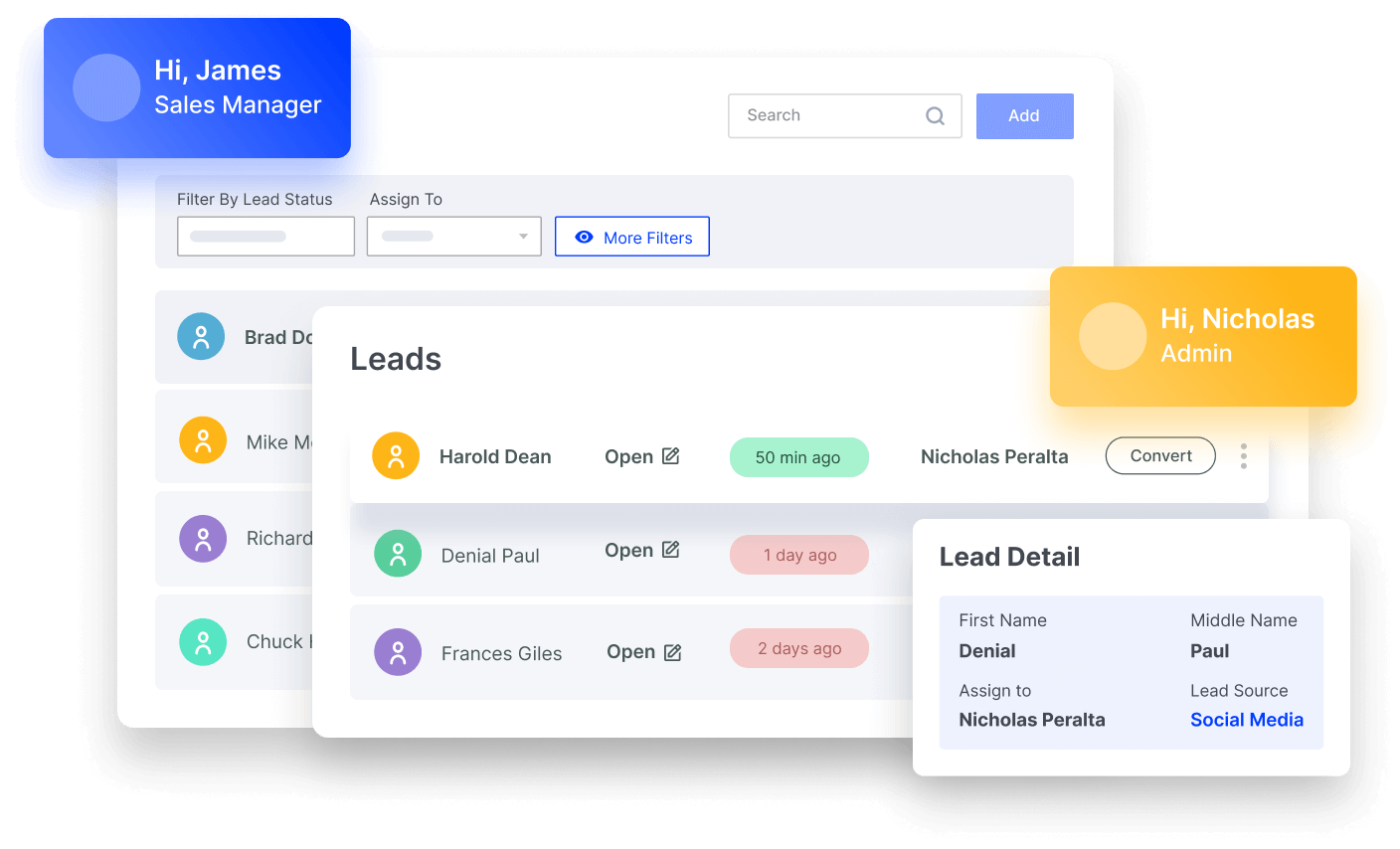
In competitive bids, the proposal that arrives first anchors the comparison — every day of delay costs win rate
5. Your Website and Portfolio: Where Shortlists Are Decided
A construction website has one job: convince someone who already found you that you are credible enough to call. Stock photography of buildings you did not build actively hurts — prospects recognize it, and it signals that you have nothing real to show.
What converts: real photographs of your finished projects with the scope described, licensing and insurance stated plainly, service areas named, and a contact path that does not require filling in eleven fields. Add a visible response-time promise if you can honor it — “we respond to every inquiry within one business day” is a differentiator in an industry where most contractors do not.
6. What Construction Marketing Costs: Benchmarks
| Channel | Typical cost per lead | Time to first lead | Best for |
|---|---|---|---|
| Google Business Profile | $0 (time only) | 2–8 weeks | Every contractor — start here |
| Referral relationships | $0–$50 | 1–3 months | Steady qualified volume |
| Local Services Ads | $50–$150 | 24–72 hours | Residential remodeling, fast pipeline |
| Paid search (PPC) | $80–$300 | 1–2 weeks | Specific project types, commercial |
| Local SEO / case studies | $0 marginal | 6–12 months | Long-term compounding pipeline |
| Paid social | $100–$400 | 1–2 weeks | Brand presence, retargeting only |
Judge every one of these on cost per awarded project, not cost per lead. A $300 construction lead looks expensive until it closes at 25% into a $95,000 project — that is $1,200 in acquisition cost against six figures of revenue.
7. The Conversion Leak Most Contractors Never Fix
Here is the uncomfortable part. Most construction companies that believe they have a marketing problem have a follow-up problem. Leads come in, get logged on a legal pad or lost in a voicemail box, and the estimate goes out six days later — by which point a competitor has already walked the job and left a number.
In competitive bidding, the first clear proposal anchors the comparison. Everything after it is judged against that number. Contractors who deliver a priced, professional bid within 48 hours of the walkthrough win materially more work than contractors with better marketing and slower estimating.
Before increasing ad spend, measure three things: how many inquiries you received last month, how many got a proposal, and how many days elapsed between walkthrough and proposal. If the second number is well below the first, or the third is above three, more leads will not increase revenue — they will just increase the number of prospects who hire someone else. Our free contractor estimate template is a reasonable place to start if your estimates are still being assembled by hand.
8. Offering Financing as a Marketing Channel
On projects above roughly $15,000, the deciding constraint is frequently not price but monthly affordability. Presenting a monthly payment alongside the total changes the conversation from “can I afford $95,000” to “can I afford $1,180 a month.” Contractors who present embedded financing at the point of proposal — rather than mentioning it only if the customer objects to price — close more work and see larger average project values, because customers upgrade scope when the payment is manageable.
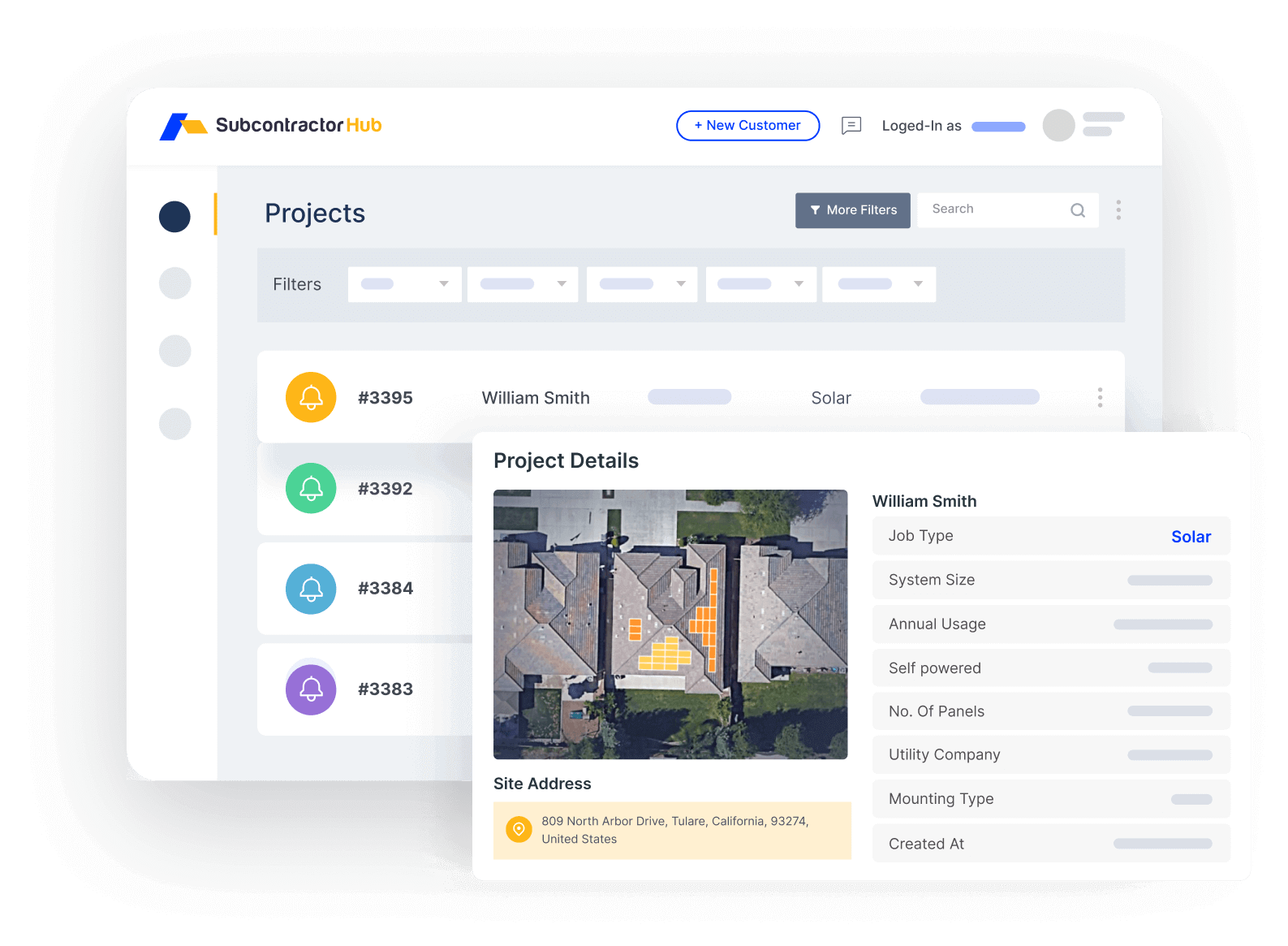
When a bid is awarded, SubcontractorHub creates the project automatically — no re-entry between sales and the field
Frequently Asked Questions
How do construction companies get more leads?
The four channels that produce the most qualified construction leads are, in order of cost-efficiency: a fully built Google Business Profile with consistent review volume, referral relationships with adjacent trades and real estate agents, Google Local Services Ads for demand capture, and a portfolio-driven website with real project photography. Referral and repeat work close at 2–3x the rate of cold paid traffic, so contractors who only buy leads pay the most per closed job.
How much should a construction company spend on marketing?
Most established construction companies spend 3–8% of gross revenue on marketing — lower than home services because average project values are higher and referral share is larger. A $3M general contractor typically runs $90,000–$240,000 per year. Newer companies without a referral base should budget closer to 8–12% while building brand presence. The number that matters is cost per acquired project, not total spend.
Does SEO work for construction companies?
Yes, but slowly and locally. Construction SEO returns on a 6–12 month horizon, and the highest-value terms are geographic and service-specific — 'commercial general contractor [city]', 'kitchen remodel [city]' — not broad national terms. The fastest-returning SEO work for a contractor is the Google Business Profile and location-specific service pages, not blog volume. If you need pipeline inside 90 days, run Local Services Ads while SEO compounds.
What is a good cost per lead for construction?
Construction cost per lead varies widely by project size: $50–$150 for residential remodeling, $100–$300 for whole-home and custom builds, and $200–$600 for commercial work. These look expensive next to home services until you weigh average project value. A $300 lead that closes at 25% into a $95,000 project is a $1,200 cost per acquired project against six figures of revenue — an excellent trade.
How important are online reviews for construction companies?
Reviews are the single highest-leverage marketing asset for a construction company because the purchase is high-cost, infrequent, and trust-dependent. Homeowners and property managers use review volume and recency as the primary filter before they ever call. A profile with 60 recent reviews at 4.7 stars will out-convert a competitor with 12 reviews at 5.0 stars, because volume reads as proof of throughput. Request a review at project closeout, every time, by text.
Should construction companies advertise on social media?
Social media works for construction as a credibility and portfolio channel rather than a direct lead source. Instagram and Facebook project galleries close deals that started elsewhere — prospects check them before signing. Paid social underperforms for construction demand capture because project need is triggered by events, not browsing. Spend the paid budget on Google, and use social organically to document finished work.
Related Guides
- How to Bid Construction Jobs in 2026
- Construction Change Order Guide
- Construction Retainage Guide
- HVAC Marketing Guide 2026
- Roofing Marketing Guide 2026
- Free Contractor Estimate Template
- → Construction Project Management Software
- → Proposal and Quoting Tools
- → HVAC Contractor Software
- → SubcontractorHub for Roofing
- → SubcontractorHub for Solar
- GoodLeap Financing for Contractors
What SubcontractorHub Does for Contractors
30-minute demo. See fast proposals, embedded financing, sales pipeline, and project management built for construction and specialty contractors.
Book a DemoConstruction Marketing, Lead Generation, Contractor Growth
SubcontractorHub
See How Top Contractors Close More Jobs
AI proposals, sales pipeline, and project management — all in one platform.
- ✓AI-powered proposals in the field
- ✓CRM built for contractor sales
- ✓Project tracking from sale to install
30 minutes. No commitment.