
Roofing Marketing Guide 2026: Channels, Budgets, and What Actually Works
By SubcontractorHub Editorial Team·Published July 2026·Updated October 2026

Bottom line up front: Roofing marketing is a speed-and-trust game. After a storm, the company that canvasses first and presents a credible on-site proposal wins the neighborhood. The rest of the year, your Google Business Profile and past-customer base do the heavy lifting. Most roofers don't have a channel problem — they have a follow-up and close-rate problem. Fix the handoff from lead to signed contract before you spend more on ads.
Roofing is one of the most competitive and seasonal marketing categories in the trades. Cost-per-click for “roof replacement near me” runs $12–$40 in most US markets, lead-generation services resell shared leads at $30–$150 each, and storm season turns every channel into a bidding war overnight. Without a clear strategy, it's easy to burn $5,000/month and have little to show for it once the season ends.
This guide covers the marketing channels that actually produce signed roofing contracts in 2026 — with realistic budgets, conversion benchmarks, and an honest read on what works at each stage of growth, including the storm and insurance dynamics that make roofing different from every other trade.
1. Google Business Profile: Your Year-Round Foundation
Before a single paid dollar, make sure your Google Business Profile (GBP) is fully built out. GBP is free, it feeds the local 3-pack that dominates “roofer near me” searches, and it's the first proof-of-legitimacy a homeowner checks when a stranger knocks on their door offering a roof inspection.
The benchmarks that move roofing GBP ranking: 50+ reviews with a 4.5+ rating, complete service and service-area listings, 30+ photos of finished roofs, and weekly Posts — especially right after a local storm event. Consistent review volume and recent photos can lift a roofing profile into the 3-pack, where the overwhelming majority of local clicks land.
The single highest-leverage habit is a repeatable review request. Text a review link the day a roof is finished: “Hi [Name], thanks for trusting [Company] with your new roof. A quick Google review really helps other homeowners find us: [link].” Roofers who do this consistently add 10–25 reviews per month — a compounding trust asset that pays off every storm season.
2. Door-to-Door Canvassing: Roofing's Highest-ROI Channel
No other trade relies on door-to-door (D2D) canvassing the way roofing does — and for good reason. After a hail or wind event, entire neighborhoods have qualifying damage that homeowners haven't noticed. A trained canvasser offering a free inspection is arriving with perfect timing and perfect relevance. Cost per acquired job through disciplined canvassing routinely beats paid channels by a wide margin.
The difference between a profitable canvassing operation and a chaotic one is systems, not effort. Assign territories so reps don't overlap. Log every door — knocked, not-home, inspection-booked — so you can circle back. And hand every qualified inspection directly to a closer who can present a proposal on the spot, not three days later.
This is exactly the workflow SubcontractorHub was built around: canvassers log doors and book inspections in the field, appointments route to closers, and reps present a branded roofing proposal — with financing — on a tablet at the homeowner's door. See how the roofing D2D and sales platform connects canvassing to close.

Every roofing channel should be measured by cost per acquired job — not cost per click or cost per shared lead
3. Insurance Restoration Marketing: Speed and Trust After Storms
A large share of residential roofing revenue is insurance-funded restoration work. Marketing for it is different: the homeowner isn't deciding whether they can afford a roof — the carrier is largely paying — so their real hesitation is trust. Who is this company, will they handle the paperwork, and will they still be here next year?
The winning plays: canvass affected ZIP codes fast after a storm, lead with a free inspection, educate homeowners clearly on the claims process, and stack social proof (reviews, finished-roof photos, licensing, “we manage the insurance paperwork”). Because price is mostly set by the claim, credibility and responsiveness win the job — not the lowest bid.
Operationally, insurance work lives or dies on documentation. Photos, measurements, supplements, and adjuster communication all need to live in one place tied to the job. A CRM that keeps inspection photos, the claim, and the proposal on a single record is what keeps restoration jobs from stalling.
4. Google Local Services Ads & PPC: For Repair and Leak Demand
Google Local Services Ads (LSAs) sit at the very top of search with a Google Guaranteed badge and charge per verified lead. For roofing, they work best for repair, leak, and inspection demand — the searches with immediate intent. Roofing LSA cost per lead runs $40–$120 depending on market and season, spiking after storms.
Standard paid search (PPC) runs below LSAs and is worth adding once your LSA budget is maxed or you're targeting specific services (metal roofing, commercial, flat roofs). PPC needs a specialist — bidding, negatives, and landing pages are where inexperienced campaigns bleed. If you can't commit $3,000+/month in spend plus management, run LSA and canvassing first. Measure everything on cost per signed job, since roofing lead-to-close rates vary wildly by channel. Landing pages are where that click either starts a quote or leaves. Leo is the early-access sidekick that drafts those pages and Meta ads and waits for your approval.
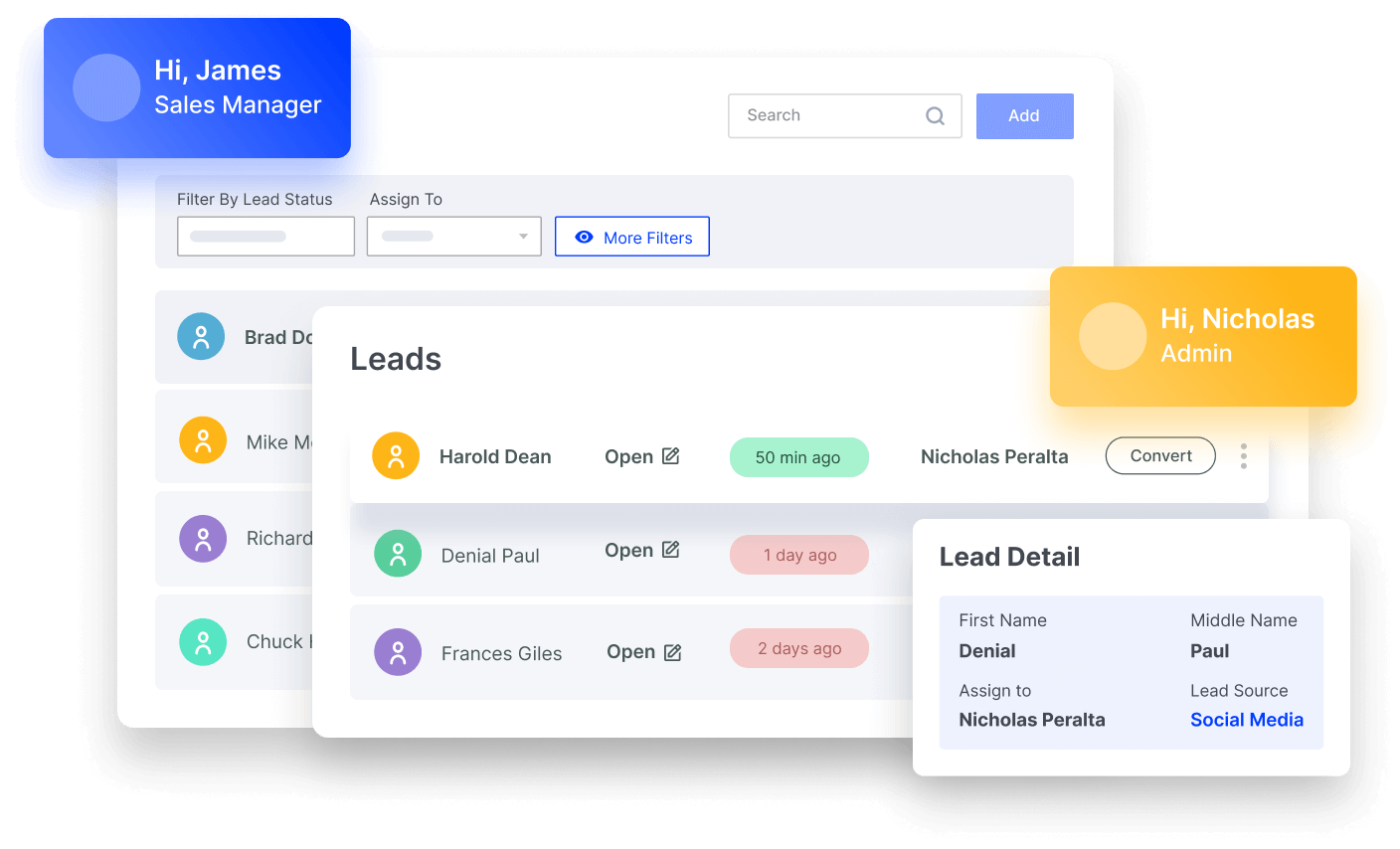
Marketing gets the inspection booked — field proposal software closes it. On-site proposals close at materially higher rates than emailed follow-ups
5. Email & Past-Customer Reactivation
Email isn't a cold-lead channel for roofing — it's how you monetize the database you already own. Every past customer, every inspection that didn't close, and every referral source is an asset. The core roofing email plays are:
- Post-storm alerts — when a storm hits a market you've worked, email past customers and prior inspections: “Did last week's hail hit your area? We're offering free inspections this week.”
- Aging-roof reminders — trigger to customers whose roofs are approaching 15–20 years with maintenance and replacement options.
- Inspection follow-ups — a sequence for homeowners who got an inspection but didn't sign; many convert weeks later once the claim clears.
- Referral and review requests — 3–5 days after a completed roof, ask for a review and introduce the referral program.
A database of even 500–1,000 past roofing customers, worked with these campaigns, reliably produces repeat and referral revenue at near-zero incremental cost — the cheapest signed jobs you'll get all year.
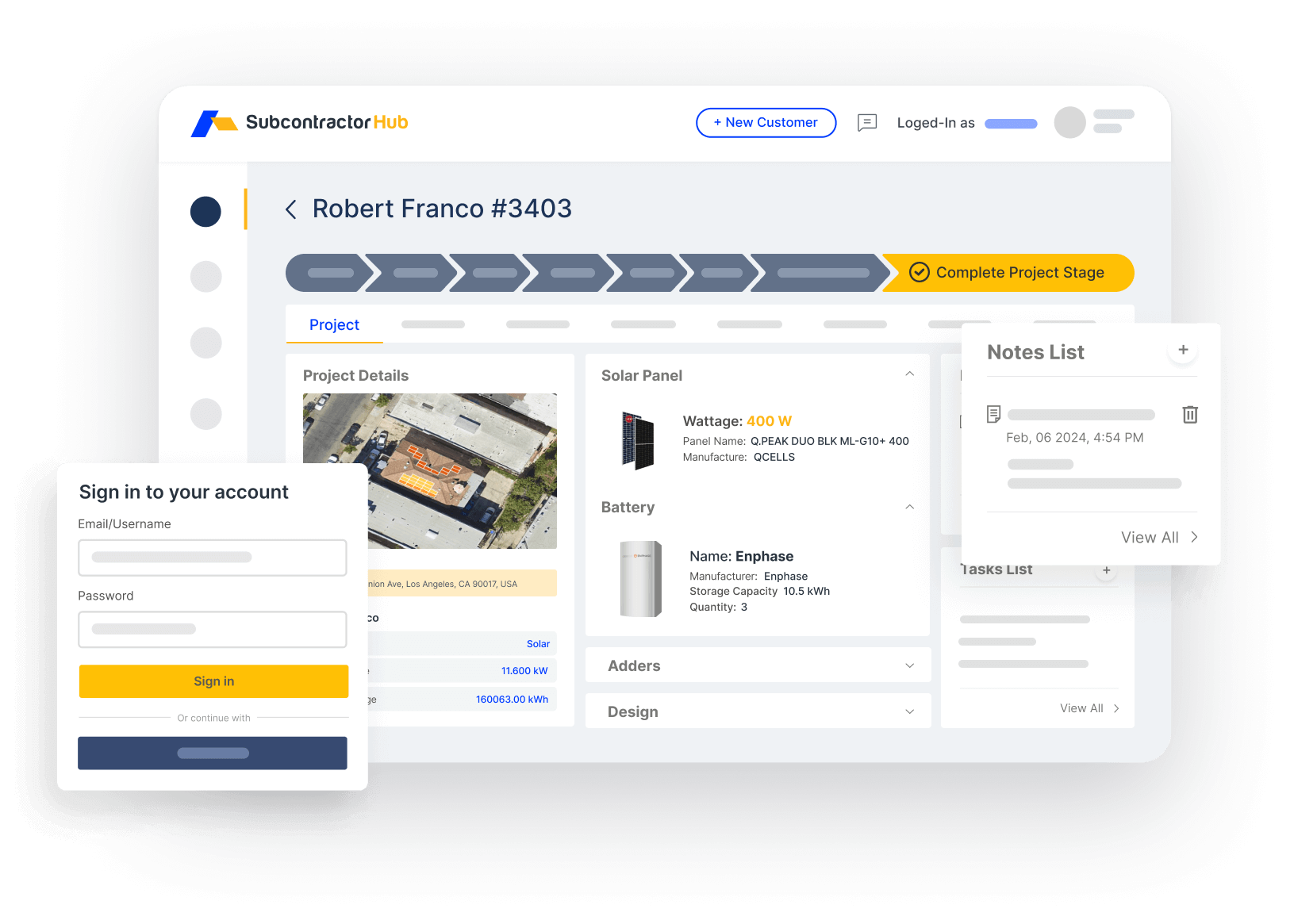
Sales Velocity by SubcontractorHub: canvassing doors, storm leads, and inspections from every channel visible in one pipeline
6. Referral Programs: Your Cheapest Signed Roofs
A referred roofing lead closes at 2–3x the rate of a cold or shared lead and carries far higher trust going in. Most roofers get referrals passively; few run a structured program that systematically amplifies them.
A simple program: a $150–$250 reward for every referral that becomes a signed job. Launch it in the post-completion email, mention it at every review request, and have crews leave a yard sign and referral card on every finished roof. Track it in your CRM so no reward is missed. Roofers who formalize referrals typically see referred revenue climb 20–40% within the first two seasons.
7. The Marketing-to-Close Gap: Why Roofing Leads Die
Most roofing marketing fails at the handoff from lead to signed contract — not in the ad. A homeowner books an inspection, the rep promises to “email an estimate,” three days pass, a competitor knocks in the meantime, and the job is gone. Or the canvasser books the inspection but it never routes to a closer.
The improvements that most lift roofing conversion are operational, not advertising:
- Route every lead instantly — canvassing doors and inbound calls should land in one pipeline and get assigned to a closer the same day.
- Propose on-site — field proposal software lets reps present options and collect a signature at the door. Same-visit proposals close far higher than emailed follow-ups.
- Offer financing on every non-insurance job — homeowners who see a monthly payment beside a $14,000 price sign at materially higher rates.
- Follow up systematically — automated sequences keep inspections-that-didn't-close alive, which matters enormously while insurance claims process.
Roofing software that connects canvassing, inspections, field proposals, financing, and pipeline in one system is what separates roofers who close 30% of inspections from those who close 50%. Marketing fills the top of the funnel; the system decides how much of it turns into signed roofs.
Roofing Marketing Budget: What to Spend at Each Stage
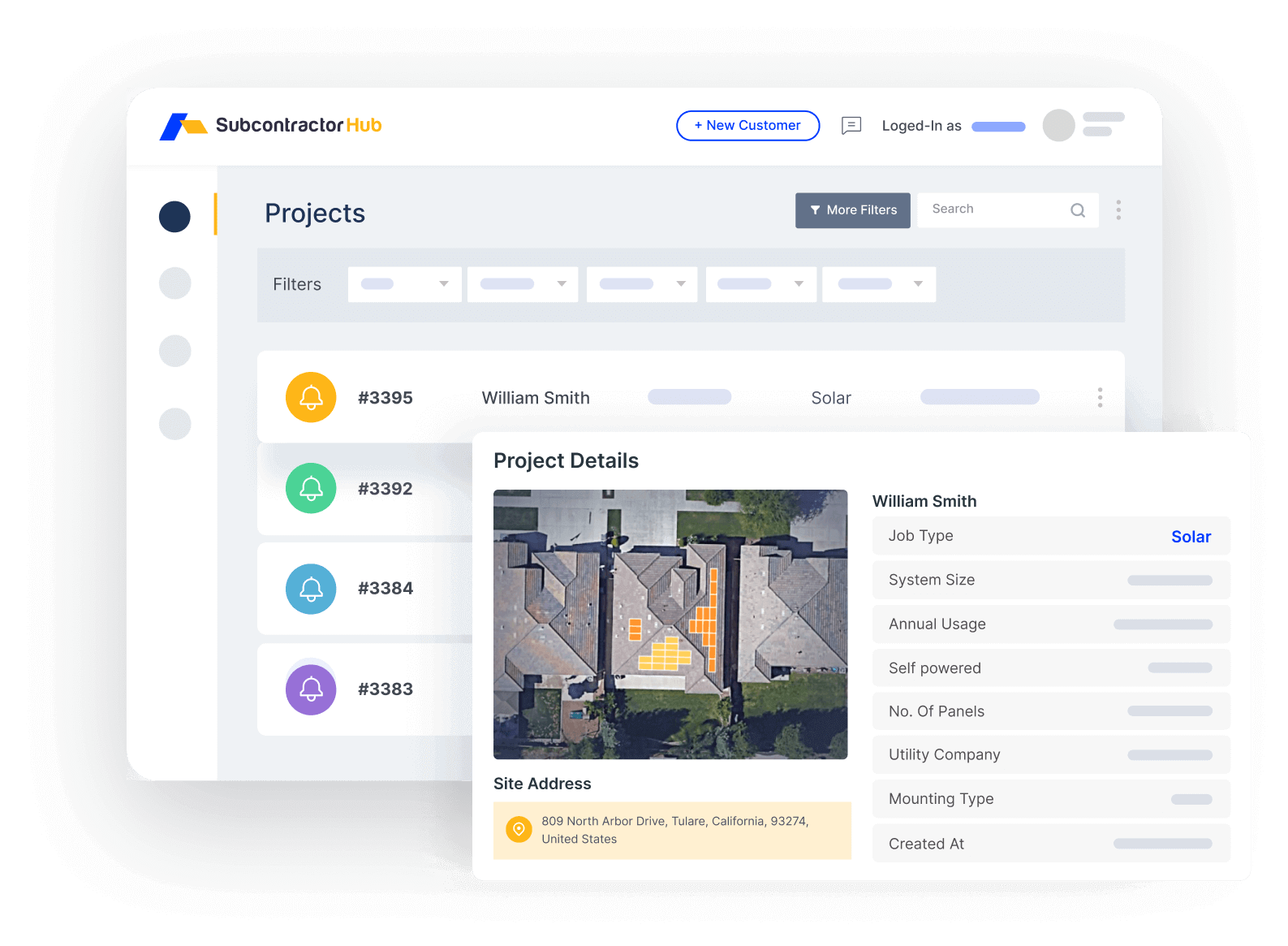
When marketing works and a roof is signed, SubcontractorHub creates the installation project automatically — no re-entry between sales and production
A Roofing Marketing Guide Still Needs a Written Offer
A roofing marketing guide can fill the calendar and still lose the job at the kitchen table. The page the homeowner signs is how to write a roofing proposal. The channel that produced the visit is how to get roofing leads. This October 2026 pass of the roofing marketing guide does not replace those steps, and it does not publish a new cost.
Dollar figures earlier in this roofing marketing guide were not given a new source. Treat the CPC ranges, the lead prices, the review counts, and the budget table as planning ranges, not a quote.
Where a Roofing Marketing Guide Stops Inventing Prices
Use the roofing marketing guide to choose a channel. Use the proposal to name the roof, the material, and the exclusions. If a number on this page is not on an invoice you can show, do not read it to the homeowner as their price.
- Name the channel. Say which path produced the lead before you talk about a budget.
- Write the scope. The roof, the material, and the exclusions come before any monthly figure.
- Label the old ranges. Planning numbers already on this page were not re-sourced in October 2026.
- Leave the close rate off. Do not add one to make the roofing marketing guide sound more precise.
Frequently Asked Questions
What is the best marketing strategy for a roofing company?
The highest-ROI roofing stack is a fully optimized Google Business Profile with 50+ reviews, Local Services Ads for repair demand, a disciplined door-to-door canvassing program in storm-affected areas, and a referral plus past-customer reactivation system. Speed after storms and trust signals matter more in roofing than any single ad channel.
How much should a roofing company spend on marketing?
Budget 8–12% of gross revenue — higher than HVAC because lead costs are steeper and work is less recurring. Track cost per acquired job and cost per approved claim, not just cost per lead, and expect to spend more during active storm season.
Does door-to-door canvassing still work for roofing in 2026?
Yes — D2D remains roofing's most cost-effective lead source, especially after storms, because a free-inspection offer arrives with perfect timing. Profitability depends on systems: assigned territories, logging every door in a CRM, and routing qualified inspections straight to a closer with an on-site proposal tool.
Are Local Services Ads worth it for roofing companies?
Yes for repair, leak, and inspection demand. Roofing LSA cost per lead runs $40–$120 and spikes after storms. Full replacement and insurance work usually still comes from GBP, referrals, and canvassing. Start at $2,000–$3,000/month and measure cost per signed job.
How do roofers market insurance restoration work?
Be first and be credible after a storm: rapid canvassing in affected ZIP codes, free inspections, clear claims-process education, and heavy social proof. Because the carrier largely funds the job, trust and responsiveness win it — not the lowest price.
Related Guides
- How to Get Roofing Leads in 2026
- How to Get Commercial Roofing Leads in 2026
- Roofing SEO Guide: How Roofers Rank and Win Local Leads
- Construction Marketing Guide 2026
- How to Grow a Roofing Business in 2026
- The Roofing Sales Process: From Knock to Signed Contract
- How to Improve Your Roofing Sales Close Rate
- Best Roofing CRM Software in 2026
- Best Roofing Software for Contractors in 2026
- Best Roofing Sales Software in 2026
- → SubcontractorHub for Roofing Contractors
- Scorpion for Contractors: What You're Paying For
- Embedded Contractor Financing
What SubcontractorHub Does for Roofing Contractors
30-minute demo. See D2D canvassing, sales pipeline, on-site roofing proposals with financing, and project management built for roofing contractors.
Book a DemoRoofing Marketing, Contractor Growth, Lead Generation
SubcontractorHub
See How Top Contractors Close More Jobs
AI proposals, sales pipeline, and project management — all in one platform.
- ✓AI-powered proposals in the field
- ✓CRM built for contractor sales
- ✓Project tracking from sale to install
30 minutes. No commitment.