
Free Interactive HVAC Tool
HVAC Troubleshooting Chart 2026
Pick your symptom, answer two follow-up questions, and get a diagnosis — most likely cause, what you can check yourself, and when to call a licensed technician.
Built by SubcontractorHub — the software HVAC contractors use to quote, finance, and run every job.
Book a Demo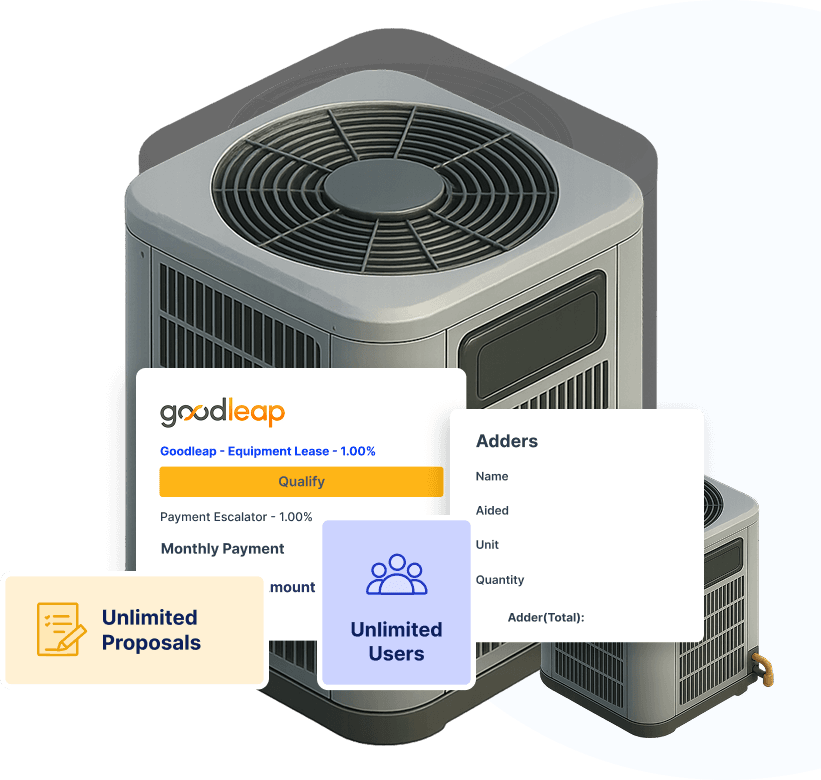
Interactive HVAC Troubleshooting Chart
Select your symptom below. The tool walks you through two follow-up questions and returns a specific diagnosis with a DIY check and a clear threshold for calling a pro.
Common HVAC Problems and Their Causes
Dirty or clogged air filter
The most common — and most preventable — HVAC problem. A filter clogged with dust and debris restricts airflow, forces the system to work harder, causes the evaporator coil to ice over, and drops cooling efficiency by 15–25%. Replace every 1–3 months depending on household conditions.
Refrigerant leak
Refrigerant doesn't get used up — if your system is low on refrigerant, there's a leak somewhere. Symptoms include reduced cooling capacity, ice on the refrigerant lines, and a hissing sound near the indoor unit. Refrigerant work requires EPA 608 certification — it's always a licensed-technician job.
Capacitor failure
The capacitor provides the electrical boost the compressor and fan motors need to start and keep running. A failed start capacitor typically presents as an outdoor unit that hums but won't spin up. Capacitor replacement is one of the most common service calls in summer and is relatively inexpensive ($100–$250).
Clogged condensate drain
As the evaporator coil cools the air, it removes humidity — and that water has to drain somewhere. A clogged condensate drain line causes water to back up into the drain pan and overflow. The system's float switch should shut it off before water damage occurs, but a clogged line is still something to address quickly.
Thermostat issues
Before calling for service, confirm the thermostat is set to the right mode, the set temperature is appropriate, and the batteries are fresh. Smart thermostats can have firmware bugs or connectivity issues that mimic system failures. A thermostat placed in direct sunlight or near a heat source will read temperatures inaccurately and cause short cycling.
Dirty coils reducing efficiency
Both the evaporator coil (indoor) and the condenser coil (outdoor) accumulate dirt over time. A dirty coil creates an insulating barrier between the refrigerant and the air it needs to exchange heat with — efficiency drops 15–20% and the compressor has to work significantly harder. Annual professional cleaning prevents this.
From Load Numbers to a Signed Proposal
A service call where a technician diagnoses a failing system is the highest-converting sales opportunity in the HVAC business. Most contractors leave the home without a replacement proposal in the customer's hands — and lose the sale to the next contractor who calls.
SubcontractorHub's EasyQuote lets your technicians build a full replacement proposal on a tablet at the home — equipment options, efficiency tiers, and financing payments side-by-side. GoodLeap, Sunlight Financial, and Service Finance are embedded directly. The customer applies, gets approved, and signs before your tech drives home.
See How It WorksBuild replacement proposals on a tablet at the home
Show equipment options and efficiency tiers side-by-side
Present monthly financing payments from multiple lenders
Customer applies and signs before the tech leaves
Closed job flows directly to operations — no re-entry
HVAC Troubleshooting — Common Questions
What are the most common HVAC problems?
The five most common HVAC problems are: a dirty or clogged air filter (restricts airflow, causes icing and poor cooling), a refrigerant leak (reduces cooling capacity and forces the compressor to overwork), a failed capacitor (the outdoor unit won't start), a clogged condensate drain (causes water leaks and system shutdowns via the safety float switch), and thermostat issues (system won't respond or cycles incorrectly). Most of these are preventable with annual professional maintenance and regular filter changes.
Why is my AC running but not cooling?
The most common causes are a dirty air filter blocking airflow, a frozen evaporator coil (often from low refrigerant or a blocked filter), a dirty condenser coil on the outdoor unit, or low refrigerant from a leak. Replace the air filter first — if the system doesn't improve within an hour after the filter change, call an HVAC technician. A frozen coil needs to be thawed (turn the system to FAN ONLY for 2–4 hours) before it will resume cooling.
Why does my HVAC keep turning on and off?
Short cycling is usually caused by an oversized system (cools too fast, shuts off before completing the humidity removal cycle), low refrigerant, a dirty air filter, or a thermostat placed near a heat source like a sunny window or a lamp. An oversized system is a design problem that requires a professional load calculation to diagnose properly. Replace the filter and check the thermostat location first — those are easy DIY checks before calling a technician.
When should I call an HVAC technician vs. fixing it myself?
DIY is appropriate for: replacing air filters (every 1–3 months), clearing debris from the outdoor unit, resetting a tripped breaker once, replacing thermostat batteries, and pouring diluted bleach into the condensate drain line. Always call a licensed professional for: refrigerant issues (legally requires EPA 608 certification), any electrical problem inside the unit, anything involving gas lines or burners, frozen coils that refreeze after thawing, and any situation involving water damage to the ceiling or walls.
How do I know if my HVAC needs repair or replacement?
A common rule of thumb: if the repair cost exceeds 50% of the cost of a new system, and the system is more than 10 years old, replacement usually offers better long-term value. A $600 repair on a 15-year-old system with a 10-year-old efficiency rating will likely be followed by another repair within a year or two. A new system at today's efficiency standards (SEER 16+) will also reduce monthly energy bills. Get a written assessment from a trusted HVAC contractor who will tell you the honest trade-off.
HVAC Software Built for Contractors Who Sell on the Spot
SubcontractorHub gives your HVAC technicians the tools to diagnose, propose, and close — all from a tablet at the home. Stop losing replacements to competitors who get there after you do.
Book a Free DemoAll diagnostic suggestions are general guidance only and should be confirmed by a licensed HVAC technician. HVAC systems vary by manufacturer, model, and installation. Do not perform electrical or refrigerant work without proper certification. All results are estimates based on historical information and should be verified by the user. This tool is provided as a free service for planning purposes only and is not a substitute for a professional inspection or applicable local code requirements.