
Best Roofing Scheduling Software for Contractors in 2026
Published June 29, 2026 · Updated August 28, 2026 · 10 min read
A roofing job isn't a single appointment — it's a sequence of events that has to land in the right order: material delivery before tear-off, permit approval before installation, inspection before final billing. Roofing scheduling software that treats every job like a service call misses the operational reality of installation contracting.
This guide compares the best roofing scheduling software in 2026 for contractors who sell and install. We cover platforms from two angles: how well they handle the scheduling complexity of multi-day roofing projects, and whether the scheduling tool connects to the rest of your business — sales, proposals, materials, and invoicing.

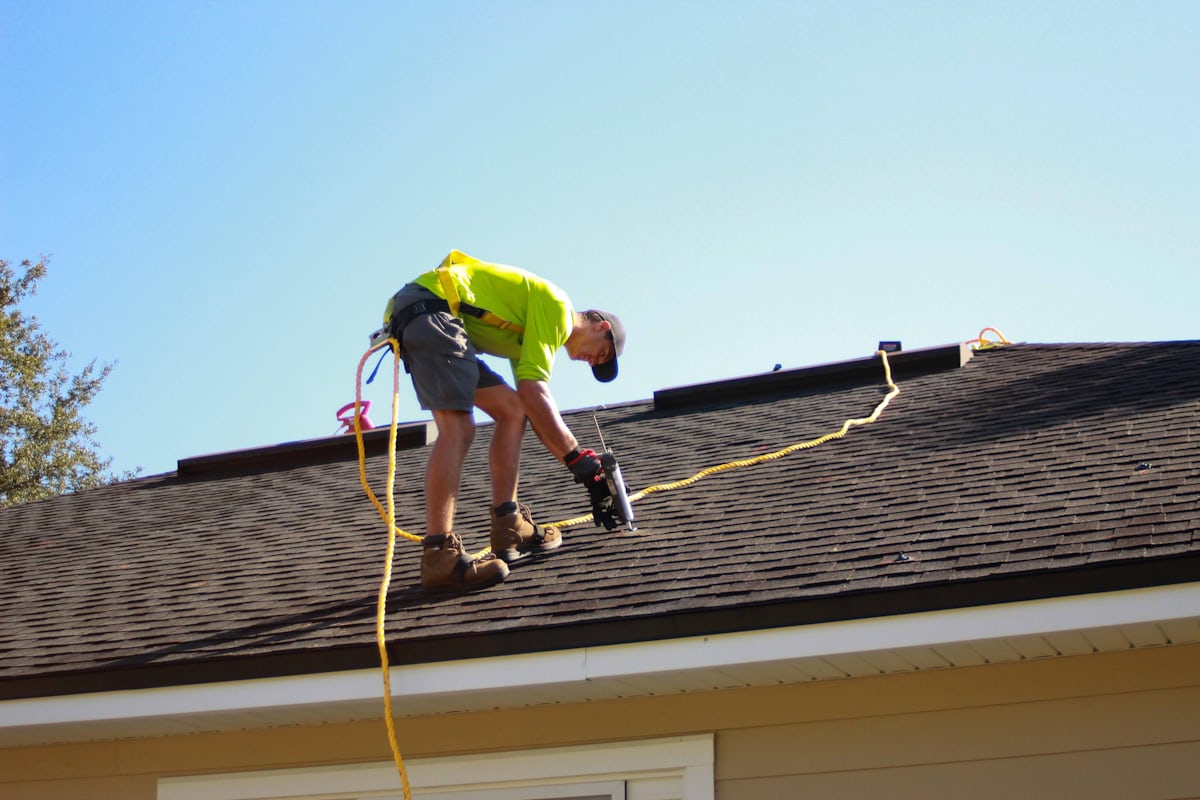
Roofing scheduling software built for installation contractors coordinates crews, materials, and permit milestones across multi-day jobs — not just calendar appointments.
What to Look for in Roofing Scheduling Software
Roofing scheduling has different requirements than HVAC or plumbing scheduling. Jobs typically span multiple days, involve multiple crew visits, and depend on external milestones (material delivery, permit approval, weather windows) that are outside your direct control. Here's what the best platforms need to handle:
- Production calendar: a multi-week view showing every job, crew, and milestone — not just a daily appointment list
- Crew management: assign specific crews or subcontractors to jobs, track availability, and manage capacity across your install backlog
- Milestone tracking: permit status, material delivery confirmation, tear-off, installation, inspection — each stage visible and trackable inside the job record
- Material coordination: scheduling tools that share job specs with the procurement workflow so materials are ordered before delivery day, not the day before
- Sales-to-scheduling handoff: when a rep closes a deal, the scheduled job should auto-create from the proposal — no manual re-entry, no scheduling gap while a coordinator waits for details
- Customer notifications: automated SMS and email updates so homeowners know when to expect the crew, material delivery, and inspection
For a full platform that connects roofing contractor operations from the first sales call through final inspection, scheduling is only one layer — but it's the layer where most installation delays are born.
SubcontractorHub
See How Top Contractors Close More Jobs
AI proposals, sales pipeline, and project management — all in one platform.
- ✓AI-powered proposals in the field
- ✓CRM built for contractor sales
- ✓Project tracking from sale to install
30 minutes. No commitment.
Roofing Scheduling Software Comparison (2026)
| Platform | Scheduling Model | Production Calendar | Sales-to-Schedule Handoff | Insurance Claim Stages | Starting Price |
|---|---|---|---|---|---|
| SubcontractorHub | Installation project scheduling connected to sales pipeline | Yes — multi-week project view | Auto — signed proposal creates project | Custom milestones | Contact for pricing |
| AccuLynx | Roofing-specific production calendar with insurance workflow | Yes — roofing-native | Partial — manual handoff | Yes — built-in | Contact for pricing |
| ServiceTitan | Enterprise scheduling board with capacity planning | Yes — enterprise-grade | Yes (complex setup) | Custom workflow | $245–$400+/tech/mo |
| JobNimbus | Board-based job tracking with basic calendar | Basic | Manual | Custom boards | From $25/user/mo |
| Jobber | Service appointment scheduling | No — single-visit model | Manual | No | From $49/mo |
The 5 Best Roofing Scheduling Software Options in 2026
1. SubcontractorHub — Best for Installation Contractors Who Sell and Install
SubcontractorHub solves the handoff problem that slows down most roofing operations: the gap between when a rep closes a deal and when the installation crew gets on the schedule. When a customer signs a proposal in SubcontractorHub, the installation project is automatically created with every job detail — materials from the proposal, customer address, system specs, and financing status — already pre-loaded. No coordinator has to re-enter anything.
The roofing scheduling module uses a multi-week production view to manage installation milestones — permit confirmation, material delivery, tear-off, installation, and final inspection — with crew assignments and customer notifications built in. Managers see the full install backlog at a glance, and reps see job status without calling the office. For roofing businesses running a D2D or canvassing sales model alongside a structured install operation, this is the only platform that connects both sides.
Best for: Roofing contractors with a structured sales process (D2D, canvassing, inside sales) running multi-week installation projects.
Not ideal for: Small shops doing exclusively insurance claim work where AccuLynx's adjuster workflow is more important than sales pipeline automation.
SubcontractorHub's production view shows every roofing job across all stages — from signed proposal to final inspection — with crew assignments auto-loaded from the closed deal.
2. AccuLynx — Best for Insurance Restoration Roofing
AccuLynx is the most purpose-built roofing platform on this list. Its Production Calendar was designed specifically for how roofing jobs actually work — with drag-and-drop rescheduling, crew assignment, and real-time notifications for schedule changes. The platform integrates directly with ABC Supply and Beacon for material ordering, pulling quantities from the estimate so procurement is tied directly to what was sold.
Where AccuLynx truly stands out is insurance claim workflow. Adjuster appointments, supplement approvals, and insurance payout milestones are native scheduling stages — not workarounds. For roofing businesses doing heavy storm restoration work, AccuLynx's claim-to-close scheduling is unmatched. The tradeoff is that AccuLynx is roofing-only; contractors who also do solar, HVAC, or siding will need a second platform. See a full breakdown in our AccuLynx alternatives guide.
Best for: Insurance restoration roofing shops where adjuster workflows and supplement tracking are core to operations.
Not ideal for: Multi-trade contractors or retail roofing businesses that need AI proposals, embedded financing, and a connected sales CRM.
3. ServiceTitan — Best for Enterprise Multi-Trade Operations
ServiceTitan's capacity-planning board is the most powerful enterprise scheduling engine in the field service space. For large roofing operations (20+ crews) running both service calls and installations, ServiceTitan can handle the complexity — across multiple crews, multiple job types, and multiple trade divisions. The dispatching board, job notifications, and GPS tracking are top-tier.
The cost and implementation barrier is the well-documented tradeoff. ServiceTitan charges $245–$400+ per technician per month with a mandatory $15,000–$25,000 onboarding investment and a 6–8 week implementation timeline. For roofing contractors under $5M in revenue, the ROI case is difficult to justify on scheduling alone. If you're evaluating ServiceTitan, see our ServiceTitan alternatives guide first.
Best for: Enterprise multi-trade contractors at $10M+ revenue running complex multi-crew operations.
Not ideal for: Independent roofing contractors or businesses under $5M where the cost-to-benefit ratio is hard to justify.
4. JobNimbus — Best for Small Retail Roofing Shops
JobNimbus uses a Kanban-style board to track jobs through custom stages — from lead to estimate to production to collected. The scheduling component is basic: you assign jobs to dates and crews, but there's no true production calendar with multi-milestone views or automated material coordination. For small retail roofing businesses (5 crews or fewer) that need a structured job board without enterprise overhead, JobNimbus is a usable entry point.
The ceiling is apparent quickly for growing businesses. JobNimbus lacks AI proposals, embedded financing, and a native sales CRM — which means reps need separate tools for quoting and customer follow-up. See how it compares in our JobNimbus alternatives guide.
Best for: Small roofing shops that primarily need job tracking and basic crew scheduling without a large platform investment.
Not ideal for: Businesses that need AI proposals, embedded financing, or a production calendar with milestone tracking.
5. Jobber — Best for Entry-Level Service Scheduling
Jobber is designed for recurring service visits and single-day appointments — not multi-day roofing installations. Its calendar is clean and easy to use, and the client hub and automated follow-up emails work well for small service businesses. But for roofing contractors managing material deliveries, permit milestones, and multi-crew installs, Jobber's scheduling model runs out of depth fast.
If your roofing business is still doing mostly maintenance or repair work (gutters, minor repairs, spot fixes), Jobber can manage the appointment calendar. As soon as your volume of multi-day replacements grows, you'll outgrow it — see what makes sense in our Jobber alternatives comparison.
Best for: Very small roofing businesses doing mostly service and repair work with simple scheduling needs.
Not ideal for: Any contractor running multi-day installations with crew scheduling, permit tracking, or material coordination requirements.
The Scheduling Problem Installation Roofing Contractors Actually Face
The most common scheduling failure in roofing installation isn't a calendar problem — it's a handoff problem. A rep closes a deal on Friday afternoon. On Monday morning, someone has to manually re-enter the job details into the scheduling system — customer name, address, roof size, material specs, crew requirements — before anyone can book the install. That gap is where jobs fall through the cracks.
When the scheduling tool isn't connected to the proposal, coordinators are working from PDFs, texts, and memory. Material gets ordered to the wrong address. The permit is filed for the wrong square footage. The crew shows up without knowing the full scope. These aren't scheduling failures — they're data handoff failures that scheduling software alone can't fix.
The solution is a platform where the signed proposal IS the scheduled job. Everything from the proposal — materials, scope, customer details, financing status — flows directly into the production calendar. The coordinator's job changes from re-entering data to managing the actual schedule. For more on how the full roofing contractor platform connects sales and operations, see how the workflow runs end to end.
Arrivy vs Zuper for Roofing Crews: Scheduling Workflows Compared
Two platforms come up constantly when roofing contractors shop for crew scheduling outside the roofing-native tools: Arrivy and Zuper. Neither is built specifically for roofing, but both are used by roofing companies, and they solve genuinely different halves of the problem. Knowing which half you actually need saves an expensive migration later.
Arrivy: routing, ETA optimization, and customer-facing proof of service
Arrivy is strongest on the customer-experience layer of a scheduled job. Its core strengths are route planning and ETA optimization for crews in the field, live tracking links and automated status notifications sent to the homeowner, and digital forms that capture proof of arrival and proof of completion — photos, signatures, and job data collected online or offline. It also handles crew coordination through shared schedules and granular time tracking across jobs.
That makes Arrivy a strong fit for roofing companies whose main complaint is that homeowners call the office asking where the crew is. If your scheduling calendar basically works but your customer communication is manual, Arrivy closes that gap well. Arrivy does not publish pricing publicly — it runs a free trial and demo motion.
Where roofing contractors look for Arrivy alternatives: Arrivy is a field-operations layer, not a roofing sales system. It has no proposal builder, no insurance claim workflow, and no financing integration, so a signed roofing contract still has to be re-entered somewhere before it becomes a scheduled job. Contractors who want that handoff to disappear generally move to a platform where the proposal and the production schedule are the same record.
Zuper: dispatch, work orders, and field check-in/check-out time capture
Zuper sits on the operations side. It is an AI-assisted field service management platform covering dispatch and scheduling, work order management, inventory, job costing and profitability, and invoicing. Its technician mobile app works offline and captures photo and video job documentation, and it handles field check-in/check-out time capture for crews — the timesheet function roofing companies usually bolt on separately.
Zuper markets to roofing directly alongside HVAC, plumbing, electrical, and solar. It is a reasonable choice for a roofing company running a high volume of discrete work orders — repairs, service calls, inspections — where each job is a ticket with labor and parts against it. Like Arrivy, Zuper does not list pricing publicly.
Arrivy dispatch vs Zuper scheduling: which one you actually need
The short version: Arrivy optimizes the trip, Zuper optimizes the ticket. Arrivy answers "where is the crew, when will they arrive, and can the customer see it?" Zuper answers "what work is authorized, who is assigned, how many hours went in, and what did it cost?" A roofing shop doing mostly multi-day replacements needs the second question answered more often than the first — but neither tool answers the roofing-specific question of how a signed contract becomes a scheduled install.
On room and resource scheduling equivalents for roofing, both platforms model resources generically — a crew, a truck, a piece of equipment as a bookable unit. That generic model is flexible, but it does not understand roofing production stages. Neither one knows that a tear-off has to precede dry-in, that a dumpster drop and a material delivery need to land the day before, or that a permit milestone gates the whole sequence. Roofing-native platforms encode those dependencies; generic resource schedulers make you rebuild them by hand.
| Capability | Arrivy | Zuper | SubcontractorHub |
|---|---|---|---|
| Routing & ETA optimization | Core strength | Yes | Crew routing for scheduled installs |
| Customer notifications / tracking links | Core strength | Yes | Milestone-based homeowner updates |
| Proof of arrival & completion | Digital forms, photos, signatures | Photo/video capture in mobile app | Photo documentation per milestone |
| Check-in/check-out time capture | Granular time tracking | Core strength | Crew time against job costing |
| Work orders & job costing | Work orders & quotes | Core strength | Job costing from proposal line items |
| Multi-day roofing production stages | Generic resource model | Generic work order model | Installation milestones |
| Signed proposal auto-creates the job | No | No | Yes |
If you are comparing Arrivy and Zuper because crew scheduling is painful, it is worth checking whether the pain actually starts upstream — at the handoff from the signed contract into production. See how the connected roofing contractor platform removes that re-entry step, or compare the roofing-native options in our AccuLynx alternatives breakdown.
Roofing Scheduling Software: Pricing Overview
| Platform | Starting Price | Production Calendar | Sales Handoff | Best For |
|---|---|---|---|---|
| SubcontractorHub | Contact for pricing | Multi-stage installation milestones | Auto from signed proposal | Installation contractors with sales teams |
| AccuLynx | Contact for pricing | Roofing-native production calendar | Partial | Insurance restoration roofing |
| ServiceTitan | $245–$400+/tech/mo | Enterprise capacity planning | Yes (complex) | $10M+ multi-trade operations |
| JobNimbus | From $25/user/mo | Basic job board | Manual | Small retail shops |
| Jobber | From $49/mo | Single-visit calendar | Manual | Service and repair only |
The Bottom Line
The best roofing scheduling software in 2026 depends on what type of roofing business you run:
- Installation contractors with a sales team: SubcontractorHub connects proposals to scheduling to project management in one platform — the signed deal auto-creates the scheduled project, and every milestone tracks without manual re-entry.
- Insurance restoration specialists: AccuLynx is purpose-built for insurance claim scheduling with ABC Supply and Beacon integration for materials — the deepest roofing-native scheduling available.
- Enterprise multi-trade operations ($10M+): ServiceTitan has the most powerful scheduling board but comes with significant cost and implementation overhead.
- Small retail shops (5 crews or fewer): JobNimbus provides a usable job board and basic scheduling without enterprise overhead.
- Repair and maintenance-focused businesses: Jobber handles simple appointment scheduling but doesn't support multi-day installation workflows.
If scheduling delays in your roofing business trace back to data handoff problems rather than calendar complexity, the fix is a connected platform — not a better calendar. See what roofing scheduling software built for installation contractors looks like in practice.
See the Roofing Production Calendar in Action
Book a demo and see how SubcontractorHub connects your sales pipeline, crew scheduling, and installation milestones in one platform.
Book a Free DemoFrequently Asked Questions: Roofing Scheduling Software
What is roofing scheduling software?
Roofing scheduling software manages crew assignments, material deliveries, and inspection appointments for roofing jobs. The best platforms include a visual production calendar, drag-and-drop crew scheduling, automated customer notifications, and a connection to the sales CRM so signed proposals auto-create scheduled jobs.
What is the best roofing scheduling software in 2026?
For roofing contractors who sell and install, SubcontractorHub auto-creates scheduled projects from signed proposals — eliminating the handoff gap. AccuLynx is the best roofing-native option for insurance restoration shops. ServiceTitan leads for enterprise multi-trade operations.
How is roofing scheduling different from general field service scheduling?
Roofing jobs require multi-day scheduling with crew rotations, material delivery coordination, permit milestone tracking, and weather buffers. General field service scheduling is built for same-day single-visit appointments. Roofing-specific platforms manage the full lifecycle from tear-off to final inspection across multiple days.
Does roofing scheduling software handle insurance claim jobs?
AccuLynx specifically tracks insurance claim stages — adjuster meetings, supplement approvals, and insurance payouts — as scheduling milestones. SubcontractorHub and ServiceTitan handle insurance jobs through custom milestone tracking. Jobber and JobNimbus do not have insurance claim workflow support built in.
Can roofing scheduling software integrate with material ordering?
The best roofing platforms connect scheduling to materials. In SubcontractorHub, a scheduled job includes the materials from the original proposal so procurement knows exactly what to order. AccuLynx integrates directly with ABC Supply and Beacon for in-platform material orders.
Arrivy vs Zuper for roofing: which scheduling platform is better?
They solve different halves of the problem. Arrivy is strongest on routing and ETA optimization, live customer tracking links and notifications, and proof of arrival and completion through digital forms. Zuper is strongest on dispatch, work order management, job costing, and field check-in/check-out time capture in an offline-capable mobile app. Arrivy optimizes the trip; Zuper optimizes the ticket. Neither is roofing-native, so neither understands multi-day production stages like tear-off before dry-in.
What are the best Arrivy alternatives for roofing field scheduling?
Arrivy is a field-operations layer with no proposal builder, insurance claim workflow, or financing integration, so a signed roofing contract still has to be re-entered before it becomes a scheduled job. Contractors looking for Arrivy alternatives generally choose either a roofing-native production platform such as AccuLynx, or a connected sales-to-production platform such as SubcontractorHub where the signed proposal auto-creates the scheduled installation.