
How to Get HVAC Leads in 2026: 9 Channels That Actually Work
By SubcontractorHub Editorial Team·Published July 2026 · Updated August 2026

Bottom line up front: Getting HVAC leads is only half the job. Most contractors don't have a lead-volume problem — they have a follow-up problem. Build two or three reliable lead channels, then put a system behind them that responds in minutes and closes on-site. That combination beats buying more shared leads every time.
HVAC lead generation in 2026 comes down to showing up where homeowners look when their system fails, and being faster and more organized than the competitor calling the same house. Below are the nine channels that produce leads for HVAC companies, ordered roughly by return on investment for a typical local installer — plus the piece almost everyone underinvests in: what happens after the lead comes in.
1. Optimize Your Google Business Profile First
Your Google Business Profile is the single highest-ROI lead source available to a local HVAC company, and it's free. When a homeowner searches “AC repair near me,” the map pack shows up before every organic result. Contractors with complete, actively managed profiles routinely get two to three times more calls than competitors with neglected listings.
Fill out every field: services, service area, hours, and real photos of your crew and completed jobs. Post weekly updates. Then attack reviews — they're the ranking factor you can move fastest. Ask every customer for a review the moment the job is done, using a simple text template. Going from 30 to 80 reviews in 90 days is realistic for a busy shop and moves you up the map pack noticeably.
2. Run Google Local Services Ads (LSAs)
Local Services Ads sit at the very top of the results page with a Google Guaranteed badge, and you pay per lead rather than per click. For HVAC, that pay-for-leads model is ideal — you're only charged when a homeowner actually calls or messages. The badge also raises trust, which matters when someone is inviting a stranger into their home. Get your GBP and reviews strong first; LSAs reward the same signals.
3. Invest in Local SEO and Helpful Content
Paid channels stop producing the moment you stop paying. Local SEO compounds. Build service-area pages for each town you cover, keep your name, address, and phone number consistent across directories, and publish genuinely useful content — cost guides, “repair vs. replace” explainers, and seasonal maintenance tips. This is the same organic engine our own HVAC marketing guide walks through in more detail.
The payoff is slow for the first few months, then it accelerates. Organic calls have no per-lead cost, and a page that ranks for “furnace replacement cost” in your city can produce leads for years.
4. Use Facebook and Instagram Ads for Replacement Leads
Search captures homeowners in an emergency; social captures them before the emergency. Facebook and Instagram ads are the best channel for generating replacement and installation leads because you can target homeowners by age of home and income, then offer a seasonal tune-up or a financing-friendly system upgrade. Pair the ad with a strong offer and a fast-loading landing page, and retarget people who visited your site but didn't call. When those Facebook and Instagram drafts should wait for a yes before anything spends, early access is the Leo waitlist.
5. Build a Referral and Review Engine
Referrals are the cheapest, highest-closing leads in the trade — the trust is already there. Make asking systematic rather than accidental: a referral incentive for existing customers, a follow-up text a week after every install, and a review request built into your job-completion workflow. A single happy replacement customer can be worth several referred jobs over the following year.
6. Mine Your Existing Customer Base and Maintenance Plans
Your best source of replacement leads is already in your database. Homeowners on maintenance agreements give you a reason to be inside their home twice a year, and that's when your tech spots the 15-year-old system on its last legs. Those in-home moments convert to replacement quotes at far higher rates than any cold lead.
Set up a recurring campaign to past service customers whose equipment is aging out, and treat every maintenance visit as a soft replacement lead. This is lead generation with a customer-acquisition cost close to zero.
7. Be Careful with Shared Lead Aggregators
Angi, HomeAdvisor, Thumbtack, and similar platforms can fill a slow week, but understand the tradeoff. Shared leads put you in a speed-and-price race with three to five other contractors calling the same homeowner at once. Margins get squeezed, and you build zero brand equity — you're renting access, not owning it. Use aggregators to smooth out gaps, not as your foundation, and track close rate by source so you know what a booked job actually costs.
8. Win on Speed-to-Lead
HVAC leads go cold fast, especially in peak season when a homeowner with no AC is calling everyone on page one. If you don't respond within five minutes, you've already lost ground to the contractor who did. And 41% of jobs booked online come in after hours — if your phone rolls to a generic voicemail at 6 PM, you're missing nearly half your potential bookings.
A CRM that instantly logs every inbound lead, assigns it to a rep, and triggers a fast follow-up is often the difference between a lead that books and one that calls your competitor next.
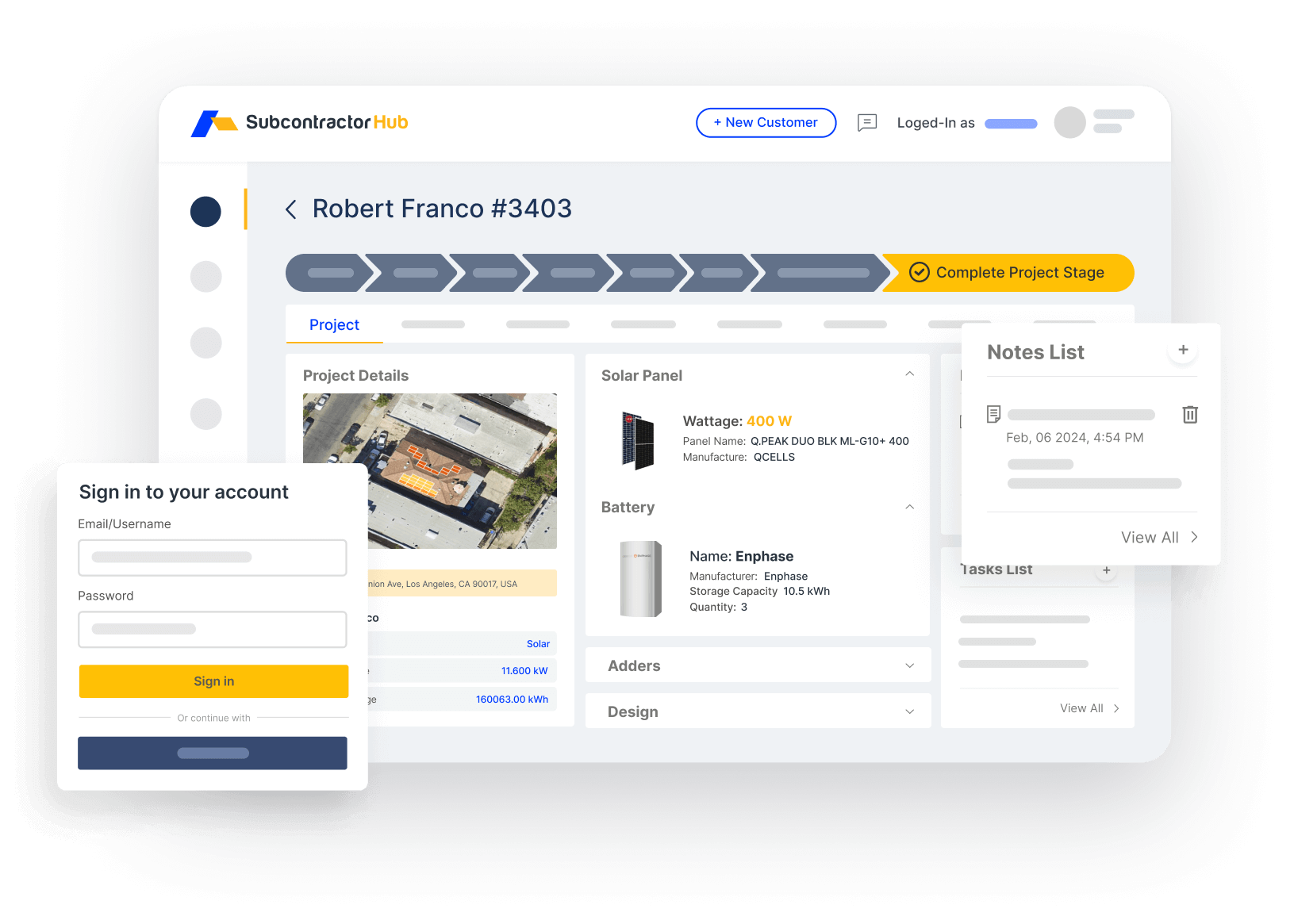
Sales Velocity: every inbound HVAC lead captured, assigned, and tracked from first call to signed job — so nothing goes cold in a voicemail box
9. Close More of the Leads You Already Have
The cheapest lead is the one you already paid for and haven't closed. Reps who build a branded proposal on a tablet at the customer's home — with multiple equipment tiers, embedded financing, and a digital signature — close far more often than reps who drive back to the office and email a quote three days later. Same-day proposals convert 40–60% higher than delayed follow-ups.
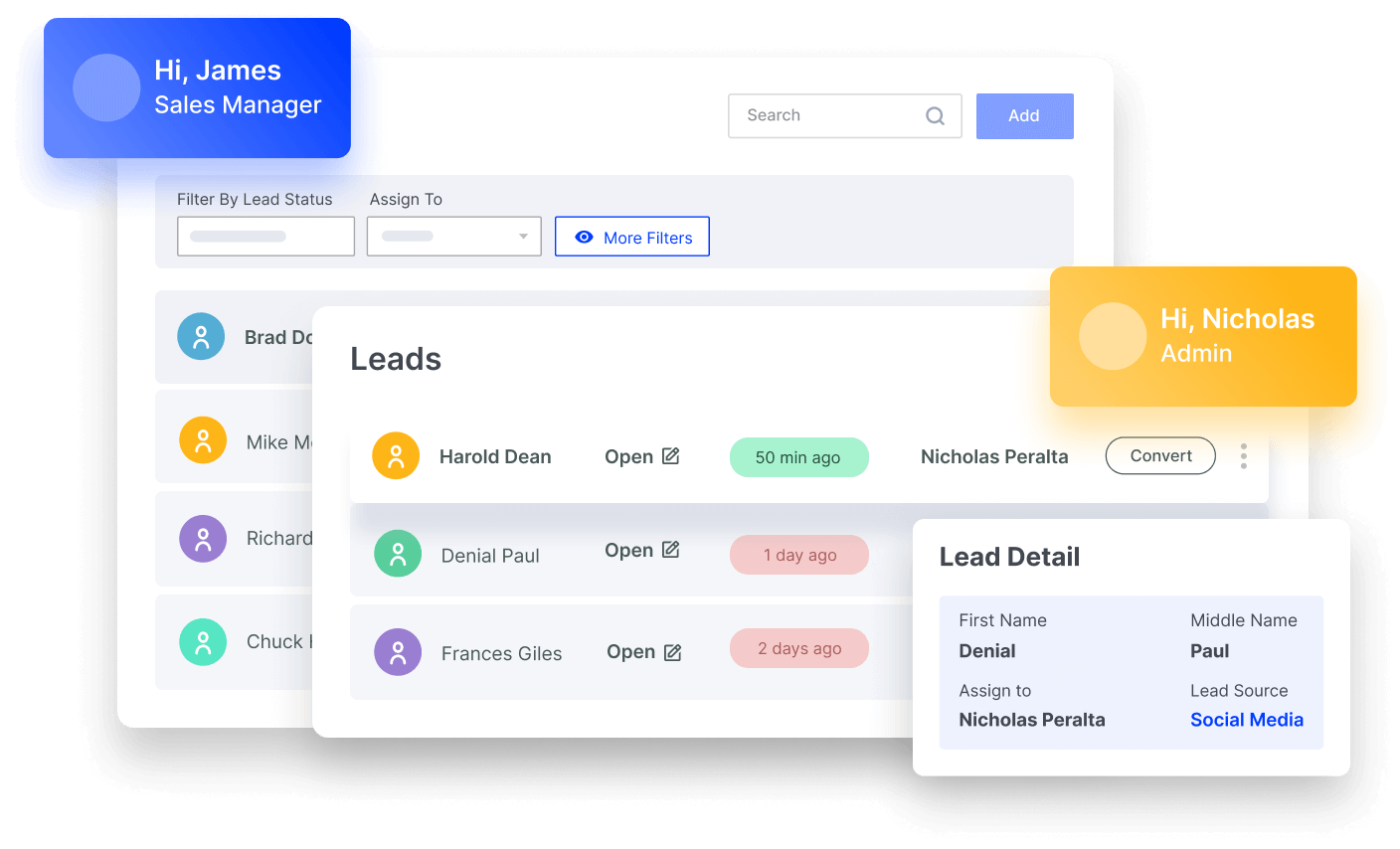
EasyQuote: build a complete HVAC proposal at the job site with equipment tiers and monthly payment options — and close before you leave the driveway
Embedding financing options directly in the proposal matters here too. When a homeowner hears “$12,000” they hesitate; when they see “starting at $149/month,” the conversation keeps moving. Contractors who present financing at the point of sale close 20–40% more of the jobs they quote.
The System Behind the Leads
Notice the pattern: the first seven items generate leads, and the last two decide how many turn into revenue. Contractors who spend all their energy on the top of the funnel and none on follow-up end up paying for leads twice — once to acquire them, and again in the deals they let slip.
The companies that scale connect the whole path in one place: leads land in a pipeline, reps get notified and follow up fast, proposals go out on-site with financing built in, and closed deals flow straight into installation project management with no re-entry. That's exactly what HVAC contractor software is built to do — and it's the difference between a lead source and a growth engine.
Should You Buy HVAC Leads? What They Cost and What You Get
“Where can I buy HVAC leads?” is one of the most common questions contractors ask, and the honest answer is that bought leads are a cash-flow tool, not a growth strategy. They fill a slow week. They do not build a business. We don't sell leads, so here is the neutral version of the math.
HVAC leads for sale fall into six buckets, and the price you pay says very little about what the lead is worth. Typical 2026 market ranges:
| Lead type | Typical cost | What you're actually buying |
|---|---|---|
| Shared service call | $25–$75 | Same homeowner sold to 3–5 contractors; fastest caller usually wins |
| Shared replacement / install | $75–$300 | Higher ticket, same race — expect a price-shopping conversation |
| Exclusive replacement | $150–$500 | Sold to you only; verify exclusivity in writing, not on a sales call |
| Pay-per-call | $40–$150 | A live caller who stayed on the line past a minimum duration |
| Google Local Services Ads | $35–$120 | Google-verified inbound contact; disputable if clearly off-target |
| Aged / recycled lists | $2–$15 | Weeks-old contacts already worked by others; usually not worth the labor |
Now the number that actually matters — cost per booked job, not cost per lead. A $250 exclusive replacement lead that closes at 30% costs you about $833 per booked job. A $100 shared lead closing at 12% costs about $833 per booked job. Identical. The lead price was never the variable; your close rate was.
That is why contractors who buy leads and don't track close rate by source almost always overspend. Before you increase a lead budget, measure what happens after the lead arrives — a lead management system that logs every source and reports close rate per channel will tell you which vendors to cut and which to scale. Most shops find one or two sources carrying the whole program.
How to Get Free HVAC Leads
Searches for free HVAC leads usually turn up list vendors, and those lists are aged data being resold. There is no legitimate marketplace giving away live, in-market homeowners. What does exist are channels with no per-lead cost, which is what most contractors actually mean:
- Google Business Profile. Free, and the highest-intent local channel there is. Covered in section 1 above.
- Your existing database. Every past customer with a system over 12 years old is a replacement lead you already own.
- Referral and review engine. No media spend, highest close rate in the trade.
- Trade cross-referrals. Plumbers, electricians, and roofers see failing equipment constantly. A standing two-way referral agreement costs nothing.
- Realtors and property managers. Inspection findings and rental portfolios generate steady repeat work.
- Manufacturer dealer locators. If you carry a brand, claim your listing — most contractors never do.
- Neighborhood groups. Nextdoor and local Facebook groups are where homeowners ask for recommendations by name.
None of these are free in labor — they cost time and consistency instead of dollars. That is the real trade: paid leads convert time into money, and free channels convert money into time. A shop that wants to stop buying leads has to commit to the follow-up discipline that makes owned channels compound.
Finding HVAC Leads Near You
Lead quality is mostly a geography problem. A lead 40 minutes outside your service area is a scheduling loss even when it closes. Tighten targeting at every layer: set real service areas on your Google Business Profile rather than a broad radius, cap Local Services Ads to the ZIP codes you can profitably reach, build a service-area page for each town you actually cover, and geo-fence social campaigns to neighborhoods with housing stock old enough to need replacements. Seasonality is regional too — replacement demand spikes with the first heat wave in the South and the first hard freeze in the North, so pull budget forward to match your climate, not the national calendar.
Frequently Asked Questions
What is the best way to get HVAC leads?
For most local HVAC companies, the highest-ROI source is a well-optimized Google Business Profile paired with Google Local Services Ads — they capture homeowners the moment their system fails. Referrals and maintenance-plan renewals are the cheapest leads because the trust is already built.
How much do HVAC leads cost?
Shared aggregator leads run roughly $25–$75 for service calls and $75–$300 for replacements, but you're competing with several contractors for the same homeowner. Leads from your own GBP, SEO, and referrals cost far less per booked job over time and build brand equity you own.
How do I get more HVAC installation and replacement leads?
Replacement leads respond best to Facebook and Instagram ads targeting homeowners with aging systems, plus campaigns to past service customers nearing end-of-life. The biggest multiplier is what happens next: same-day field proposals and embedded financing convert far more replacement quotes into jobs.
Why am I losing HVAC leads I already have?
Usually it's speed-to-lead and follow-up, not lead volume. HVAC leads go cold within minutes and 41% of online bookings come after hours. Without a CRM that logs, assigns, and tracks every lead, reps forget to follow up and managers have no visibility.
Is it worth buying HVAC leads?
As a cash-flow tool to fill a slow week, yes — as a foundation, no. Shared service calls run $25–$75, shared replacements $75–$300, exclusive replacements $150–$500. Close rate decides the outcome, not price: a $250 exclusive lead at 30% and a $100 shared lead at 12% both cost about $833 per booked job.
Where can I get free HVAC leads?
Lists advertised as free HVAC leads are aged data being resold. The genuinely no-cost channels are your Google Business Profile, your existing customer database, referrals and reviews, cross-referrals from plumbers and electricians, realtor and property-manager relationships, manufacturer dealer locators, and neighborhood groups. They cost time and consistency instead of dollars.
What is the difference between shared and exclusive HVAC leads?
Shared leads go to three to five contractors at once, so speed wins and the homeowner is price-shopping immediately. Exclusive leads are sold only to you, cost two to three times more, and convert better because you are not racing anyone. Get exclusivity confirmed in writing before you pay for it.
Do I need a CRM to manage HVAC leads?
Once you're getting more than a few leads a week, yes. A CRM gives every lead a stage, every proposal a status, and every rep accountability. HVAC companies that adopt one typically see a 15–25% close-rate improvement within a quarter — from losing fewer leads, not buying more.
Related Guides
- HVAC Marketing Guide 2026: Channels, Budgets & What Works
- How to Start an HVAC Business in 2026: Costs & Licensing
- How to Grow an HVAC Business in 2026: 7 Strategies
- Best HVAC CRM Software in 2026
- Best HVAC Sales Software in 2026
- How to Sell HVAC Maintenance Agreements
- → SubcontractorHub for HVAC Contractors
- → HVAC Contractor Software Platform
- Embedded Contractor Financing
Turn HVAC Leads Into Booked Jobs
30-minute demo. See how SubcontractorHub captures every lead, speeds up follow-up, and closes more with on-site proposals and embedded financing.
Book a DemoHVAC Leads, Lead Generation, HVAC Marketing
SubcontractorHub
See How Top Contractors Close More Jobs
AI proposals, sales pipeline, and project management — all in one platform.
- ✓AI-powered proposals in the field
- ✓CRM built for contractor sales
- ✓Project tracking from sale to install
30 minutes. No commitment.