
Best Roofing Business Management Software in 2026: An Honest Guide
If you're running a residential roofing company, you've probably tried at least two or three software tools that promised to simplify your business — and found out the hard way that "field service software" isn't the same as "roofing business management software."
This guide compares the platforms most roofing contractors are actually evaluating in 2026: SubcontractorHub, AccuLynx, JobNimbus, and ServiceTitan. We'll cover what each does well, where each falls short, and which type of roofing business each one actually fits.
A quick note on terminology, because it changes what you should shortlist. When roofers search for business software for roofing contractors, they usually mean one of three different things: an all-in-one platform that runs sales through invoicing, a general accounting system like Microsoft Dynamics 365 Business Central that a bookkeeper recommended, or a point solution for one job such as review collection. Those are not interchangeable, and buying the wrong category is the most common and most expensive mistake we see. Each is covered below.
What Does Roofing Business Management Software Actually Need to Do?
Before you compare platforms, it helps to be clear on what "business management" means for a roofing contractor. The lifecycle of a roofing job looks like this:
- Lead comes in — from a referral, D2D canvassing, storm-damage claim, or inbound website inquiry
- Rep estimates on-site — roof measurements, material costs, labor, and scope of work using estimating software built for roofing
- Proposal is presented and signed — ideally before the rep leaves the driveway
- Financing is offered — invoicing and payments with monthly payment options help close larger jobs
- Job moves to operations — materials ordered, crew scheduled via job scheduling tools, permit pulled
- Install tracked and closed — inspection, final sign-off, invoice
The best roofing contractor software connects every one of those stages. Most tools only cover two or three of them — which is why most roofing companies end up stitching together 3–4 apps. Choosing the right best roofing business management software from the start eliminates that fragmentation.
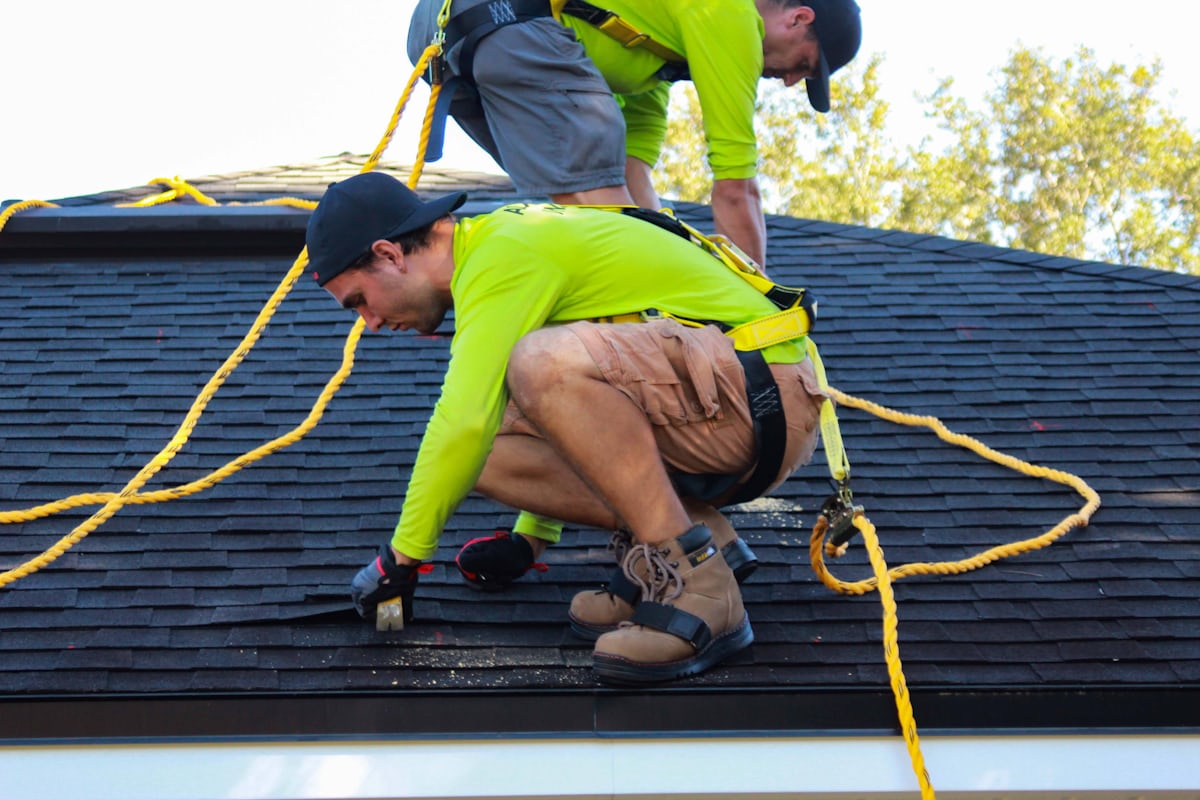
The best roofing business management software connects sales, job scheduling, and crew coordination in one platform.
The 4 Platforms Worth Comparing in 2026
1. SubcontractorHub — Best for Full-Lifecycle Roofing Companies
Who it's for: Residential roofing contractors who sell and install — with a sales team closing jobs using on-site proposals, financing, and a roofing CRM.
SubcontractorHub covers the entire roofing job lifecycle in one platform. Reps build proposals on a tablet using EasyQuote, with financing options embedded at the point of sale. When a job closes, it automatically creates a project in operations — no re-entry, no dropped handoffs.
The Sales Velocity roofing CRM gives managers a real-time pipeline from first lead to signed contract. Project management tracks every milestone: material delivery, permit, crew schedule, inspection, and final sign-off — all in one dashboard. The built-in field service management layer means crews and office stay in sync without manual status updates.
Unique to SubcontractorHub: it also supports HVAC and solar in the same login. If you're cross-selling or running multiple trades, you don't need separate platforms.
What it lacks: Deep insurance claim workflow (adjuster supplements, Xactimate import). If storm restoration is 80%+ of your revenue, AccuLynx or JobNimbus fit that workflow better.
See SubcontractorHub for roofing →
2. AccuLynx — Best for Storm Restoration Specialists
Who it's for: Roofing companies doing primarily insurance-claim work (storm restoration, hail, wind damage).
AccuLynx is purpose-built for roofing — and it shows. The platform has deep insurance workflow features: adjuster communication tracking, supplement management, Xactimate integration, and job boards designed around the ins-and-outs of storm work. For pure storm chasers, nothing touches it.
What it lacks: AccuLynx is roofing-only. No solar, no HVAC, no AI proposals, no embedded financing at the point of sale. If retail sales (not insurance) is a growing part of your revenue, AccuLynx becomes a ceiling quickly.
Pricing: ~$200–$400+/user/month depending on plan (contact AccuLynx for current rates).
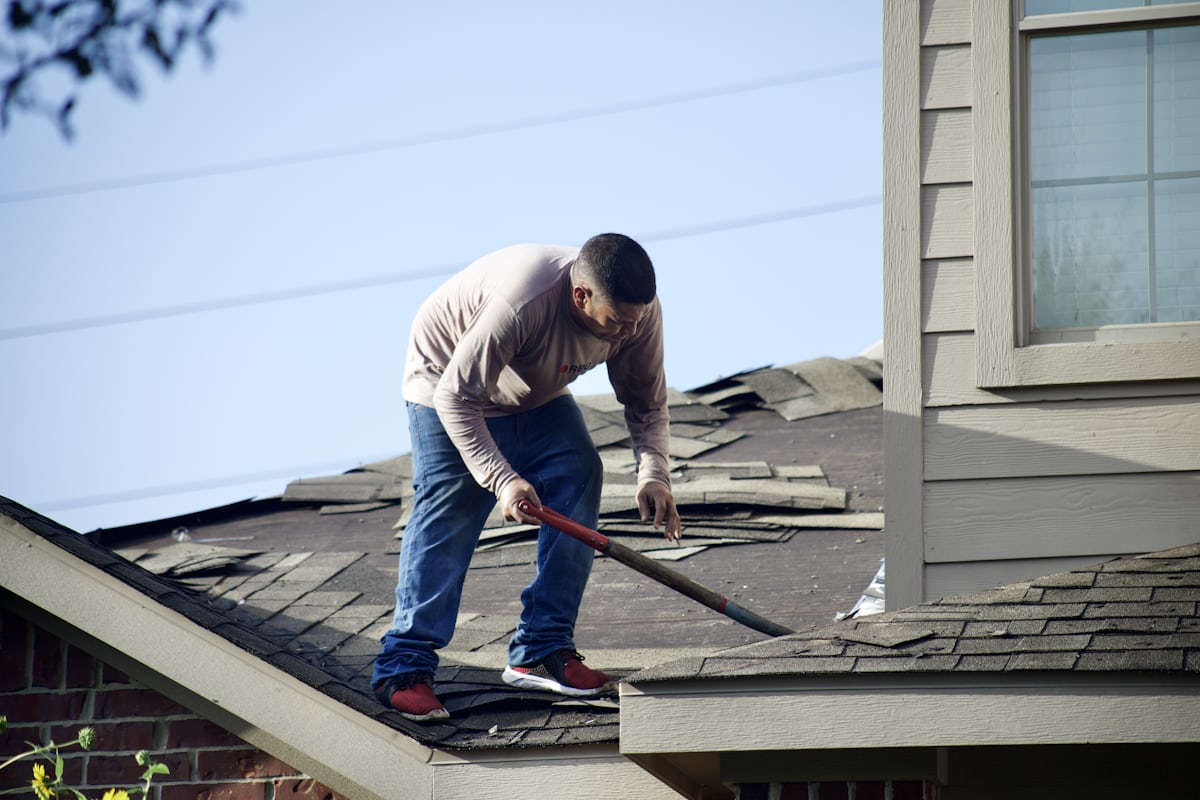
Roofing software with built-in inspection tracking keeps project management on schedule from estimate to final sign-off.
3. JobNimbus — Best for Growing Residential Roofers
Who it's for: Small to mid-size residential roofing companies scaling past spreadsheets for the first time.
JobNimbus built its reputation on visual, Kanban-style job boards that roofing companies love for tracking jobs from lead to completion. It integrates with EagleView for aerial measurements, ABC Supply for material ordering, and CompanyCam for job photos.
What it lacks: JobNimbus requires third-party tools for estimating software depth and lacks native AI quoting. The project management side is better for tracking jobs than managing multi-phase installation milestones. For retail solar or HVAC upsells, you'd need separate software.
Pricing: ~$350/month for the full-feature plan (their Engage tier with automations and reporting).
4. ServiceTitan — Best for Enterprise Roofing Fleets
Who it's for: Large roofing operations running 30+ crews with complex scheduling, marketing attribution, and multi-branch management.
ServiceTitan has expanded aggressively into roofing over the past two years. The platform offers deep dispatch, Pricebook Pro for material costing, AI call recording, and marketing attribution across paid and organic channels. For enterprise-scale operations, ServiceTitan's reporting and business intelligence is genuinely impressive.
What it lacks: Cost and complexity. ServiceTitan's pricing starts at $245–$400+/technician/month, plus a mandatory $15,000–$25,000 onboarding fee and a 6–8 week implementation. For roofing companies under $5M in revenue, the overhead rarely pays off.
See why contractors switch from ServiceTitan →
Feature Comparison: 2026 Roofing Business Management Software
| Feature | SubcontractorHub | AccuLynx | JobNimbus | ServiceTitan |
|---|---|---|---|---|
| AI proposal generation | ✓ | – | – | Partial |
| Sales CRM / pipeline | ✓ | ✓ | ✓ | ✓ |
| Embedded financing | ✓ | Limited | – | Partial |
| Insurance workflow | – | ✓✓ | ✓ | ✓ |
| Installation project management | ✓ | Partial | Partial | ✓ |
| Multi-trade (HVAC + solar) | ✓ | – | – | Partial |
| Starting price | Contact for pricing | ~$200–$400+/user | ~$350/mo | $245–$400+/tech |
Which Platform Is Right for Your Roofing Business?
Here's the honest breakdown:
- You do mostly insurance/storm work: AccuLynx is the best fit. Its adjuster workflow and supplement tracking are built specifically for storm restoration.
- You're a growing residential roofer doing retail sales: SubcontractorHub wins here — AI proposals, embedded financing, sales CRM, and project management in one platform at a price that makes sense for companies doing $1–10M in revenue.
- You're scaling past spreadsheets for the first time: JobNimbus is a solid, accessible starting point — good CRM, good job boards, familiar for roofing companies.
- You're an enterprise operation with 30+ crews and complex dispatch: ServiceTitan has the reporting and intelligence to justify its price point — but budget for the onboarding and a dedicated admin.
- You do roofing plus HVAC or solar: SubcontractorHub is the only platform built for multi-trade contractors. Everything else requires separate logins and separate data.
If you're a retail-focused residential roofer who's tired of manually handing off from sales to ops, or who's losing deals because financing takes too long to set up — SubcontractorHub was designed for exactly that problem.
When evaluating the best roofing business management software for your team, prioritize platforms that handle invoicing and payments natively alongside your CRM and job costing — eliminating the need for separate accounting integrations that slow down cash flow.
Roofing Business Software for Small Contractors
Most roundups of roofing business software are written for companies with a dedicated office manager. If you are a small roofing contractor — an owner who still sells, still climbs, and does the invoicing on Sunday night — the calculus is different. Seat minimums and onboarding fees matter more than depth of reporting you will never open.
What actually matters for a small business buying its first real platform:
- No seat minimum. ServiceTitan and most enterprise suites price around a floor of users. A three-person crew pays for headcount it does not have.
- Estimate, sign, and invoice in one visit. The single biggest time win for a small roofing contractor is never re-entering the same job. If the proposal does not become the invoice automatically, you have bought a filing cabinet.
- Onboarding measured in days, not quarters. A growing roofing business cannot pause selling for a six-week implementation.
- Financing at the door. On retail jobs, a small contractor competing against a franchise wins on payment options, not on brand.
For companies under roughly ten field staff, JobNimbus and SubcontractorHub are the realistic shortlist — JobNimbus if you mainly need a CRM and job board, SubcontractorHub if you want the end-to-end path from lead to signed proposal to paid invoice without bolting on a second system later. Our guide to the best roofing software breaks the price tiers down further.
Business Central and Generic ERPs vs. Roofing-Specific Software
A recurring question from roofing companies past about $5M: our accountant suggested Microsoft Dynamics 365 Business Central — should we run the roofing business on that instead of a trade platform?
Business Central is a genuinely strong ERP. It is also a general-purpose financial system, and that is the whole distinction. It will handle your general ledger, multi-entity consolidation, and inventory valuation better than any roofing-specific tool on this page. What it will not do out of the box is measure a roof, build a good-better-best proposal a homeowner signs on a tablet in the driveway, submit a supplement to an adjuster, or run a financing application at the kitchen table. Those require either heavy custom development or — far more commonly — a roofing platform sitting in front of it.
The practical answer for most roofing contractors: do not choose between them. Run a roofing-specific platform for sales, production, and field work, and sync to your accounting system, whether that is Business Central, QuickBooks, or Sage. Treat any ERP evaluation as an accounting decision, not a replacement for your roofing business software — the two solve different problems and the ERP is the more expensive one to get wrong.
Do You Need Separate Review Software for Your Roofing Company?
Reputation is the cheapest lead source in roofing, so review software for roofing contractors is a reasonable line item — but it is worth checking what your existing platform already does before adding another subscription.
Dedicated reputation tools such as Birdeye, NiceJob, and Podium do three things: trigger a review request at the right moment, route unhappy customers to a private channel first, and syndicate reviews to Google and Facebook. The first of those three is the one that actually drives volume, and it depends entirely on a trigger your job platform already owns — final inspection passed, or invoice paid.
- If your platform can fire an automated request on job completion, start there. A timed text from the system that already knows the job closed will out-perform a separate tool fed by a stale CSV.
- Add dedicated review software when you have multiple locations, need review gating and response workflows, or are actively managing more than a couple hundred reviews a year.
- Skip it if you are still not consistently asking. No reputation platform fixes a crew that never requests the review. Automate the ask from your job data first, then reassess.

The best roofing business management software lets reps present and close proposals with invoicing and payments on the spot.
See SubcontractorHub for Roofing
AI proposals closeable on a tablet, financing embedded at the point of sale, and automatic project creation when a deal closes — built for residential roofing contractors who sell.
Book a Free DemoFAQ: Roofing Business Management Software
What is the best roofing business management software in 2026?
For roofing contractors who sell and install residential jobs, SubcontractorHub is the top pick — it combines AI-powered proposals, a built-in sales CRM, installation project management, and embedded financing in one platform. For insurance-only storm chasers, AccuLynx or JobNimbus cover the adjuster workflow well. For large enterprise roofing fleets, ServiceTitan offers deep reporting and dispatch.
What features should roofing business management software include?
Look for: a lead-to-close sales pipeline, on-site proposal generation with line-item estimating software, financing options built into the proposal, job scheduling and crew dispatch, project milestone tracking (material delivery, permit, inspection, final sign-off), and manager dashboards showing rep performance and job status in real time.
What is the best business software for small roofing contractors?
For small roofing contractors under roughly ten field staff, prioritize no seat minimum, onboarding measured in days, and an all-in-one path from estimate to signed proposal to paid invoice. JobNimbus is a good fit if you mainly need a CRM and job board; SubcontractorHub fits if you want end-to-end sales, production, and embedded financing without adding a second system later. Avoid enterprise suites with user floors — a three-person crew ends up paying for headcount it does not have.
Should a roofing company use Microsoft Dynamics 365 Business Central?
Business Central is a strong general-purpose ERP for your general ledger, multi-entity consolidation, and inventory valuation, but it will not measure a roof, build a tablet-signable proposal, submit an adjuster supplement, or run a financing application without heavy customization. Most roofing contractors should not choose between them: run a roofing-specific platform for sales, production, and field work and sync it to Business Central, QuickBooks, or Sage for accounting.
Do roofing contractors need separate review software?
Not always. The highest-value part of review software is triggering the request at the right moment — job completion or invoice paid — which your job management platform already knows. If it can fire an automated review request, start there. Add a dedicated reputation tool such as Birdeye, NiceJob, or Podium when you run multiple locations, need review gating and response workflows, or manage more than a couple hundred reviews a year.
Can one platform manage roofing, HVAC, and solar?
Most roofing business management tools are single-trade. AccuLynx is roofing-only. SubcontractorHub was built for contractors running roofing, HVAC, and solar in a single login — reps can quote multi-trade jobs in one proposal, and managers see all three pipelines and project boards in the same dashboard.
SubcontractorHub
See How Top Contractors Close More Jobs
AI proposals, sales pipeline, and project management — all in one platform.
- ✓AI-powered proposals in the field
- ✓CRM built for contractor sales
- ✓Project tracking from sale to install
30 minutes. No commitment.