
How to Price Roofing Jobs in 2026: A Contractor's Guide to Profitable Bids
By SubcontractorHub Editorial Team·Published July 2026 · Updated October 2026

A roofing bid is deceptively simple: a number of squares, a price per square, and a total. That's exactly why so many roofers lose money on jobs that looked profitable on the estimate. The margin doesn't leak on the big line items you can see — it leaks on the waste factor you under-ordered, the tear-off you under-scoped, and the dump fees you forgot to build in. The roof got installed. The profit just quietly evaporated.
This guide walks through how to price roofing jobs the way profitable companies do it in 2026: how to build the estimate per square, the waste and overhead most bids miss, current cost-per-square benchmarks, and how financing and consistent quoting turn a good bid into a closed, profitable job.
Start with the squares — and measure them right
Roofing is priced in squares: one square equals 100 square feet of roof surface. Every material and labor number downstream depends on getting this figure right, so it's the one measurement you never eyeball. Take the footprint, adjust for the roof's pitch, and account for every facet. A steep or complex roof has far more surface area than its footprint suggests. Run the numbers with our roofing squares calculator and roof pitch calculator before you order a single bundle.
Add the waste factor before it eats your margin
You never install exactly the roof area you measured. Starter courses, hip and ridge caps, valley cuts, and standard offcuts all consume material beyond the net square footage. That's the waste factor, and getting it wrong is the single most common way a roofing bid goes underwater. A simple gable roof might need only a 10% add; a cut-up roof with multiple valleys, dormers, and hips can need 15–20%.
Under-order and you're paying for an emergency supply run mid-job; over-order and you've eaten the surplus. Standardize it per roof type instead of guessing — our roofing waste factor calculator takes the memory out of it.
Build the price: materials + labor + overhead + margin
With squares and waste locked, build the bid in layers. A reliable structure:
Price = (Materials × waste factor) + Burdened labor per square + Tear-off & disposal + Overhead per job, then apply markup to hit your target net margin.
- Materials. Shingles or panels, underlayment, flashing, fasteners, drip edge, and ridge — marked up 20–50% over your supplier cost to cover sourcing, stocking, and warranty risk. Size it with the roofing material cost calculator.
- Labor. Use your burdened crew cost per square — the wage plus payroll taxes, workers' comp, insurance, and non-productive time — not the raw wage. Pricing off the raw wage is how roofers lose money on every square. Check yours with the roofing labor cost calculator.
- Tear-off & disposal. Removing existing layers and dump fees are real costs that scale with the number of layers. Never fold these into a vague “labor” bucket.
- Overhead. Office, trucks, software, sales, and admin have to be recovered on every job. Divide annual overhead across your realistic job volume and add it in before margin.
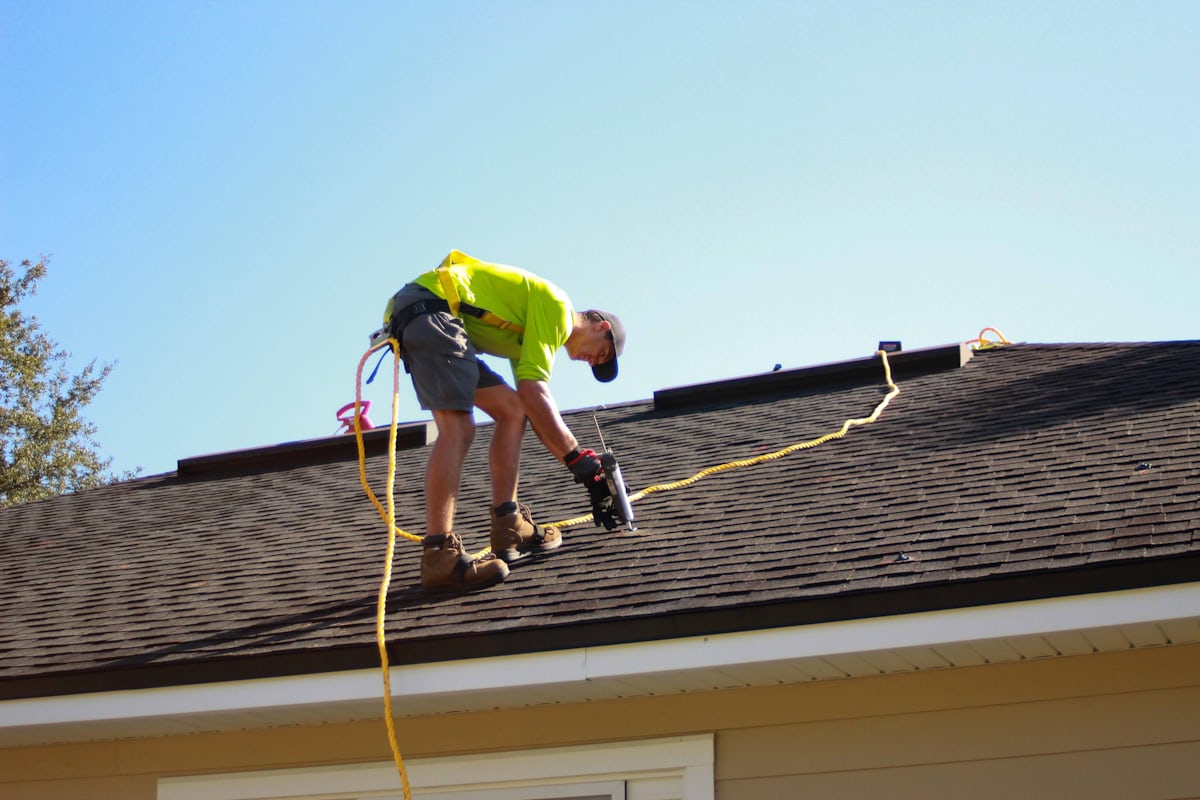
The visible line items rarely sink a roofing bid. Waste factor, tear-off, and unrecovered overhead do.
2026 roofing pricing benchmarks
Benchmarks are a sanity check on your own cost math — not prices to copy. Local labor, material volatility, roof complexity, and season move these ranges. As of 2026, for standard residential work:
- Installed asphalt shingle: $400–$700 per square ($4.50–$8.00/sq ft)
- Typical full re-roof (2,000 sq ft home): $9,000–$18,000
- Tear-off & disposal: $100–$200 per square, per layer
- Waste factor: 10% simple, 15–20% complex
- Target gross margin: 20–40% (8–15% net after overhead)
Metal, tile, slate, and steep or multi-facet roofs run well above these numbers. For a homeowner-facing view of totals, see our breakdown of how much it costs to replace a roof.
Price per square internally, present one number
Build the estimate per square so the math stays honest — but present the homeowner a single, all-in project price. The per-square build-up protects your margin; the flat customer-facing number closes faster because the homeowner sees one clear total instead of a line-item sheet they'll pick apart. Pairing that clean total with a monthly payment option removes the last barrier: with embedded roofing financing you can present the full-price roof and an affordable monthly payment side by side, on the spot.
SubcontractorHub
See How Top Contractors Close More Jobs
AI proposals, sales pipeline, and project management — all in one platform.
- ✓AI-powered proposals in the field
- ✓CRM built for contractor sales
- ✓Project tracking from sale to install
30 minutes. No commitment.
Common roofing pricing mistakes that kill margin
- Under-ordering waste. The most expensive rounding error in roofing — it forces mid-job supply runs and eats the surplus you didn't bill.
- Pricing off the raw wage. Skipping labor burden means every square is quietly underpriced.
- Burying tear-off and dump fees. Disposal scales with layers and has to be its own line, not a guess inside labor.
- Measuring the footprint, not the roof. Pitch and facets add real area; footprint math undercounts every steep roof.
- Letting each rep bid from memory. The same roof coming back at $12,400 or $15,800 depending on who quoted it is a pricing system problem.
How software makes profitable bids repeatable
Knowing the formula is half the battle. The other half is making sure every bid, from every rep, applies it the same way. That's where a purpose-built platform matters. With SubcontractorHub's roofing platform, your material costs, labor rates, waste factors, and markups live in one place, so a rep builds an accurate, on-brand proposal from a tablet on the driveway instead of guessing. Measurement, pricing, proposal, e-signature, and financing happen in a single flow. The sections that proposal should contain are in how to write a roofing proposal.

A shared price book means the same roof is bid at the same profitable price no matter which rep runs the appointment.
Because pricing, CRM, and project management sit in one system, the numbers you set actually stick from bid to signed contract to installed job. See the full estimating and quoting toolset on our roofing contractor software and roofing estimating software pages, or compare the market in our best roofing estimating software guide.

Priced bids flow straight into your sales pipeline, so no estimate is left on a clipboard.
How to price roofing jobs when the measure changes
A second measure is a new version of the price, not a discount on the page they already saw. Write which squares changed, which waste line changed, and which cash total replaced the old one. The signed page, if one exists, stays the version they signed until a new page replaces it. How a change is written after a signature is in the construction change order guide. What the proposal itself should contain is how to write a roofing proposal.
Do not leave both totals live. Close the old note with a pointer to the new page. A text that lowers the cash figure without that page is how two people quote two different roofs.
How to price roofing jobs when they do not sign?
The cash price on the page they saw stays the price. A second visit does not invent a discount, a waste change, or a new square count unless you write a new version. Leave the old total on the old page. Point to the new page if the measure changed. Do not text a lower number.
| Line | Keep | Do not do |
|---|---|---|
| Cash total | The figure on that version | A text that undercuts it |
| Measure | The squares that version used | A new count with no new page |
| Waste | The factor written on that version | A quiet cut after they leave |
| Discount | Only a discount already on the page | A follow-up gift |
| Next page | A pointer when the scope changes | Two live totals |
- Keep the cash total that is on the version they have.
- Keep the square count that version used.
- Keep the waste factor written on that version.
- Write a new version when the measure changes, and point the old page at it.
- Close the old page. Do not leave two totals live.
Frequently Asked Questions
How do you price a roofing job?
Measure the roof in squares (one square = 100 sq ft), add a 10–15% waste factor for cuts, hips, and valleys, then price materials per square at your marked-up cost, add burdened labor per square, layer in tear-off, disposal, and overhead, and apply a markup that hits your target net margin. Most residential roofers target a 20–40% gross margin.
How much does it cost to install a roof per square in 2026?
In 2026, installed asphalt shingle roofing commonly runs $400–$700 per square (materials plus labor), or roughly $4.50–$8.00 per square foot for standard residential work. Metal, tile, and steep or complex roofs run significantly higher. Treat these as benchmarks, not prices.
What is a roofing waste factor and why does it matter?
The waste factor is the extra material ordered beyond the exact roof area to cover cuts, starter courses, hips, valleys, and ridge caps. A simple gable roof may need 10%; a cut-up roof can need 15–20%. Under-estimating waste is one of the fastest ways to turn a profitable roofing job into a break-even one.
Should roofers price per square or with a flat project price?
Build the estimate internally per square to keep the material and labor math honest, but present the homeowner one all-in project price. The per-square build-up protects margin; the flat number closes faster because the homeowner sees a single clear total.
What profit margin should a roofing business target?
Most residential roofing contractors target a 20–40% gross margin on a re-roof, which typically nets 8–15% after overhead. Insurance and storm-restoration work can run higher. A net under 8% usually means margin is leaking on waste factor, disposal, or unrecovered overhead.
Does a second visit change the price on the roofing proposal?
Only when you write a new version. The cash total, the square count, and the waste factor on the page they already have stay on that page. A second visit does not invent a discount. If the measure changed, close the old page with a pointer to the new one.
Related Reading
Bid Every Roof for Profit
Stop bidding from memory on the driveway. SubcontractorHub gives your team a shared roofing price book, estimating, proposals, and embedded financing in one platform — so every bid protects your margin. Book a demo and we'll build a live roofing proposal with you in under 30 minutes.
Book a DemoRoofing Pricing, Roofing Software, Contractor Tools