
Best HVAC Work Order Software in 2026: An Honest Guide for Contractors
By SubcontractorHub Editorial Team·Published June 2026 · Updated September 2026

Quick Answer
The best HVAC work order software in 2026 is SubcontractorHub for installation contractors who need work orders connected to a real sales pipeline and multi-stage project management. ServiceTitan is the enterprise pick for 20+ tech service operations. Housecall Pro and Jobber work for simple service-call dispatch but lack the installation project depth most growing contractors need. See the full HVAC contractor software platform or book a demo to see it live. Not ready to switch systems? Start with our free work order template to standardize what goes on every job.
HVAC work orders are not all the same. A service-call work order closes when a technician fixes a capacitor and the invoice is sent — the whole job is one visit. An installation work order spans weeks: equipment ordering, permit filing, rough-in crew, system startup, inspection, and commissioning. Most HVAC software tools were built for the first type.
This guide compares the leading HVAC work order platforms, where each one excels, and which scenarios each tool genuinely can't handle.
What Makes HVAC Work Order Software Different for Installation Contractors
Installation contractors need work order management that connects upstream (the sales proposal) with downstream (the project). Without that connection, the handoff between sales and operations is a manual step — and manual steps create data loss, double-entry, and scheduling errors. Good field service management software eliminates that gap by making the work order the single source of truth from first proposal to final sign-off.
The right HVAC work order software for installation teams handles:
- Automatic work order creation from closed proposals: when a rep closes an equipment replacement in the field, the work order should be created automatically with all system specs, customer info, and financing details pre-loaded — no re-entry
- Multi-stage installation tracking: permit submitted, equipment ordered, crew scheduled, rough-in completed, inspection passed, system commissioned — not just “open” and “closed”
- HVAC scheduling and dispatch: assigning the right technicians and tracking material delivery in the same view as the job timeline, so operations never schedules a crew before equipment arrives
- Financing status tracking: knowing whether the customer's financing is approved before scheduling the install crew
- HVAC mobile app access for field techs: so crews can update job stages, upload photos, and capture sign-offs without calling the office
That full workflow is what separates an installation work order platform from a service-dispatch tool. See how HVAC project management software handles the full installation lifecycle inside SubcontractorHub.

The best HVAC work order software gives field technicians real-time job access via a mobile app, eliminating office call-backs.
5 Questions to Ask Before Choosing HVAC Work Order Software
- Does it auto-create work orders from closed sales? If your operations team has to manually re-enter job details after a rep closes a deal, you're paying twice for the same data entry — and risking errors every time.
- How many installation stages does it track? “Open” and “closed” is a service-call model. Installation businesses need permit, equipment, crew, inspection, and sign-off stages tracked separately.
- Can it handle multi-crew jobs? A full system replacement may involve a rough-in crew, an electrical crew, and a final inspection tech — all on different days. Strong HVAC technician management means sequencing those crews without double-booking or idle time.
- Does financing status integrate with the work order? Scheduling an install before financing approval is confirmed is a common (and expensive) mistake. The best platforms block or flag job scheduling until financing clears.
- Can it grow with you across trades? If you add solar or roofing, you want one work order platform — not one per trade.
SubcontractorHub
See How Top Contractors Close More Jobs
AI proposals, sales pipeline, and project management — all in one platform.
- ✓AI-powered proposals in the field
- ✓CRM built for contractor sales
- ✓Project tracking from sale to install
30 minutes. No commitment.
Head-to-Head: Top HVAC Work Order Software in 2026
Platform-by-Platform Breakdown
1. SubcontractorHub — Best for HVAC Installation Contractors
SubcontractorHub is built from the installation workflow forward. When a rep closes a system replacement using EasyQuote — the AI-powered on-site proposal tool — the work order is automatically created in project management with all proposal details pre-loaded: customer information, system specs, equipment to order, financing approval status, and install address. Operations sees a ready-to-schedule project, not an email from sales.
The HVAC project management board tracks each installation through permit, equipment receipt, crew scheduling, rough-in, inspection, and final sign-off — with manager visibility at every stage. HVAC invoicing is generated directly from the closed work order, so billing reflects the actual installed scope without manual re-entry. The HVAC platform also supports solar and roofing in the same login, making it the only work order solution for multi-trade installation businesses.
Best for: HVAC installation contractors, multi-trade businesses, D2D sales teams
Not ideal for: Pure service-call businesses with no installation sales
Pricing: Contact for a quote
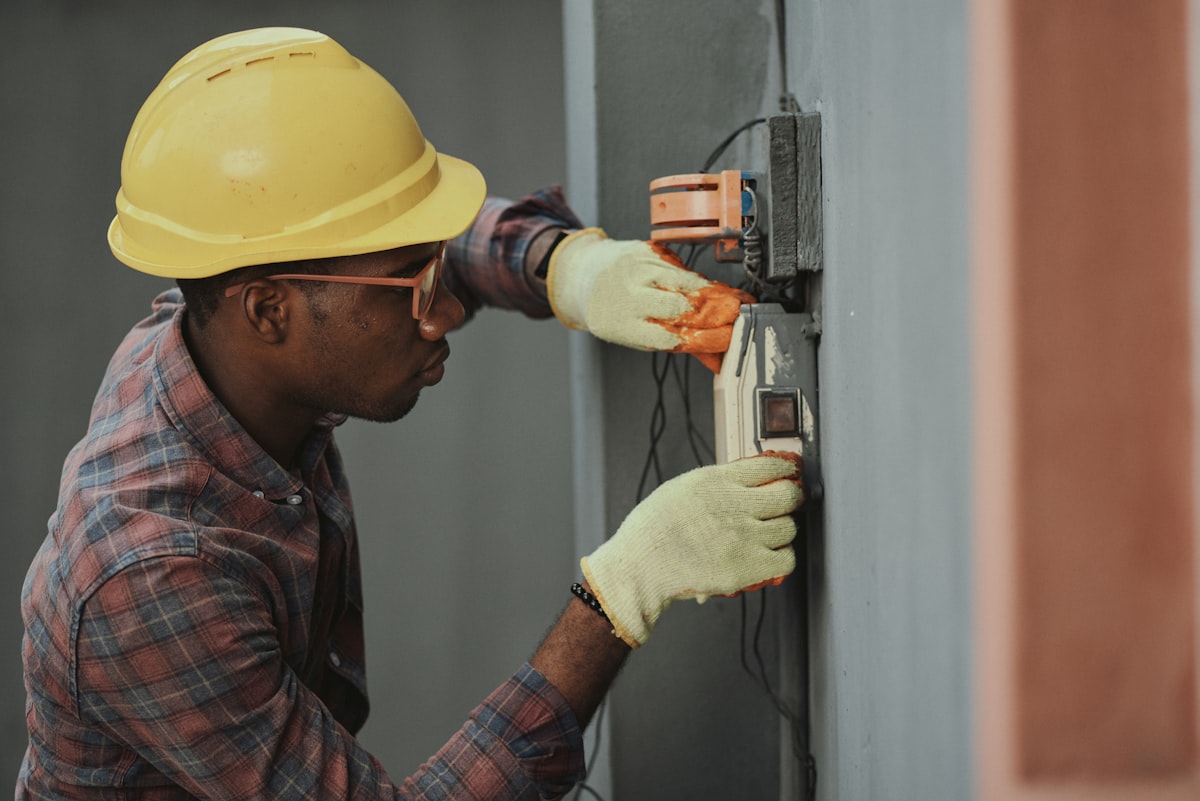
Effective HVAC technician management in work order software sequences crews, tracks milestones, and eliminates scheduling conflicts across multi-day installs.
2. ServiceTitan — Best for Large Enterprise HVAC Service Operations
ServiceTitan is the market leader for large HVAC companies running 20+ technicians with high-volume service call operations. Its work order and dispatch features are comprehensive, with flat-rate pricebooks, customer portal, and deep reporting. The trade-off is cost and complexity: $245–$500+ per technician per month, a mandatory $15,000–$25,000 onboarding fee, and a 6–8 week implementation timeline.
Best for: Large HVAC service companies (20+ techs), high-volume dispatch operations
Not ideal for: Installation-first businesses, contractors under 20 techs, multi-trade companies
Pricing: $245–$500+/tech/month + $15k–$25k onboarding
3. Housecall Pro — Best for Service-Call HVAC Businesses
Housecall Pro handles the service-call workflow well: inbound requests, scheduling, dispatch, work order completion, and HVAC invoicing. The platform is clean, mobile-first, and onboards in days. The ceiling shows when installation projects begin — there's no multi-stage project management, no AI proposal generation, no financing integration, and no sales pipeline for replacement leads. For businesses that run a mix of HVAC service calls and light installations, Housecall Pro covers the service side but leaves the installation workflow unmanaged.
Best for: Service-call HVAC businesses, repair and maintenance-focused operations
Not ideal for: Installation sales, multi-phase projects, financing integration
Pricing: $49–$549+/month
4. Jobber — Best for Small HVAC Owner-Operators
Jobber is clean, affordable, and works well for 1–8 person HVAC shops running maintenance plans, service visits, and simple installs. Work order creation, scheduling, and invoicing are straightforward. The gaps emerge when businesses scale: no AI quoting, no installation project management depth, no built-in financing, and no sales pipeline beyond basic client records.
Best for: Solo operators and small HVAC service crews (under 10 people)
Not ideal for: Multi-week installations, D2D sales teams, multi-trade contractors
Pricing: $29–$349+/month

The best HVAC work order software connects the homeowner consultation to a ready-to-schedule installation project — no manual handoff required.
Work Orders, Job Management, and Team Collaboration Are Not the Same Thing
Contractors shopping for this category use three terms interchangeably, and vendors are happy to let them, because each one describes a different amount of software. Being precise about which one you actually need is the fastest way to avoid overbuying.
- A work order is a single unit of dispatched labor: who is going, where, when, to do what, and what it is billed at. Work order software is fundamentally a record of one visit. If your business is repairs and maintenance, one work order usually equals one job, and work order software alone is sufficient.
- Job management spans everything from the signed proposal to the final invoice, which on an installation is typically five to nine separate visits — site survey, permit, equipment delivery, rough-in, install, inspection, commissioning, punch list. A system that treats those as eight unconnected work orders has no concept of the job, so nobody can answer "where is the Henderson install?" without opening eight records.
- Team collaboration is whether the office, the sales rep, the install crew, and the customer are looking at the same information without anyone re-keying it. This is the piece contractors most often solve with a group text thread, and it is the piece that breaks first as headcount grows.
The practical test: count the number of scheduled visits in your average sold job. At one or two, buy on dispatch and scheduling quality and ignore everything else. At five or more, the work order layer is the least important part of the decision — you are really buying job management, and a platform that cannot roll multiple work orders up into one job with one margin figure will cost you more in re-entry and status chasing than it saves in subscription. See HVAC project management software for how the multi-visit installation workflow is structured.
The Bottom Line
If your HVAC business makes most of its revenue from system replacements and installations — not repair visits — you need work order software built for that workflow. The key differentiator is whether the platform connects proposals to work orders automatically, tracks multi-stage installation milestones, integrates HVAC invoicing into the closed work order, and covers HVAC scheduling and dispatch before crews are committed.
SubcontractorHub is purpose-built for that installation lifecycle. ServiceTitan wins for large service-call operations with the budget to match. Housecall Pro and Jobber serve smaller service-focused businesses well but hit a ceiling as installation volume grows.
Ready to see how the work order and project management workflow actually looks? Book a demo and we'll walk through a live HVAC installation workflow from closed proposal to final sign-off.
Frequently Asked Questions
What is the best HVAC work order software in 2026?
SubcontractorHub is the best HVAC work order software in 2026 for installation contractors. It auto-creates work orders from closed proposals, tracks multi-stage installation milestones, and integrates financing status — all connected to the sales pipeline. For pure service-call businesses, Housecall Pro or Jobber are solid lower-cost options.
What should HVAC work order software include?
Look for: automatic work order creation from closed proposals, multi-stage installation tracking (permit, equipment, crew, inspection), crew and material scheduling, financing status integration, mobile field access, and manager dashboards. The best platforms for installation contractors connect the entire workflow from first proposal to final sign-off.
How is work order software different for installations vs. service calls?
Service-call work orders close when the invoice is sent after a single visit. Installation work orders span multiple weeks and stages: permitting, equipment ordering, multi-crew scheduling, inspections, and commissioning. Installation-focused platforms track all of those stages — service-call tools typically don't.
Can HVAC work order software handle solar and roofing too?
Most HVAC platforms are single-trade. SubcontractorHub manages HVAC, solar, and roofing work orders and installation projects in one login — the only platform built for multi-trade installation contractors.
How long does onboarding take for HVAC work order software?
SubcontractorHub typically gets HVAC teams operational in 2–3 weeks. ServiceTitan requires a mandatory 6–8 week implementation. Housecall Pro and Jobber onboard in days for service-call operations.
Related Resources