
Roofing SEO Guide: How Roofers Rank and Win Local Leads in 2026
By SubcontractorHub Editorial Team·Published July 2026 · Updated October 2026

When a homeowner's roof starts leaking, they don't open the phone book — they type “roof repair near me” into Google and call one of the first companies they see. Roofing SEO is the work of making sure that's your company. Done well, it turns search into a steady stream of leads that don't cost you a click, and it compounds month after month while your competitors keep renting their traffic from ads.
This guide walks through what actually moves the needle for roofers in 2026: local SEO and your Google Business Profile, the service and city pages that rank, reviews, the technical basics, and the content that earns trust. For the paid and referral side, pair it with our guide to getting roofing leads and the broader roofing marketing guide.
Start with local SEO — it's where roofing leads live
Roofing is a local business, so the highest-leverage SEO isn't generic rankings — it's the local map pack, the three business listings Google shows above the regular results. The center of local SEO is a fully completed, actively managed Google Business Profile: correct categories, service areas, hours, photos of real jobs, and a steady drip of posts. Google ranks the pack on relevance, distance, and prominence, and a complete, active profile signals all three.
Reviews are a ranking factor and a closing tool
Review volume, rating, and recency all feed local rankings — and they do double duty by convincing the homeowner to call once they find you. Build a simple, consistent process: ask every satisfied customer for a review at the moment the job wraps, send a direct link, and respond to every review, good or bad. A roofer with 80 recent five-star reviews will out-rank and out-close one with a dozen stale ones almost every time.
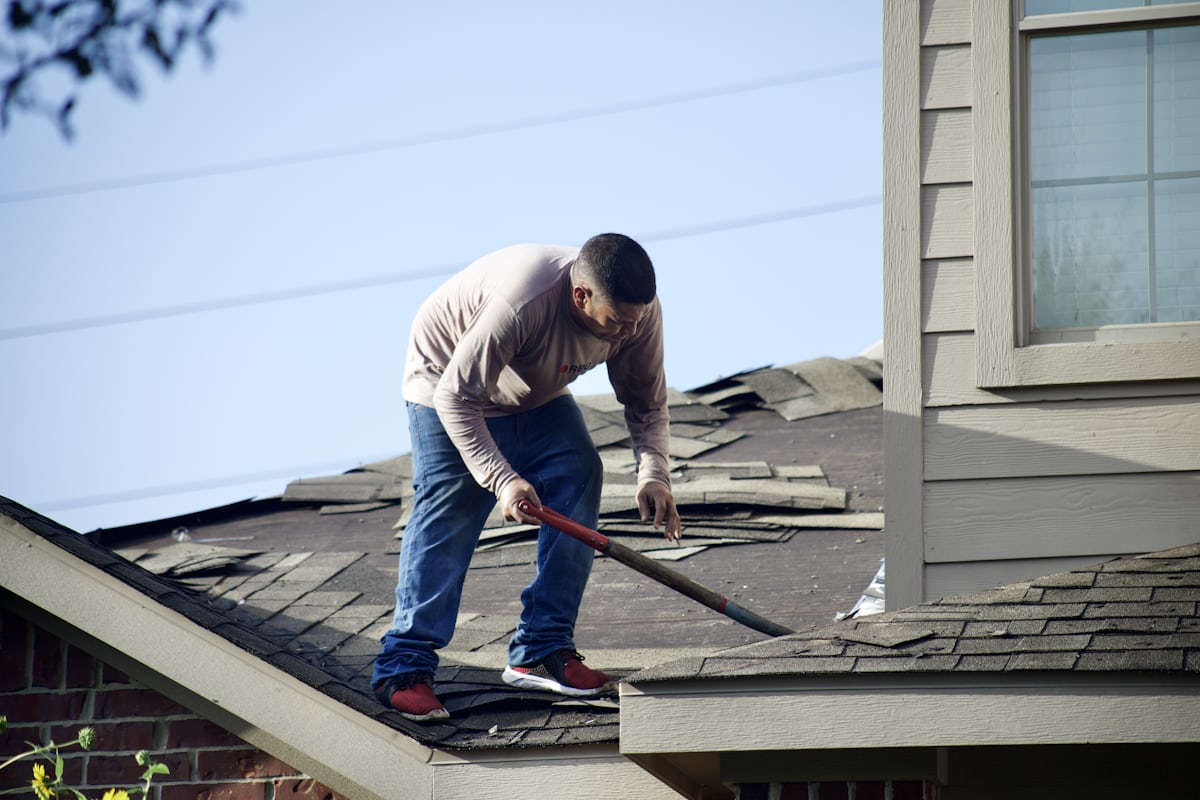
Real job photos strengthen your Google Business Profile and give service and city pages the original imagery Google rewards.
Build service pages and city pages that rank
A single “Services” page can't rank for everything. Give each core service its own dedicated page — roof replacement, roof repair, storm and hail damage, metal roofing, gutters — so each can target its own search intent. Then build city or service-area pages for the towns you actually work, with genuinely unique content: local projects, neighborhoods, permit notes, and real photos. Thin, copy-pasted city pages that only swap the town name are a known way to get ignored or penalized, so write each one for the place.
Cover the technical basics
Most homeowners search on a phone, so a fast, mobile-friendly site is non-negotiable — slow pages lose both rankings and calls. Beyond speed, get the fundamentals right: an accurate title tag and meta description on every page, clean URLs, one clear H1, image alt text, an XML sitemap, and prominent click-to-call and “book an inspection” buttons above the fold. Add LocalBusiness and FAQ schema so Google understands who you are and where you work.
SubcontractorHub
See How Top Contractors Close More Jobs
AI proposals, sales pipeline, and project management — all in one platform.
- ✓AI-powered proposals in the field
- ✓CRM built for contractor sales
- ✓Project tracking from sale to install
30 minutes. No commitment.
Content that earns rankings and trust
Helpful content captures homeowners before they're ready to buy and builds the topical authority that lifts your commercial pages. Answer the questions people actually search — what a roof replacement costs, how to handle a storm-damage insurance claim, how to spot hail damage. A few thorough, genuinely useful articles beat a pile of thin posts. For example, homeowners researching insurance work land on our roofing insurance claim process guide, and price-shoppers on how much a roof replacement costs — both then flow toward a booked inspection.
Roofing SEO mistakes that stall growth
- Neglecting the Google Business Profile. The single biggest local lever, left half-finished.
- Thin, duplicated city pages. The same paragraph with the town name swapped fools no one, least of all Google.
- No review process. Waiting for reviews to happen instead of asking every customer.
- Inconsistent NAP. Name, address, and phone that differ across directories dilute trust signals.
- A slow site. A homeowner in a hurry — and Google — both bounce off a page that takes five seconds to load.
- Chasing hacks over consistency. SEO rewards steady work; shortcuts age badly.
Turn organic leads into booked jobs
SEO fills the top of the funnel, but leads only pay off if you respond fast and follow up. Speed-to-lead wins roofing jobs: the company that calls back first usually books the inspection. With SubcontractorHub's roofing platform, every form fill and call lands in one CRM, reps get an on-site proposal tool, and no lead sits in an inbox while a competitor closes the job.
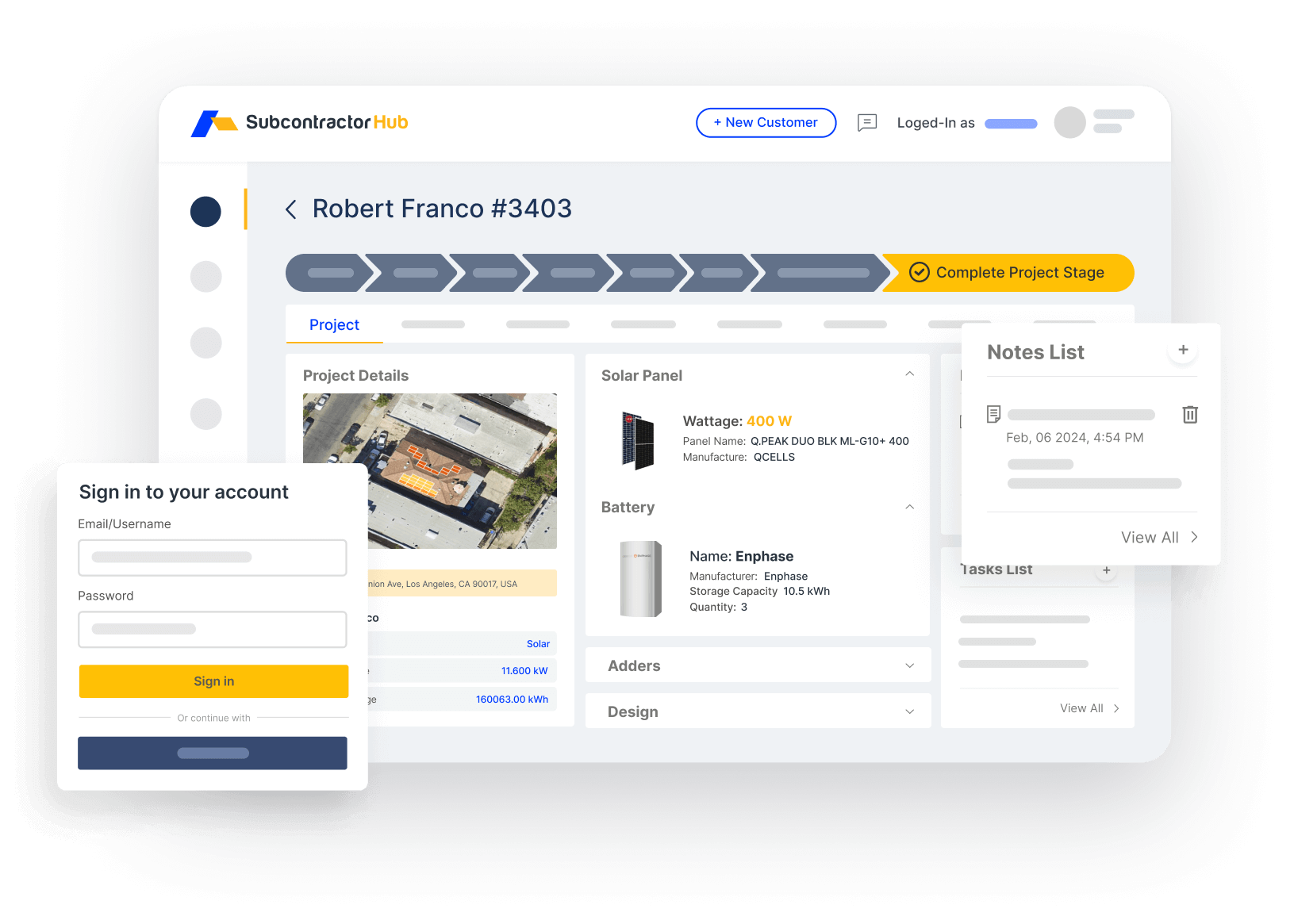
Search leads flow into one pipeline, so the company that responds first is the one that books the roof.
Because CRM, estimating, and project management sit in one system, an organic lead becomes a proposal and a scheduled job without re-keying anything. See the full toolset on our roofing contractor software page, or compare the market in our best roofing CRM software guide.
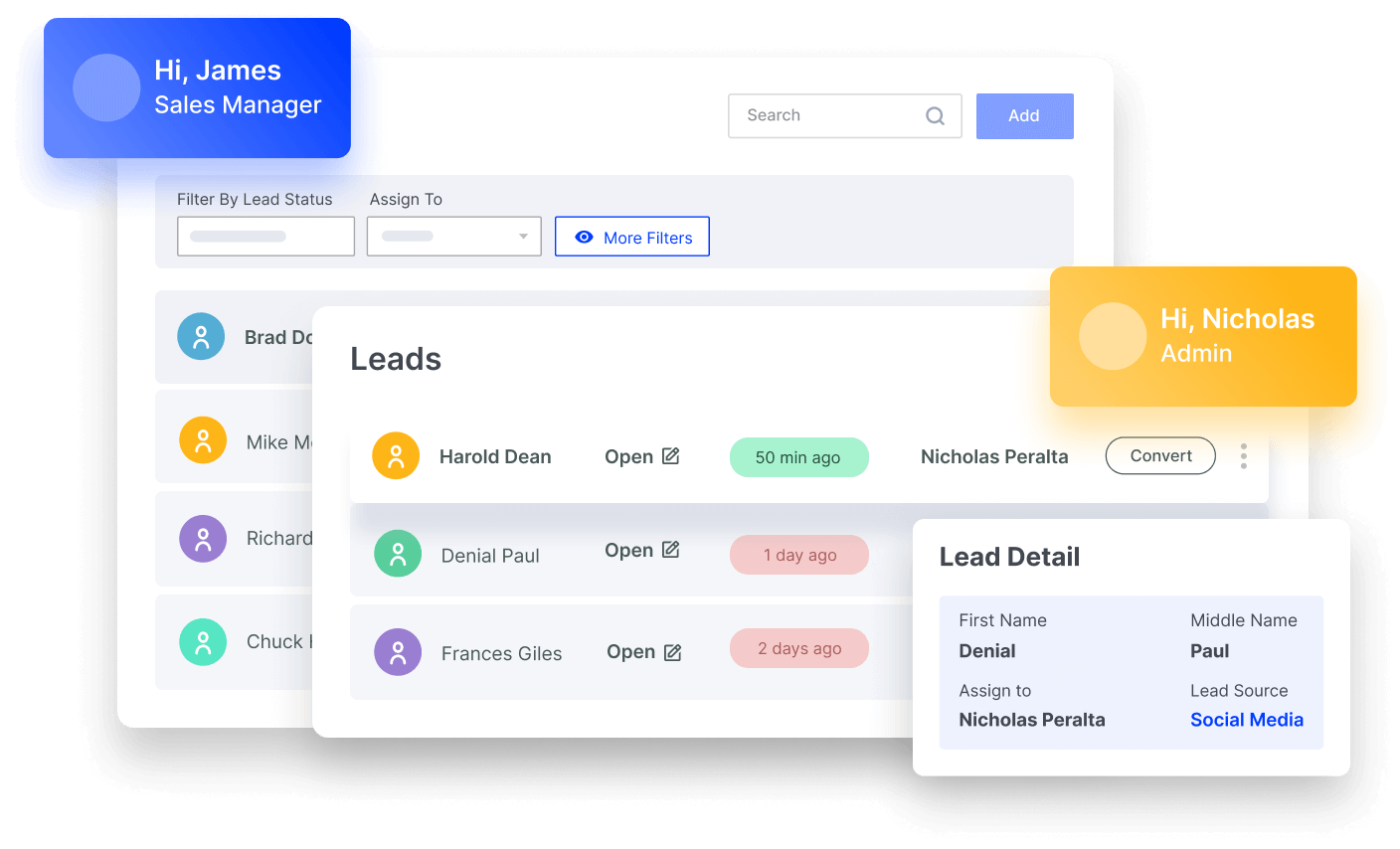
An on-site proposal tool turns the inspection SEO earned you into a signed contract before you leave the driveway.
What Google Says a Roofing SEO Page Can and Cannot Promise
Google's SEO starter guide, fetched on 20 October 2026, says there are no secrets that automatically rank a site first. Some changes take effect in hours. Others can take several months. Google generally says to wait a few weeks to assess the effect. Title links are generated from the title element and from headings. A good title on that page is unique, clear, concise, and accurately describes the page.
The three-to-six-month sentence already on this page was not re-sourced in October 2026. It is not a number from that Google guide. Use the starter guide's range, hours through several months, plus a few weeks of waiting, and do not treat any of those spans as a ranking guarantee for a roofing company.
Who publishes this site is on About SubcontractorHub. Contractor stories are on testimonials and case studies. How the site handles data is the privacy policy.
Frequently Asked Questions
What is roofing SEO?
Roofing SEO is the practice of optimizing a roofing company's website and online presence so it ranks in Google when local homeowners search for roof repair, replacement, and storm-damage help. It combines local SEO (Google Business Profile, reviews, map pack), on-page SEO (service and city pages), technical SEO (site speed, mobile), and content (guides and FAQs) to turn organic search into a steady stream of qualified roofing leads.
How long does roofing SEO take to work?
Local SEO wins — an optimized Google Business Profile and a few strong reviews — can start producing map-pack calls within a few weeks. Ranking organically for competitive terms like 'roof replacement [city]' typically takes three to six months of consistent work, and longer in dense metros. SEO is a compounding channel: the leads keep coming without paying per click, but it rewards patience and consistency over quick hacks.
What are the most important ranking factors for roofers?
For local roofing search, the biggest levers are a complete and active Google Business Profile, the volume and recency of genuine reviews, proximity and relevance to the searcher, NAP (name, address, phone) consistency across directories, and dedicated pages for each core service and service area. A fast, mobile-friendly website with clear calls to book an inspection ties it together.
Do roofing companies need a blog for SEO?
A blog isn't mandatory, but helpful content earns rankings and trust. Answering the questions homeowners actually search — how much a roof replacement costs, how to handle a storm-damage insurance claim, how to spot hail damage — captures early-stage searchers and builds topical authority that lifts your commercial pages too. A handful of thorough, genuinely useful articles beats a high volume of thin posts.
Is SEO or Google Ads better for roofing leads?
They serve different timelines. Google Ads and Local Services Ads buy leads immediately but stop the moment you stop paying. SEO takes months to build but then produces leads at a fraction of the per-lead cost and keeps compounding. Most successful roofers run ads for immediate volume while investing in SEO so their cost per lead drops over time. The two reinforce each other.
Related Reading
Turn Search Traffic Into Booked Roofs
SEO earns the lead — SubcontractorHub helps you close it. Capture every call and form fill in one CRM, respond first, and build the proposal on-site. Book a demo and we'll walk your roofing lead flow with you in under 30 minutes.
Book a DemoRoofing SEO, Roofing Marketing, Roofing Software