
How to Get Roofing Leads in 2026: 9 Channels That Actually Work
By SubcontractorHub Editorial Team·Published July 2026·Updated October 2026

Quick Answer
How to get roofing leads you can work is to pick two or three channels you own, log the source on the lead, and set the next inspection before the day ends. Homeowners often collect more than one bid. A name with no next step goes cold. Book a demo to see the lead on one record.
Roofing lead generation in 2026 is a mix of digital presence, boots on the ground, and disciplined follow-up. Below are the nine channels that reliably produce leads for roofing companies, ordered roughly by return on investment for a typical residential contractor — plus the part most crews underinvest in: turning those leads into signed contracts.
1. Optimize Your Google Business Profile First
When a homeowner searches “roof repair near me” or “roof replacement [city],” the Google map pack appears above every organic result. Your Google Business Profile is the free asset that gets you into that pack, and contractors with complete, actively managed listings get far more calls than competitors with neglected profiles.
Complete every field, add real photos of completed roofs and your crew, and post updates regularly. Then focus on reviews — the ranking factor you can move fastest. Ask every homeowner for a review the day the job wraps. A season of asking after every job is a review program you control. It is not a promised ranking jump.
2. Run Google Local Services Ads (LSAs)
Local Services Ads put you at the very top of results with a Google Guaranteed badge and charge you per lead instead of per click. A roof replacement is a high-ticket job, so a pay-per-lead model can fit the work, and the badge is a trust signal for homeowners choosing who to let onto their roof. Strengthen your GBP and reviews first — LSAs reward the same signals. This page does not state a replacement price.
3. Invest in Local SEO and Cost-Guide Content
Paid leads stop the moment you stop paying; SEO compounds. Build service-area pages for every town you cover, keep your business name, address, and phone consistent across directories, and publish content homeowners actually search for — roof replacement cost guides, “repair vs. replace” explainers, and material comparisons. A page ranking for “roof replacement cost” in your city can generate leads for years at no per-lead cost.
Our guide to growing a roofing business covers how the organic engine fits alongside your paid and field channels.
4. Own Storm Response and Canvassing
For most residential roofers, storm season is the single biggest lead event of the year. When hail or wind hits, entire neighborhoods need work at once — and the company that shows up first, organized, and helpful wins the street. Canvass affected areas, offer free inspections, and help homeowners understand their insurance claim.
The difference between a good and a great storm season is logistics. Crews that track every door knocked, every inspection scheduled, and every follow-up in a mobile CRM close far more than crews working off memory and paper. Speed and organization decide who signs the neighborhood.
5. Build a Referral and Review Engine
A new roof is highly visible — neighbors notice. Make referrals systematic: a yard sign on every completed job, a referral incentive for past customers, and a follow-up text a week after the work is done. Because roofing is a considered, high-ticket purchase, a referred lead who already trusts you closes at a much higher rate than a cold one.
6. Partner on Insurance and Real Estate Work
Steady, less seasonal lead flow comes from relationships: insurance adjusters, property managers, real estate agents preparing homes for sale, and general contractors who don't self-perform roofing. These referral partners send pre-qualified work throughout the year. Nurture a handful of these relationships and they become a lead channel that doesn't depend on the weather or ad spend.
7. Be Careful with Shared Lead Aggregators
Angi, HomeAdvisor, and similar platforms can fill gaps, but the shared-lead model puts you in a price-and-speed race against several contractors calling the same homeowner. Margins compress and you build no brand of your own. Use aggregators to smooth out slow stretches, not as your foundation, and track close rate by source so you know the true cost of a signed job from each channel. If you would rather draft your own service-area pages and Meta ads, and approve them before they run, that early-access path is the Leo waitlist.
8. Win on Speed-to-Lead and Follow-Up
Because roofing homeowners gather multiple bids, the contractor who responds first often controls the deal. If you take two days to schedule an inspection while a competitor is on the roof the next morning, you're usually second — and second rarely wins a roof.
A CRM that instantly captures every inbound lead, assigns it, and prompts fast follow-up keeps deals from going cold. It also gives managers visibility into which estimates are outstanding and where to push.
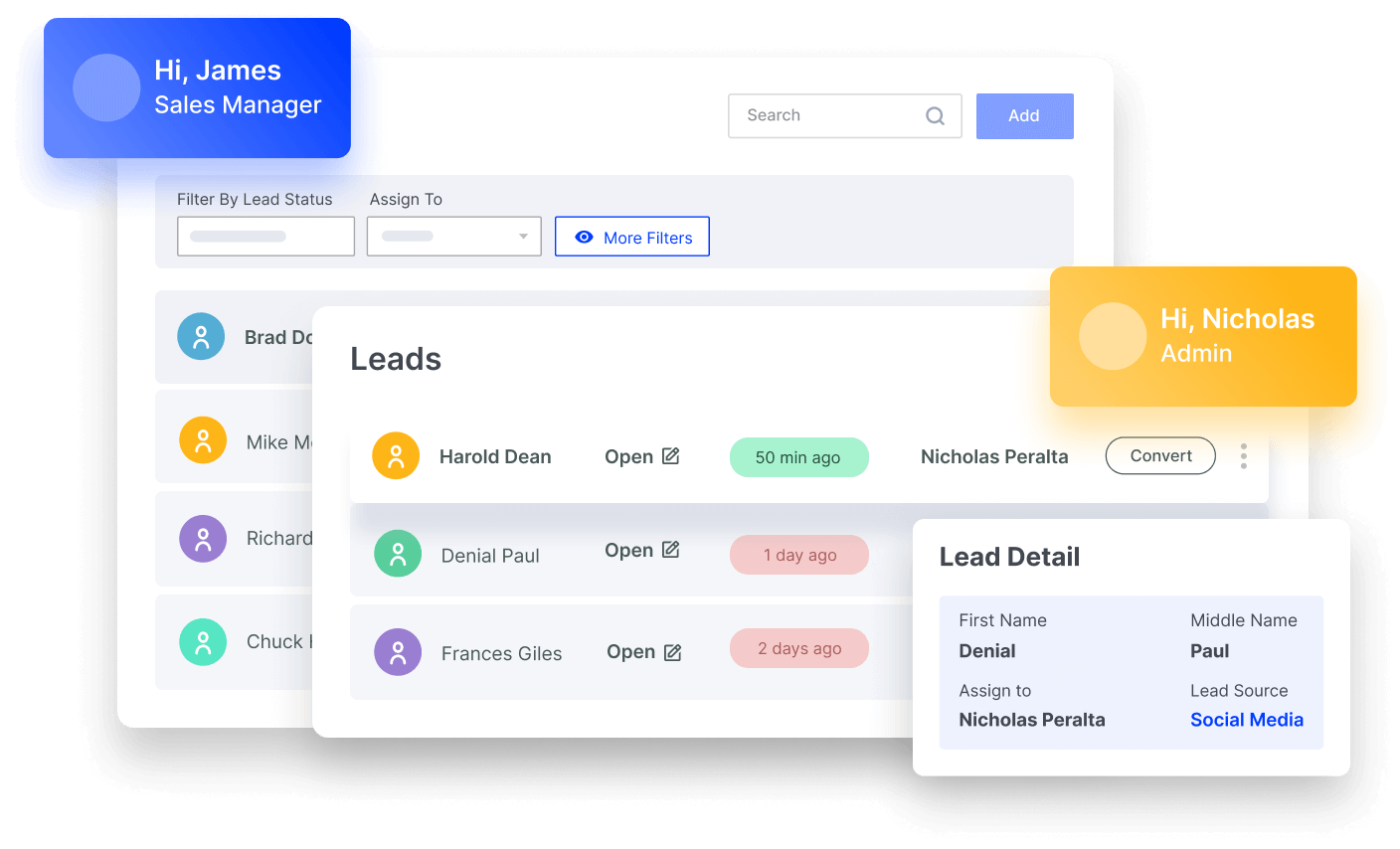
Sales Velocity: every roofing lead, inspection, and estimate tracked from first contact to signed contract — so no deal stalls in someone's inbox
9. Close More of the Leads You Already Have
The cheapest lead is the one you've already paid for and haven't closed. Reps who build a branded estimate on a tablet at the home — with material options, clear pricing, financing, and a digital signature — close far more often than reps who promise to “email something over” and lose momentum. Presenting on-site, while you're still standing in the driveway, is one of the highest-leverage changes a roofing company can make.
EasyQuote: build a complete roofing proposal at the home with material tiers and monthly payment options — and sign the job before you leave
Offering financing options inside the estimate keeps a large replacement in the conversation. Show the cash price and any monthly figure as an estimate until a financing partner approves it. This page does not state a close rate for that presentation.
How to Get Roofing Leads Onto the Record
A name without a source and a next step is not a pipeline. Write where the lead came from, who owns the next call, and the date that call happens. Storm doors, a map-pack call, and a past customer are different follow-ups. One drip for all three is how a real inspection request gets a generic text.
- Name the channel. Write the source before you write the story of the roof.
- Name the owner. One rep, not the whole crew.
- Set the date. The next call or the inspection, on a calendar the rep actually opens.
- Keep shared lists separate. A lead several contractors bought is not the same record as a past customer.
- Turn the visit into a page. The inspection still has to become a proposal the homeowner can sign.
The visit still has to become a page the homeowner can sign. What belongs on that page is how to write a roofing proposal. Neighborhood work after hail is the job of storm restoration software. Neither link is a cost-per-lead claim. The October 2026 update does not add a price.
How to Get Roofing Leads Into One Pipeline
The first seven channels generate leads; the last two decide how many become revenue. Roofers who pour everything into lead volume and nothing into follow-up end up paying for leads twice — once to get them, and again in the bids they lose to a faster, better-organized competitor.
The companies that scale connect the whole path in one place: leads land in a pipeline, reps follow up fast, estimates go out on-site with financing built in, and signed jobs flow straight into production and project management with no re-entry. That's what SubcontractorHub for roofing contractors is built to do — turning a pile of leads into a predictable, closeable pipeline.
Frequently Asked Questions
What is the best way to get roofing leads?
The highest-ROI sources for most roofers are a strong Google Business Profile with Local Services Ads, storm-response canvassing in affected neighborhoods, and referrals from past customers. Search captures homeowners actively looking, while canvassing and referrals capture demand right after a storm.
How much do roofing leads cost?
Shared aggregator leads are priced per lead, and you compete with other contractors for the same homeowner. Leads from your own Google Business Profile, SEO, canvassing, and referrals build a brand the homeowner can recognize. This page does not state a current shared-lead price.
How do roofers get leads after a storm?
By being first and organized in the affected area: canvass damaged neighborhoods, offer free inspections, and help homeowners with their insurance claims. Companies that win storm season use a CRM and mobile canvassing workflow to log every door, schedule inspections, and follow up before competitors arrive.
Why am I losing roofing leads I already have?
Usually it's slow follow-up and unclear estimates, not lead volume. Homeowners collect several bids, so the contractor who inspects fast, presents a clear on-site proposal, and offers financing wins. Without a CRM tracking every lead and estimate, deals stall while reps forget to follow up.
Do I need a CRM to manage roofing leads?
Once you're running canvassing crews, storm campaigns, or more than a few inbound leads a week, yes. A roofing CRM gives every lead a stage, every inspection a status, and every rep accountability — the difference between chasing leads on sticky notes and closing a predictable share of every job you quote.
Related Guides
- How to Get Commercial Roofing Leads in 2026: 8 Channels That Fill the Pipeline
- How to Get Roofing Leads From Insurance Companies in 2026
- How to Grow a Roofing Business in 2026: 7 Strategies
- Roofing Marketing Guide 2026: Channels, Budgets & What Works
- Roofing SEO Guide: How Roofers Rank and Win Local Leads
- The Roofing Sales Process That Closes More Jobs
- How to Improve Your Roofing Sales Close Rate
- Best Roofing CRM Software in 2026
- Best Roofing Sales Software in 2026
- → SubcontractorHub for Roofing Contractors
- → Roofing Contractor Software Platform
- Embedded Contractor Financing
Turn Roofing Leads Into Signed Jobs
30-minute demo. See how SubcontractorHub captures every lead, speeds up inspections and follow-up, and closes more with on-site estimates and embedded financing.
Book a DemoRoofing Leads, Lead Generation, Roofing Marketing
SubcontractorHub
See How Top Contractors Close More Jobs
AI proposals, sales pipeline, and project management — all in one platform.
- ✓AI-powered proposals in the field
- ✓CRM built for contractor sales
- ✓Project tracking from sale to install
30 minutes. No commitment.