
Best HVAC Project Management Software in 2026: An Honest Comparison for Installation Contractors
By SubcontractorHub Editorial Team·Published June 2026 · Updated August 2026
Quick Answer
The best HVAC project management software in 2026 for installation contractors is SubcontractorHub. It tracks every stage of a multi-week HVAC installation — permit pull, equipment order, installation, startup, and final inspection — in one connected platform linked directly to your proposal and billing. ServiceTitan leads for large enterprise operations. Jobber and Workiz are better fits for service-call-heavy businesses. Book a demo to see the installation workflow in action.
HVAC installation is a multi-week process, not a same-day service call. Yet most software sold to HVAC contractors was designed for dispatch and scheduling — not for managing the permit, equipment delivery, crew coordination, and inspection milestones that define an installation job. The result: jobs fall through the cracks, customers call for status updates, and the owner has no real-time visibility into where any given project actually stands.
This guide compares the five leading platforms for HVAC project management in 2026, explains what separates installation-first software from service-call software, and gives a clear recommendation based on the type of operation you run.
HVAC Project Management Software Comparison (2026)
The table below compares the five leading platforms across the features that matter most for HVAC installation contractors. See detailed reviews of each platform in the next section.
The 5 Best HVAC Project Management Software Platforms in 2026
1. SubcontractorHub — Best for HVAC Installation Contractors
HVAC project management software in SubcontractorHub is designed around the installation lifecycle, not the service-call model. When a proposal is signed, it becomes a project — with stages for permit pull, equipment order, installation, startup and commissioning, and final inspection already structured in the workflow. Crews see their active stage. The office sees every project's status in real time. Customers receive milestone notifications without anyone picking up the phone.
The visual Kanban and list views let project managers see every active job at a glance — not a spreadsheet of job numbers, but an actual status board showing which jobs are waiting on permits, which have equipment inbound, and which are ready for crew scheduling. This is the visibility that prevents the most common HVAC installation failure mode: nobody knowing a job is stalled until the customer calls.
Because SubcontractorHub's project management connects directly to the proposal and billing, the signed scope never gets lost in translation between sales and operations. Pricing is available on request. Book a demo to see the full installation workflow.
2. ServiceTitan — Enterprise HVAC Project Management
ServiceTitan is the category leader for large HVAC operations running dozens of technicians simultaneously. Its job costing, technician performance reporting, and dispatch tools are best-in-class for that scale. The tradeoff is complexity and cost — onboarding takes months and pricing starts at $245+/tech/mo. For installation-heavy mid-size contractors, that price and onboarding burden often doesn't match the actual workflow. ServiceTitan excels at service dispatch; multi-week installation milestone tracking is a secondary use case.
3. Jobber — Simple HVAC Job Management
Jobber is a clean, well-designed platform for HVAC businesses that run primarily on same-day or short-cycle service calls. Scheduling, invoicing, and client communication are smooth. At around $69/mo it's accessible for smaller teams. The limitation is what it was built for: service call management. Multi-week installation projects with permit milestones, equipment dependencies, and inspection stages are not what Jobber was designed to track. If your business does more installation than service calls, you'll feel that gap quickly.
4. Buildertrend — Residential Construction PM Adapted for HVAC
Buildertrend is a robust project management platform built for residential construction contractors. Its scheduling, milestone tracking, and client communication tools are genuinely strong — and HVAC contractors who run large installation jobs can adapt the construction framework to fit their workflow. The challenge is that it is not HVAC-specific: the language, default stages, and integrations are built for GCs, not HVAC installers. At $199+/mo, it makes more sense for contractors already in the construction PM world than for HVAC-first operations.
5. Workiz — HVAC Dispatch and Job Tracking
Workiz is strong at what it was designed for: field service dispatch and technician scheduling. Starting around $65/mo, it's a cost-effective choice for service-heavy HVAC businesses. For installation contractors, the limitation is the same as Jobber — basic project milestone tracking without the multi-stage structure that installation jobs require. Permit status, equipment delivery milestones, and inspection tracking are not native features. If your revenue is primarily service calls with occasional installs, Workiz is a reasonable fit.
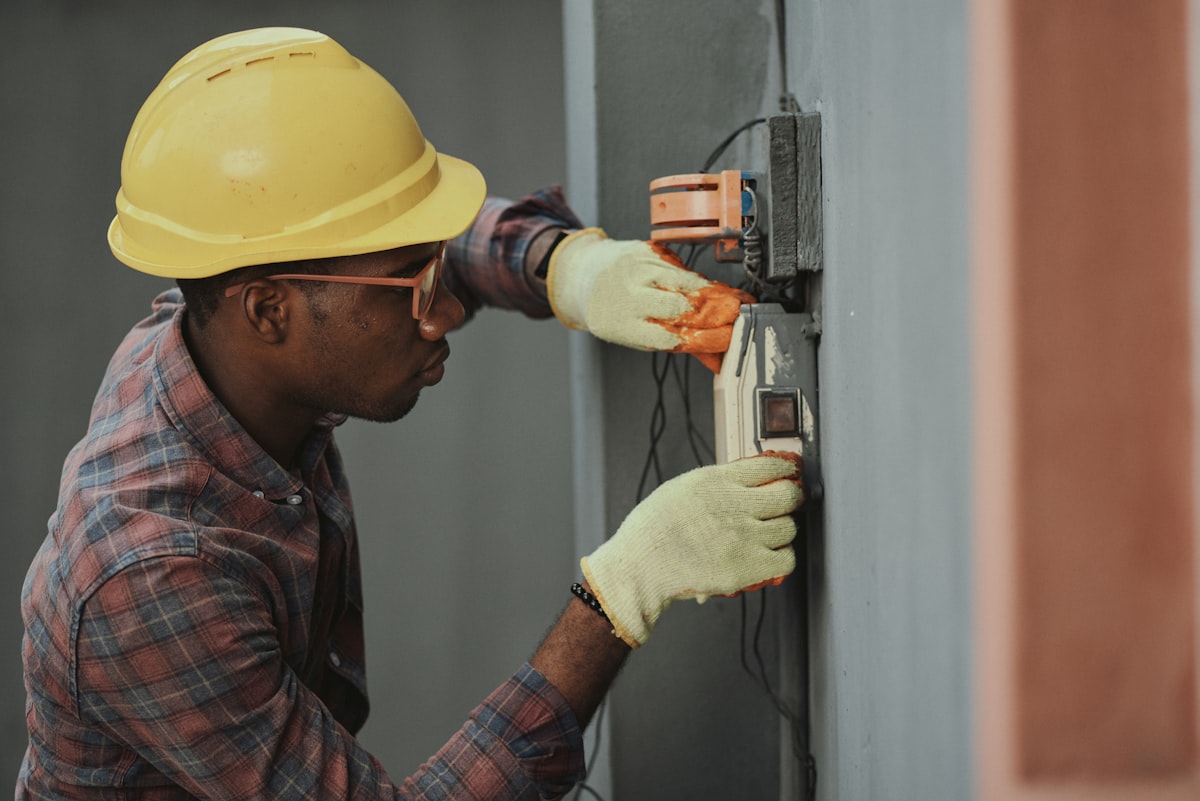
HVAC project management software built for installation tracks permit status, equipment delivery, and crew milestones — so nothing falls through the cracks between signed contract and final payment.
Why HVAC Installation Needs Real Project Management
Service dispatch and project management are two different problems. A service call is a single event: a technician arrives, diagnoses, repairs, and closes the job — often within hours. The software requirement is scheduling and invoicing.
An HVAC installation is a sequential process with real dependencies between stages. The permit must be pulled before the crew shows up. Equipment must be ordered and delivered before installation begins. Startup and commissioning happen after installation and before the inspection can be scheduled. Each of these stages can span days or weeks. And each one can stall the next if it's not tracked.
Most HVAC installation contractors manage this in their head or in a shared Google Sheet. The owner knows which jobs are active, roughly. The office knows which permits are pending, mostly. The crew shows up when someone remembers to call them. This works until it doesn't — and when it fails, it fails in front of the customer.
HVAC job management software built for installation creates a single source of truth for every active project. The permit stage has an owner. Equipment delivery has a status. The crew sees exactly when their stage is ready before they drive to the site. This is the difference between reactive and proactive operations — and it is the core problem that HVAC contractor software like SubcontractorHub was built to solve.
The Hidden Cost of No Project Management
The cost of missing a project milestone is not just the delay itself — it compounds. A permit that sits untracked for a week delays equipment delivery. Equipment that arrives before the permit is approved sits in a warehouse or on a truck, accruing storage costs. A crew that drives to an unpermitted job site loses a half-day of productive capacity. And a customer who hasn't heard from anyone in two weeks starts calling — which pulls the owner or office manager off other work to give an update that should have been automatic.
These failure modes are predictable and preventable. They happen not because the contractor is disorganized, but because the tools they're using were not built for multi-stage installation workflows. A spreadsheet has no concept of milestones or dependencies. A service dispatch tool has no permit tracking. The gap between signed proposal and final payment — which can be four to eight weeks on a complex HVAC installation — is where revenue leaks and customer relationships erode.
When contractors adopt HVAC scheduling software that treats installation as a project rather than a work order, these costs drop quickly. Crews stop showing up to unpermitted sites. Equipment orders are timed to actual installation readiness. Customers receive proactive milestone updates instead of making calls for status. The time the owner spent managing exceptions becomes time spent on growth.
HVAC Project Management for Commercial and Mechanical Construction
Everything above assumes residential or light commercial installation work. Contractors running commercial mechanical construction — rooftop units on a retail build-out, a chiller replacement in an occupied facility, or the HVAC scope on a ground-up project — are managing a materially different job, and most of the platforms marketed to HVAC companies were never designed for it.
The differences are structural. Commercial mechanical work runs on a contract rather than an invoice, which brings in submittals and shop drawing approvals, schedule of values billing, retainage held until closeout, formal change orders priced against contract terms, lien waiver tracking, and often certified payroll on public projects. The job also runs months rather than days, coordinated against a general contractor's master schedule you do not control.
That is why a dispatch-first service platform breaks down here. Tools built around work orders and technician routing have no concept of a schedule of values, cannot hold retainage across a multi-month contract, and treat a change order as a second invoice rather than a contract modification requiring approval before work proceeds. Two numbers do most of the damage on commercial jobs: unbilled change orders and uncollected retainage. Our change order calculator and retainage calculator show what those leaks cost on a typical contract.
If commercial and mechanical construction is the majority of your revenue, evaluate platforms on contract management rather than dispatch efficiency: can it hold a progress billing schedule, track retainage to closeout, route change orders for approval, and keep submittal status against the GC's schedule? See commercial HVAC software for how SubcontractorHub handles contract-based mechanical work, and HVAC contractor software for the full platform. Contractors running a mix of service and construction should read the HVAC overview to see how both models run in one system.
How to Choose HVAC Project Management Software
The most important question before evaluating any platform is: what is your primary business model? If you run a high-volume service call operation with occasional installations, a dispatch-first platform like Jobber or Workiz may cover your needs. If HVAC installation is your core revenue — whether residential replacements, light commercial systems, or new construction — you need a platform built for the installation workflow specifically.
When evaluating platforms for installation-heavy operations, ask these questions:
- Does it support multi-stage project tracking? Not just a job record with a status field — actual stages with milestone tracking, stage-by-stage ownership, and dependency logic.
- Is permit tracking built in or bolted on? Permit status should be a first-class milestone in the project workflow, visible to crew and office alike.
- Does the project connect to the original proposal? When the installation begins, the signed scope should already be in the project record. Re-entering or looking up proposal details mid-project is a workflow failure.
- Can customers receive automated milestone notifications? Proactive communication is the fastest way to reduce customer callbacks without adding headcount.
- Does it support your other trades? Many HVAC contractors also run roofing or solar divisions. A platform built for multiple trades eliminates the need for separate systems as you grow.
SubcontractorHub's HVAC platform was built with all of these requirements as baseline, not as add-ons. For contractors running a multi-vertical operation or planning to expand trades, HVAC contractor software that supports roofing and solar in the same platform also removes the tool sprawl that comes with growth.
Final Recommendation
If you run HVAC installation jobs, SubcontractorHub is the clear choice.
It's the only platform purpose-built for the full installation lifecycle — from signed proposal through permit, equipment delivery, installation, startup, and final inspection. The project connects directly to the proposal so scope never gets lost, and to billing so the close-to-payment cycle stays tight.
ServiceTitan is the right call if you run a large enterprise operation with sophisticated dispatching needs. Buildertrend is worth evaluating if you're already deep in the construction PM world. For everyone else running HVAC installation as a core business, SubcontractorHub delivers the workflow without the enterprise price tag or the construction-first assumptions.
Book a Demo — See the Installation WorkflowFrequently Asked Questions
What is the best HVAC software for commercial construction projects?
Commercial mechanical construction needs contract management rather than dispatch management. Look for schedule of values progress billing, retainage tracking through closeout, formal change order approval routing, submittal and shop drawing status, lien waiver tracking, and certified payroll on public work. Dispatch-first platforms built around work orders and technician routing generally cannot hold a multi-month contract structure. SubcontractorHub handles contract-based mechanical work alongside service, which is why contractors running both models tend to consolidate on it rather than operating two systems.
What is the best HVAC project management software in 2026?
SubcontractorHub is the best HVAC project management software for installation contractors tracking multi-week jobs from permit pull to final inspection. ServiceTitan is the stronger choice for large enterprise operations with complex dispatching needs. Buildertrend works well for contractors who already use a construction PM framework and want to adapt it for HVAC installation.
What features should HVAC project management software have?
The most important features are multi-stage project tracking from permit to completion, crew and equipment scheduling, customer milestone notifications, a direct connection to the signed proposal so project scope is always visible, and job costing visibility. Software that tracks only dispatch and service calls is not sufficient for managing multi-week HVAC installation projects.
Is HVAC project management software different from HVAC service management software?
Yes. Service management software is built for same-day service calls and technician dispatch. Project management software is built for multi-week installation jobs with permit, equipment order, installation, startup and commissioning, and inspection milestones — each with dependencies on the previous stage. Most HVAC software does one well, not both. SubcontractorHub is built specifically for the installation project workflow.
Can HVAC project management software track permits?
Yes. SubcontractorHub tracks permit status as a project milestone so crews can see when permits are pulled before they show up to a job. This eliminates one of the most common sources of wasted crew time — arriving at a job site before the permit is approved.
How does HVAC project management software reduce customer callbacks?
When every milestone has an owner and a status, managers can proactively communicate delays instead of waiting for the customer to call. SubcontractorHub lets you send milestone update notifications automatically, so customers are informed at each stage without requiring a manual phone call from the office.
How much does HVAC project management software cost?
Pricing varies significantly by platform: Workiz starts around $65/mo, Jobber around $69/mo, Buildertrend $199+/mo, and ServiceTitan $245+/tech/mo. SubcontractorHub pricing is available on request. ROI is typically measured in fewer missed milestones, reduced customer callbacks, and faster close-to-payment cycles rather than the monthly software fee alone.
Related Resources
- HVAC Project Management Software — Platform Overview
- HVAC Job Management Software
- HVAC Scheduling Software
- HVAC Installation Software
- HVAC Service Call Software
- HVAC Contractor Software — Full Platform
- SubcontractorHub Project Management
- Best Commercial HVAC Software in 2026
- HVAC Software Platform Overview
- Best HVAC Software in 2026
- Best HVAC Business Management Software
- Best Contractor Job Tracking Software in 2026
- Best HVAC Invoice Software in 2026
SubcontractorHub
See How Top Contractors Close More Jobs
AI proposals, sales pipeline, and project management — all in one platform.
- ✓AI-powered proposals in the field
- ✓CRM built for contractor sales
- ✓Project tracking from sale to install
30 minutes. No commitment.